Jun 2026 · 9 min read
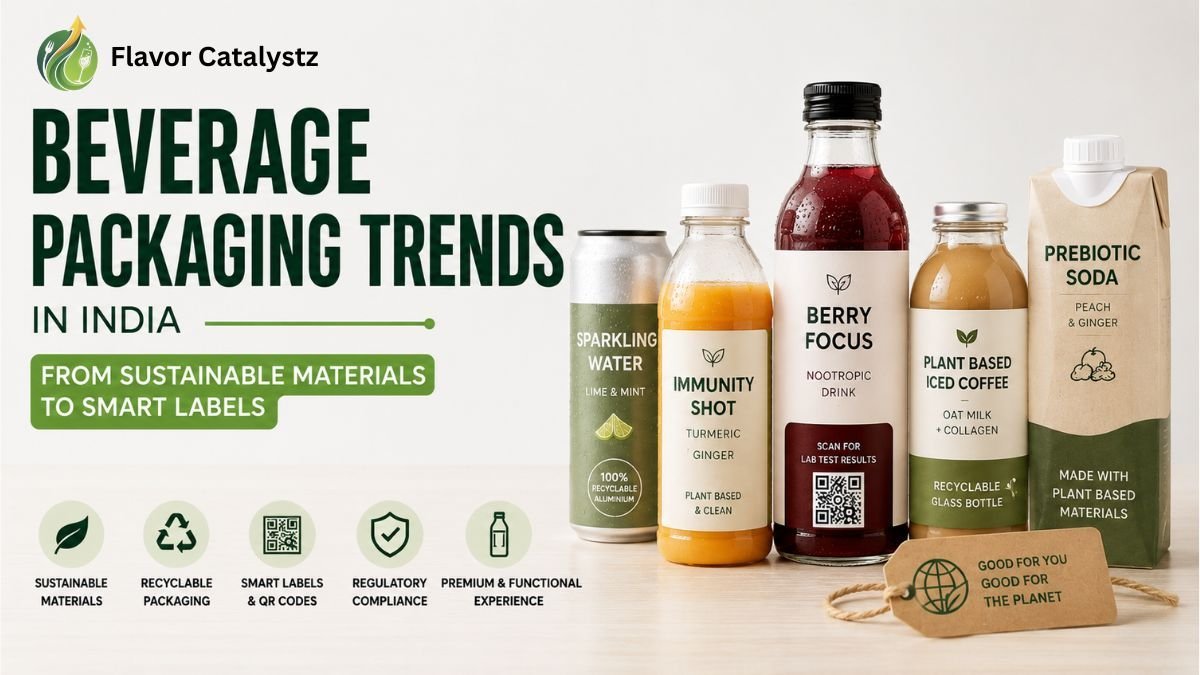
Packaging is no longer just a container. For a beverage brand in India in 2026, packaging is a strategic decision that affects shelf life, consumer perception, sustainability positioning, retail listing eligibility, and — increasingly — regulatory compliance.
The packaging landscape for beverages is changing faster than at any point in the last two decades. New materials are entering commercial viability. Sustainability pressure is increasing from consumers, retailers, and government policy. Smart labels and QR-based experiences are reshaping the post-purchase consumer relationship. And the format preferences of Indian consumers are shifting as quick commerce, D2C, and premium retail create different display and distribution requirements.
This guide covers the most important beverage packaging trends shaping India in 2026 — and what they mean for your brand.
Choosing the Right Packaging for Your Beverage Brand?
Packaging impacts far more than appearance. The right bottle, can, carton, or sachet affects shelf life, product stability, logistics, sustainability, retail acceptance, and consumer perception. We help founders choose packaging that’s commercially practical, brand-friendly, and production-ready.
Why Packaging Decisions Are More Strategic Than Ever
In a D2C and quick commerce environment, packaging is doing the job that a salesperson used to do. On Blinkit, a consumer decides whether to click on your product from a thumbnail image — 30 pixels wide. On a D2C website, the unboxing experience determines whether they photograph the product and share it. In modern trade, your bottle competes with 50 others in a 2-second shelf glance.
The commercial stakes of packaging decisions have never been higher. And the sustainability dimension — once a nice-to-have — is increasingly becoming a commercial necessity as certain consumers, retailers, and export markets make it a purchasing criterion.
Trend 1: Aluminium Cans — The Premium Packaging Shift
Aluminium cans have moved from being associated exclusively with mass-market cola to becoming the packaging of choice for premium functional beverages, sparkling waters, RTD coffees, and non-alcoholic drinks.
Why aluminium is winning in 2026:
- Superior barrier properties: Aluminium provides a complete barrier against light, oxygen, and moisture — better than PET and comparable to glass. This means better shelf life for oxygen-sensitive functional ingredients.
- Recyclability: Aluminium is the most recycled packaging material globally. A can made today may be back on shelf as a new can in 60 days. This is a genuine sustainability credential, not greenwashing.
- Premium perception: In consumer research, cans are increasingly perceived as premium, especially in the 250ml format associated with imported energy drinks and specialty beverages.
- Quick commerce compatibility: Cans are compact, stackable, and robust — ideal for the dark store to doorstep journey of quick commerce delivery.
The practical shift: Brands that launched in PET bottles are reformulating for aluminium cans at scale. New functional beverage brands are launching in cans from day one.
Challenge: Can MOQ (minimum order quantity) is significantly higher than bottles — typically 10,000–50,000 units. For very early-stage brands, this limits accessibility. See our beverage brand launch cost guide for how to plan around this.
Trend 2: Sustainable and Mono-Material Packaging
India’s Single Use Plastic (SUP) regulations have accelerated the shift toward sustainable packaging in beverages. But sustainability in packaging is complex — and the “most sustainable” choice depends on the product, distribution model, and what you are optimising for.
Mono-material packaging is one of the most important sustainability trends in beverage packaging globally. Traditional multilayer packaging (PET bottle + multilayer label + foil seal) is difficult to recycle because the different materials cannot be easily separated. Mono-material packaging uses a single material type throughout — making recycling dramatically simpler.
What this means for beverages:
- Mono-material PET bottles with PET labels (rather than PP or paper labels) — fully recyclable in the same stream
- All-aluminium cans with aluminium lids — standard already
- Paper-based packaging (Tetra Pak’s new plant-based variants) with paperboard cartons
Biodegradable and compostable packaging: Emerging but still early in India. PLA (polylactic acid) bioplastic bottles are available but have limited commercial viability at scale — they require industrial composting infrastructure that is not widely available in India. More relevant for export markets (EU) where composting infrastructure exists.
rPET (Recycled PET): Bottles made from recycled PET — same properties as virgin PET but with a recycled content claim. Growing in availability from Indian bottle manufacturers. Allows “made with recycled materials” label claim.
Trend 3: Smart Labels and QR Code Integration
The label on a beverage bottle is traditionally a one-way communication channel — brand to consumer. Smart labels change this into a two-way, trackable, experience-rich interaction.
QR codes on beverage labels in 2026:
Traceability: “Scan to see where your ingredients come from.” For premium functional beverages using specific sourcing (single-origin Alphonso mango, organic Coorg coffee, KSM-66 ashwagandha), a QR code linking to provenance information builds trust and differentiates from commoditised products.
Batch-specific information: Lab test results for the specific batch. Consumers increasingly want to verify the functional ingredient content of the specific product in their hand — not just a general claim on the label. A QR code linking to the batch CoA (Certificate of Analysis) is a powerful trust-building tool.
Extended label content: FSSAI’s mandatory label requirements take up significant space on small bottles. A QR code linking to extended nutritional information, detailed ingredient sourcing, usage guidance, and brand story allows more information delivery without overcrowding the physical label.
Consumer engagement: Recipes using the product. WhatsApp community join link. Loyalty programme registration. The QR code becomes the post-purchase consumer journey entry point.
Serialised QR codes: Individual, unique QR codes on each unit — enabling anti-counterfeiting, product authentication, and granular consumer engagement tracking. Still early in Indian FMCG but growing.
Trend 4: Glass Bottles for Premium Positioning
Glass is having a premium renaissance in Indian beverages. While it has always been the packaging of choice for certain categories (beer, wine, premium juice), glass is now being adopted by D2C functional beverage brands, cold press juice brands, beauty beverages, and RTD mocktails as a deliberate premium positioning signal.
Why glass is growing in functional beverages:
- Consumer perception: Glass communicates quality, purity, and premium instantly. A collagen drink in a sleek glass bottle looks and feels ₹100 more expensive than the same product in PET.
- Flavour neutrality: Glass has zero migration — no flavour compounds leach from the container into the beverage. Critical for delicate flavour profiles (rose, elderflower, cold brew coffee).
- Instagram-ability: Glass bottles are significantly more photogenic than PET. In D2C, where consumer-generated social content is a major acquisition channel, packaging aesthetics are commercially significant.
- Light protection: Amber or coloured glass protects UV-sensitive functional ingredients (curcumin, anthocyanins, Vitamin C) without requiring additional packaging layers.
Challenge: Glass is heavy and fragile — higher shipping cost per unit, higher breakage risk. D2C brands using glass must invest in appropriate secondary packaging (corrugated inserts, bubble wrap) to prevent breakage in transit.
Trend 5: Portion-Sized and Convenience Formats
The single-serve, on-the-go format has become the dominant commercial format for premium functional beverages. 250ml, 330ml, 30ml shots — these portion-controlled formats serve the quick commerce impulse purchase, the gym bag, and the office desk occasion.
What is growing:
- 30–60ml wellness shots: Immunity shots, adaptogen shots, beauty shots. Concentrated, convenient, premium. Immunity shot formulation covers this format in detail.
- 250ml single-serve cans: The standard for RTD mocktails, functional sparkling water, and premium carbonated drinks.
- Single-serve powder sachets: Electrolyte sachets, protein water sachets, adaptogen premix sachets. The most convenient functional beverage format — dissolve in water, consume anywhere. Electrolyte powder sachet brand guide covers commercial development.
Multipacks: While single-serve drives trial, multipack formats (6-pack, 12-pack) drive subscription and repeat purchase economics. Design your packaging system with both single and multipack formats in mind from launch.
Trend 6: FSSAI Packaging Compliance Updates
Packaging decisions in India are not purely commercial — they are regulatory. FSSAI’s evolving packaging regulations affect material choices, labelling requirements, and claim permissions.
Key regulatory packaging considerations for 2026:
Front-of-pack labelling: FSSAI has been finalising mandatory front-of-pack (FOP) labelling for products high in sugar, fat, or salt. Ensure your packaging design has sufficient real estate for FOP label requirements if your product may be subject to this.
QR code requirements: FSSAI has indicated interest in mandatory QR codes for traceability on packaged food products. Getting ahead of this with voluntary QR code implementation positions your brand for compliance without future redesign costs.
Plastic packaging rules: BIS standards and FSSAI packaging regulations on minimum recycled content and packaging material certifications are evolving. Stay current on applicable standards for your packaging format.
For complete label compliance requirements, see our FSSAI beverage label mandatory guide.
Ready to Build a Beverage Brand That Stands Out on Every Shelf?
From packaging selection and label compliance to beverage formulation, shelf-life validation, and commercial manufacturing, Flavor Catalystz helps founders create products that are retail-ready, quick-commerce friendly, and built to scale across India.
Choosing the Right Packaging for Your Beverage Brand
Packaging is a formulation decision as much as a design decision — it affects shelf life, ingredient stability, consumer experience, and regulatory compliance. Getting it right from launch is significantly cheaper than redesigning after your first 10,000 units.
At Flavor Catalystz, we work with beverage founders on packaging selection as part of the product development process.
FAQs
What is the best packaging for a functional beverage brand in India in 2026?
Aluminium cans for carbonated functional beverages (best barrier, premium perception, sustainability). Glass bottles for premium still beverages and D2C brands where Instagram-ability matters. PET for mass-market and high-volume formats where cost efficiency is priority.
Is sustainable packaging commercially viable for beverage brands in India?
Yes — rPET bottles, mono-material packaging, and aluminium cans are all commercially available at competitive prices in India. Full biodegradable/compostable packaging remains early stage and higher cost, but rPET and aluminium offer genuine sustainability credentials at commercially viable price points.
What are smart labels in beverages?
Labels with QR codes that link to digital content — batch-specific lab results, ingredient sourcing information, extended nutritional data, brand story, loyalty programme. Growing as consumer demand for transparency increases.
Are aluminium cans more sustainable than PET bottles?
Per unit, aluminium production is energy-intensive. However, aluminium’s near-infinite recyclability (with recycled aluminium requiring 95% less energy than virgin) makes it significantly more sustainable in a high-recycling system. India’s aluminium recycling infrastructure is better developed than plastic recycling.
What packaging format works best for quick commerce beverages?
Aluminium cans and PET bottles in single-serve sizes (250–500ml). Robust secondary packaging is critical — quick commerce delivery is less gentle than standard courier. Glass should have adequate protective secondary packaging.