Jun 2026 · 9 min read
Getting a customer to buy your beverage brand once is the first challenge. Getting them to buy again — and again, and again — is the business.
In the economics of a consumer beverage brand, repeat purchase is everything. A customer who buys once and never returns costs you acquisition cost with no return. A customer who reorders every month for a year generates 12x the revenue from the same acquisition spend.
Yet most beverage brands in India focus disproportionately on customer acquisition and dramatically underinvest in retention. This guide changes that. It is a practical retention playbook for Indian beverage brands — covering the product decisions, channel strategies, and marketing tactics that drive repeat purchase.
Struggling to Turn First-Time Buyers Into Repeat Customers?
A beverage brand grows when customers reorder. If you’re facing low repeat purchases, weak customer retention, or poor subscription performance, our team can help improve product experience, positioning, packaging, and long-term consumer loyalty.
Why Repeat Purchase Is the Core Metric for Beverage Brands
Before the strategies, understand why retention matters so disproportionately in beverages:
Beverages are consumables. Unlike a piece of furniture or a piece of clothing, a beverage is consumed and needs to be repurchased. The product is designed for repeat purchase — if it does not achieve it, something is fundamentally wrong with either the product or the brand’s retention approach.
Customer Acquisition Cost (CAC) is high and rising. Digital advertising costs in India have increased significantly. Acquiring a new customer through Meta or Google ads typically costs ₹100–400 for a beverage brand. If that customer only buys once at ₹150–200, the economics are deeply negative.
Lifetime Value (LTV) is the real business metric. An electrolyte sachet customer who reorders monthly for 2 years has an LTV of ₹3,000–4,000. A subscription protein water customer for 18 months: ₹3,600. These numbers justify much higher acquisition investment than a single-order customer.
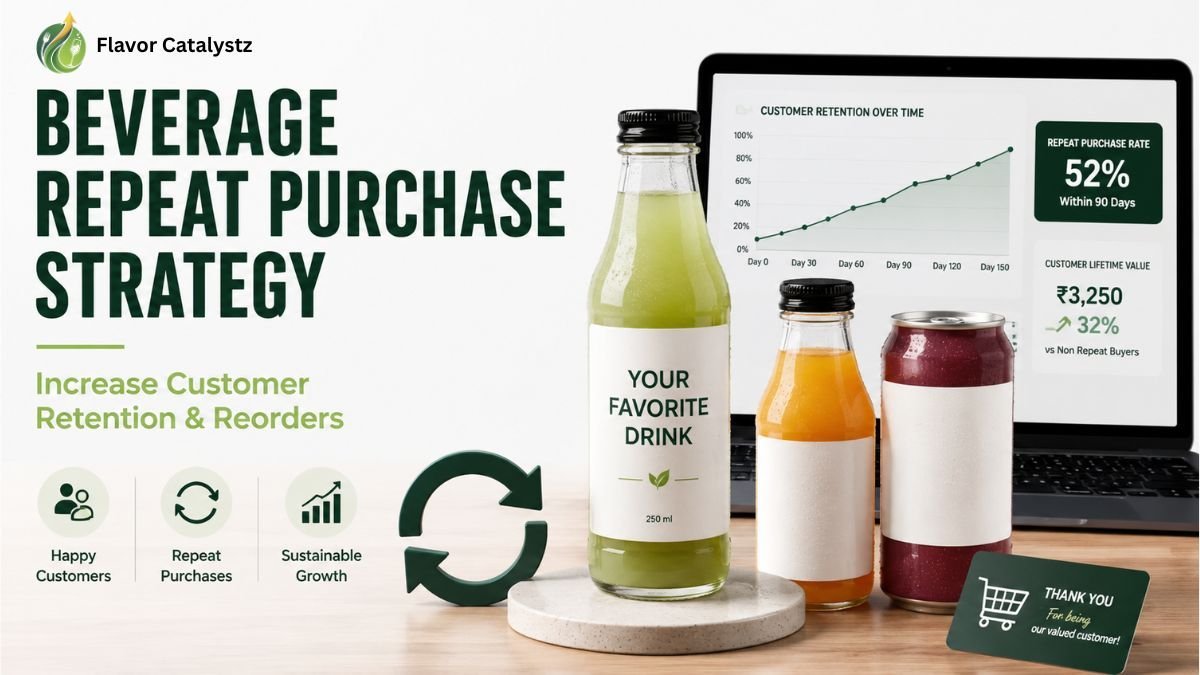
The benchmark: A healthy beverage brand should see 30%+ of first-time buyers make a second purchase within 60 days, and 50%+ within 90 days.
Foundation: Product-Driven Retention
No retention strategy fixes a product that people do not love. Before investing in retention marketing, ensure:
The product delivers on its promise. If you position as an immunity shot and consumers feel no effect, they will not reorder. If you market a sleep drink and it does not relax them, they will not subscribe. Functional beverages with genuinely effective formulations retain customers automatically — the product does the retention work.
The flavour creates desire, not just satisfaction. “It was fine” does not drive repurchase. “I genuinely crave this drink” does. Work on your flavour profile until consumers say they want it, not just that it is okay.
The experience of the first order is exceptional. The unboxing, the first sip, the first effect — all of this forms the first impression that determines whether a customer reorders. Premium packaging and a thoughtful first-order experience (handwritten note, sampling of a second product, clear usage guide) dramatically improves first-to-second purchase conversion.
Strategy 1: Subscription — The Most Powerful Retention Mechanic
For any beverage with a daily consumption ritual — immunity shots, protein water, electrolyte sachets, wellness tonics — subscription is the most powerful retention model available.
Why subscription works for beverages:
- Consumer removes the decision to reorder — it happens automatically
- Discount incentive (10–20% off for subscribers) makes the math compelling
- You receive predictable recurring revenue that enables inventory planning
- Subscriber LTV is typically 3–5x higher than non-subscriber LTV
Setting up subscription in India:
- Shopify + ReCharge or Bold Subscriptions: Standard for D2C beverage brands with a Shopify store
- Amazon Subscribe & Save: For Amazon-based brands — significant conversion uplift
- WhatsApp-based subscription: For early-stage brands without a website — manually managed but highly effective in India’s WhatsApp-first consumer culture
Subscription pricing strategy:
- 15–20% discount for monthly subscription — compelling enough to convert without destroying margin
- Free shipping on subscription orders — removes friction
- Easy pause/cancel — removes anxiety about commitment
Key metric: Subscription cancellation rate. Target below 5% monthly churn for a healthy subscription business.
Strategy 2: WhatsApp Retention — India’s Most Effective Channel
India’s most underutilised retention channel for D2C beverage brands is WhatsApp. Open rates for WhatsApp messages are 70–90% — versus 15–25% for email. Every beverage brand building in India should have WhatsApp as a core retention channel.
Building your WhatsApp list:
- Ask for WhatsApp opt-in at the point of purchase (website checkout, QR code on packaging)
- Offer a value exchange — “Join our WhatsApp community for exclusive health tips and early access to new products”
- Never add people without explicit consent
WhatsApp retention sequences:
Day 1 (after first order): Welcome message. “Your [BrandName] order is confirmed! Here’s how to get the most from your [product]” — usage tips, what to expect, when to drink it.
Day 7: Check-in. “How are you getting on with [product]? We’d love to hear your experience.” This generates early feedback and signals that you care.
Day 25 (before expected repurchase): Repurchase nudge. “Running low? Reorder before [date] and get 10% off with code BACK10.”
Day 60: Loyalty offer. “As one of our regulars, here’s an exclusive offer…” — early product access, bundle deal, subscription invitation.
Broadcast frequency: Maximum 2–3 messages per month. WhatsApp is intimate — over-messaging causes blocks and opt-outs.
Strategy 3: Loyalty Programme
A simple loyalty programme rewards repeat purchase behaviour — creating a tangible reason to choose your brand over a competitor on the next occasion.
Simple beverage loyalty programme mechanics:
Points-based: Earn points per purchase, redeem for discounts or free products. “Earn 10 points per ₹100 spent. 100 points = ₹50 off your next order.”
Stamp card: Buy 9, get 1 free. The classic format — simple, easy to communicate, effective. Works particularly well for premium single-serve products (immunity shots, cold brew).
Tiered loyalty: Bronze/Silver/Gold based on total spend. Higher tiers unlock free shipping, early product access, or exclusive flavours. Creates aspiration for higher spend.
Implementation: Shopify Loyalty apps (Smile.io, Yotpo), or manually managed via WhatsApp for early-stage brands.
Strategy 4: The Repurchase Window Email/WhatsApp Sequence
For consumable beverages, you can mathematically predict when a customer will run out of product. Use this to trigger a perfectly timed reorder nudge.
For a 30-sachet electrolyte pack: Customer bought Day 1. At 1 sachet/day, they run out Day 30. Send reorder reminder: Day 22 (8 days before running out).
For a 6-pack of 250ml immunity shots (1 per day): Runs out Day 6. Send reorder: Day 4.
For a 500ml protein water (daily purchase): Customer likely buys by occasion — retargeting within 3–7 days.
Segment your customer base by product purchased and automate these sequences through your CRM or WhatsApp business tool.
Strategy 5: Referral Programme
The most cost-efficient customer acquisition for a beverage brand is a satisfied existing customer recommending it to a friend. A referral programme formalises and incentivises this.
Basic referral mechanic: “Give ₹50 off, Get ₹50 off.” Customer shares a unique link. Friend orders with discount. Referring customer gets discount on next order.
In the Indian context, WhatsApp referral is more effective than email or web-based referral. Make your referral link easy to share on WhatsApp — a one-tap share button with a pre-written message.
What makes beverage referral programmes work:
- The referred friend gets a compelling first-order discount (₹50–100 off) — enough to overcome the inertia of trying a new brand
- The referrer gets a valuable reward (not just points — actual discount or free product)
- The process is simple (2 steps, not 5)
Strategy 6: Community Building
For functional beverage brands, building a community around the lifestyle and values your brand represents is one of the strongest long-term retention strategies.
For a fitness beverage brand: A WhatsApp or Telegram group for customers who share workout tips, nutrition advice, and motivation. Your brand is present but not the focus.
For an immunity/wellness beverage brand: Weekly health tips, seasonal recipe ideas, Ayurvedic knowledge sharing. Positions your brand as a wellness partner, not just a product.
Community members have dramatically higher retention rates than non-community customers — because they have a reason to stay engaged with the brand beyond the product itself.
Measuring Retention: The Metrics That Matter
Track these metrics monthly:
Repeat Purchase Rate: Percentage of customers who have made more than one purchase. Target: 30%+ within 60 days of first purchase.
Customer Retention Rate: Percentage of customers from last month who also purchased this month. Target: 40–60% for a subscription-heavy brand, 20–35% for a non-subscription brand.
LTV (Lifetime Value): Average total revenue per customer over their relationship with the brand. Increase by improving retention rate and average order value.
Subscription Churn Rate: For subscription brands — percentage of subscribers who cancel each month. Target: below 5% monthly.
Net Revenue Retention (NRR): Total revenue from existing customers this month vs. last month. Above 100% means you are growing revenue from your existing base — the ideal state.
Ready to Build a Beverage Brand Customers Reorder?
From beverage formulation and flavour optimisation to packaging, positioning, subscription strategy, and D2C growth, Flavor Catalystz helps founders create products consumers genuinely come back for. Build stronger retention, higher lifetime value, and sustainable brand growth.
FAQs
What is a good repeat purchase rate for a beverage brand in India?
30%+ of first-time buyers making a second purchase within 60 days is a healthy benchmark. 50%+ within 90 days indicates strong product-market fit and retention.
What is the most effective retention channel for D2C beverage brands in India?
WhatsApp — open rates of 70–90% make it dramatically more effective than email. Combined with a subscription model, WhatsApp is the most powerful retention stack for Indian beverage brands.
How do I set up a subscription for my beverage brand?
On Shopify: use ReCharge or Bold Subscriptions apps. On Amazon: enroll eligible products in Subscribe & Save. For early-stage D2C without a website: manually manage subscription via WhatsApp with UPI payment links.
What discount should I offer for a subscription?
15–20% off the standard price is the standard range. Enough to make the subscription math compelling for consumers, while maintaining acceptable margins for the brand.
How do I measure if my retention strategy is working?
Track monthly: repeat purchase rate (30%+ target), subscription churn (below 5% target), and month-over-month revenue from existing customers. Improvement in these metrics indicates retention strategy is working.