Apr 2026 · 11 min read
Mayonnaise has quietly become one of the most commercially significant condiment categories in India. What started as a Western imported product is now firmly embedded in Indian food culture, driven by quick service restaurants, home cooking, and the rapid growth of packaged food consumption across urban and semi-urban markets.
In 2026, the Indian mayonnaise market is at a point where there is genuine opportunity for new brands to compete. The category is no longer monopolized by one or two legacy players. D2C brands, regional food companies, restaurant chains, and export-focused businesses are actively developing private label and custom mayonnaise products.
If you are considering launching a mayonnaise product, contract manufacturing is the most practical and capital-efficient route to market.
This guide covers everything you need to know about mayonnaise contract manufacturing in India, from market data and product variants to the food product development process, cost breakdown, compliance, and how to choose the right manufacturing partner.
India Mayonnaise Market in 2026
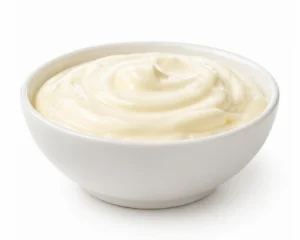
The Indian mayonnaise and salad dressings market was valued at USD 290 million in 2024 and is projected to grow at a CAGR of approximately 9 percent through 2030. Within this, eggless mayonnaise commands the largest volume share because of India’s large vegetarian consumer base. The flavored and specialty mayonnaise segment is growing faster than the standard variant as consumer taste preferences evolve.
| Metric | Data |
| Market Value (2024) | USD 290 million approximately |
| Projected CAGR (2024 to 2030) | Approximately 9 percent |
| Largest Segment by Volume | Eggless mayonnaise |
| Fastest Growing Segment | Flavored, vegan, and low-calorie variants |
| Top Distribution Channels | Modern trade, quick commerce, HoReCa, D2C |
| Key Growth Drivers | QSR expansion, home cooking, D2C brands, exports |
| Average Retail Price (250 gm jar) | Rs. 60 to Rs. 180 depending on variant and positioning |
Types of Mayonnaise Products You Can Manufacture
The mayonnaise category has expanded well beyond the classic variant. A competent contract manufacturer can develop multiple product types depending on your target consumer and positioning.
Classic Eggless Mayonnaise
The highest volume product in India. Made with vegetable oil, vinegar, soy protein or starch-based emulsifiers, and stabilizers. Shelf life of 9 to 12 months is achievable with the right formulation and packaging. This is the baseline product for most mayonnaise brands.
Egg-Based Mayonnaise
Targeted at non-vegetarian consumers and the HoReCa segment. Egg-based mayonnaise requires higher hygiene standards in production and cold chain management across the distribution network. Shelf life is typically 6 to 9 months.
Flavored and Specialty Mayonnaise
Chipotle, garlic, sriracha, peri peri, herb and cheese, tandoori, and truffle mayonnaise are all growing segments. These products allow higher price points and serve the QSR, gourmet retail, and food service markets where differentiation is valued.
Low Calorie and Light Mayonnaise
Driven by calorie-conscious consumers, light mayonnaise typically has 30 to 50 percent lower fat content than standard variants. Achieving the right texture and taste at reduced fat content requires specific emulsifier systems and food science expertise.
Vegan Mayonnaise
Beyond just being eggless, vegan mayonnaise is positioned as a plant-based product with clean-label ingredients. Aquafaba-based and cashew-based variants are emerging in the premium segment and targeting health-conscious and vegan consumers.
Industrial and HoReCa Bulk Mayonnaise
Restaurant chains, cloud kitchens, and food service operators require large volume packs of 5 kg, 10 kg, or 20 kg. This is a high-volume, lower-margin segment but provides steady, predictable order volumes for brands that have supply relationships with QSR and institutional buyers.
Trending Mayonnaise Variants and Formats in 2026
| Product Type | Growing Consumer Demand | Ideal For |
| Eggless Classic | Mass market vegetarian consumers | General retail, quick commerce |
| Chipotle and Sriracha | Young urban consumers, QSR chains | D2C, premium retail, food service |
| Garlic Aioli Style | Home cooks and gourmet buyers | Modern trade, specialty stores |
| Vegan and Aquafaba | Vegan and clean label consumers | D2C, health food stores |
| Low Calorie Light | Diet-conscious and fitness buyers | Modern trade, gym nutrition retail |
| Bulk HoReCa Packs | Cloud kitchens, QSR, catering | Food service, institutional supply |
The Mayonnaise Contract Manufacturing Process
Mayonnaise is an emulsion product, which makes it technically more complex to manufacture than many other condiments. Understanding the manufacturing process helps you set realistic expectations and ask the right questions when evaluating potential partners.
Stage 1: Formulation Brief and Feasibility (1 to 3 days)
Define the product variant, target consumer, intended use case, price point, required shelf life, and distribution channel. The more detail you provide at this stage, the more accurately the formulation team can develop the right emulsifier system, flavor profile, and texture characteristics.
Stage 2: Formulation and R&D (10 to 21 days)
Food scientists develop the emulsifier system, oil-to-water ratio, acidulant level, flavoring blend, and stabilizer package. For eggless variants, achieving the right creamy texture without eggs requires specific ingredient combinations. Multiple lab-scale batches are produced and evaluated for appearance, flavor, texture, and spreadability.
Stage 3: Stability and Shelf Life Testing (14 to 30 days)
Emulsion stability testing determines whether the product separates over time. Accelerated shelf life testing evaluates how the product performs across different temperatures and humidity levels. Microbiological testing confirms the product is safe and pathogen-free. This stage is critical for mayonnaise because pH level and water activity directly affect food safety.
Stage 4: Packaging Selection and Compliance (5 to 10 days)
Common packaging formats for mayonnaise include PET jars, glass jars, squeeze bottles, sachets, and bulk pails. Packaging selection affects shelf life, distribution requirements, consumer convenience, and price point. FSSAI-compliant labelling must cover all mandatory elements including the nutritional information panel, ingredient list, allergen declarations, and license numbers.
Stage 5: Pilot Batch Production (5 to 10 days)
A pilot batch is produced under full production conditions to identify any differences between lab-scale and production-scale performance. Emulsification equipment, homogenizer settings, and fill temperature must all be validated at this stage.
Stage 6: Full Production and Dispatch (7 to 21 days)
Full batch production takes place with inline quality checks including pH monitoring, viscosity testing, visual inspection, and fill-weight verification. Every batch should be accompanied by a certificate of analysis and batch production record.
Cost of Mayonnaise Contract Manufacturing in India (2026)
| Cost Component | Typical Range (2026) | Notes |
| Per-Kg Manufacturing Cost | Rs. 120 to Rs. 280 per kg | Eggless standard at lower end, premium flavored variants higher |
| Minimum Order Quantity | 500 kg to 2,000 kg per batch | Higher volumes bring per-unit cost down significantly |
| Formulation and R&D | Rs. 75,000 to Rs. 2,50,000 | Custom emulsifier system, flavor development, multiple sample rounds |
| Stability and Shelf Life Testing | Rs. 30,000 to Rs. 80,000 | Emulsion stability, microbiological, pH and water activity testing |
| Packaging Design and Print | Rs. 20,000 to Rs. 75,000 | Label design, jar or bottle selection, print-ready files |
| FSSAI Registration | Rs. 5,000 to Rs. 25,000 | Brand owner license |
| Total First Launch Budget | Rs. 3,00,000 to Rs. 8,00,000 | Approximate all-in for one SKU |
FSSAI and Regulatory Requirements for Mayonnaise
Mayonnaise falls under FSSAI’s standards for emulsified sauces and condiments. Compliance is non-negotiable before you can sell through any retail channel in India.
- Both your brand and your manufacturing partner require valid FSSAI licenses. Both license numbers must appear on the product label
- The FSSAI standard for mayonnaise prescribes minimum oil content and pH level requirements. Your formulation must meet these standards
- Eggless mayonnaise cannot be labeled simply as mayonnaise under FSSAI norms. It must be clearly identified as eggless or vegetarian mayonnaise
- Mandatory labeling elements include nutritional information per 100 gm and per serving, complete ingredient list in descending weight order, allergen declarations, manufacturing date, best before date, and batch number
- If your product makes claims such as low fat or no preservatives, the product must meet the FSSAI threshold for those claims
- Egg-based mayonnaise requires additional handling and hygiene standards and must be stored and transported with cold chain requirements where applicable
- For HoReCa bulk packaging, labeling requirements differ from retail and must be reviewed carefully
Cold Chain and Storage Considerations
Mayonnaise is a sensitive emulsion product. How it is stored and transported significantly affects product quality and shelf life. This is an important consideration when planning your supply chain.
Standard eggless mayonnaise produced with proper stabilizers can be stored at ambient temperature up to 25 degrees Celsius if unopened. However, exposure to temperatures above 30 degrees Celsius for extended periods can accelerate emulsion breakdown and reduce shelf life. Many manufacturers recommend cool, dry storage conditions below 25 degrees.
Egg-based mayonnaise requires refrigeration below 5 degrees Celsius throughout the supply chain. This adds logistics complexity and cost, which is why most startups entering the mayonnaise category begin with eggless formulations.
Once opened, all mayonnaise variants should be refrigerated and consumed within a defined period stated on the pack. Your packaging should clearly communicate storage instructions to consumers.
Certifications to Look for in a Mayonnaise Manufacturer
- FSSAI Central License is the baseline requirement. Verify the license number directly on the FSSAI portal
- ISO 22000 certifies the food safety management system and is required by most modern trade retailers and large institutional buyers
- HACCP certification identifies and controls critical control points in the mayonnaise production process, particularly important for a pH-sensitive emulsion product
- GMP certification ensures the facility maintains clean, contamination-free production conditions
- For export products, FDA registration is required for the USA and EU food law compliance is required for European markets
- Halal certification opens access to Muslim consumer segments in India and across Middle Eastern and Southeast Asian export markets
How to Choose the Right Mayonnaise Manufacturer
Choosing a mayonnaise manufacturer is not the same as choosing a manufacturer for dry snack products. Emulsion technology, hygiene standards, and quality control requirements are significantly higher. Here is what to evaluate.
- Ask specifically about their experience manufacturing emulsion-based products. Not every food manufacturer has the emulsification equipment and food science expertise required for good mayonnaise
- Visit the facility or ask for a detailed facility audit report. Hygiene standards in a mayonnaise plant must be exceptionally high
- Ask how they control pH levels during production. pH monitoring is critical for food safety in mayonnaise
- Check their stabilizer and emulsifier sourcing. Using inconsistent or low-quality emulsifiers is one of the most common reasons mayonnaise products fail quality checks
- Ask about minimum fill temperature and pasteurization protocols for egg-based products
- Confirm their packaging capabilities for your target format, whether jar, squeeze bottle, sachet, or bulk
- Request references from existing clients who manufacture similar products and contact them independently
- Understand their quality assurance process including the tests run on every batch before dispatch
Who Should Consider Mayonnaise Contract Manufacturing
- D2C food brands that want to offer a premium or differentiated condiment product without owning manufacturing infrastructure
- Regional food companies that see an opportunity to create a locally-positioned mayonnaise brand with regional flavor variants
- QSR chains and cloud kitchens that want a custom house mayonnaise formulation to serve as a signature product or menu ingredient
- Export-oriented businesses targeting markets in the UAE, USA, UK, and Southeast Asia where demand for Indian food products including condiments is growing
- Retail chains wanting to develop a store-brand mayonnaise product at competitive pricing to improve category margins
- Bakeries, sandwich brands, and food service operators who want to move away from mass market brands and develop proprietary condiment formulations
- Health food brands that want to launch a clean-label, low-calorie, or vegan mayonnaise to address a gap in the premium health food segment
Ready to Launch Your Mayonnaise Brand
The Indian mayonnaise market in 2026 has room for brands that get the fundamentals right. Consumers are experimenting with new flavors, health-conscious buyers are looking for better ingredient options, and the food service sector is growing fast enough to absorb significant volume from new suppliers.
The biggest barrier for most brands is finding a manufacturing partner who genuinely understands emulsion technology, meets food safety standards, and can scale with you as your business grows.
Flavor Catalystz brings deep expertise in condiment manufacturing, strong food science capability, and a track record of successful mayonnaise product launches for both consumer brands and food service clients.
Contact us today at +91 9711730492 to discuss your mayonnaise product concept, get a transparent development timeline and quote, and take the first step toward building a condiment brand that competes on quality and taste.
Frequently Asked Questions
What is the minimum order quantity for mayonnaise contract manufacturing in India?
MOQ for mayonnaise manufacturing in India typically ranges from 500 kg to 2,000 kg per batch. MOQ varies based on the variant, packaging format, and processing requirements. Some manufacturers offer lower MOQs for first-batch private label launches.
What shelf life can I expect from contract-manufactured mayonnaise?
Shelf life for standard eggless mayonnaise ranges from 9 to 12 months with proper formulation and packaging. Egg-based variants typically achieve 6 to 9 months. Shelf life depends on formulation, packaging material, and cold chain management across the supply chain.
What certifications does a mayonnaise manufacturer need in India?
A valid FSSAI Central License is mandatory. ISO 22000, HACCP, and GMP certifications are important for quality assurance and for meeting the requirements of modern trade retailers and institutional buyers.
Can I manufacture eggless mayonnaise through contract manufacturing?
Yes. Eggless mayonnaise is the highest demand variant in India and most established contract manufacturers have the formulation capability to produce it. Eggless variants use soy protein, aquafaba, or modified starch as emulsifiers and are fully suitable for vegetarian and vegan consumers.
How long does it take to launch a mayonnaise product through contract manufacturing?
From concept to first production batch, the typical timeline is 45 to 90 days. This covers formulation and sampling (10 to 21 days), stability and shelf life testing (14 to 30 days), packaging finalization (5 to 10 days), and production (7 to 21 days).