May 2026 · 3 min read
India’s energy drink segment is expanding fast, driven by fitness trends, urban consumption, and demand for functional beverages. For founders, this creates a strong entry opportunity—but execution needs to be precise.
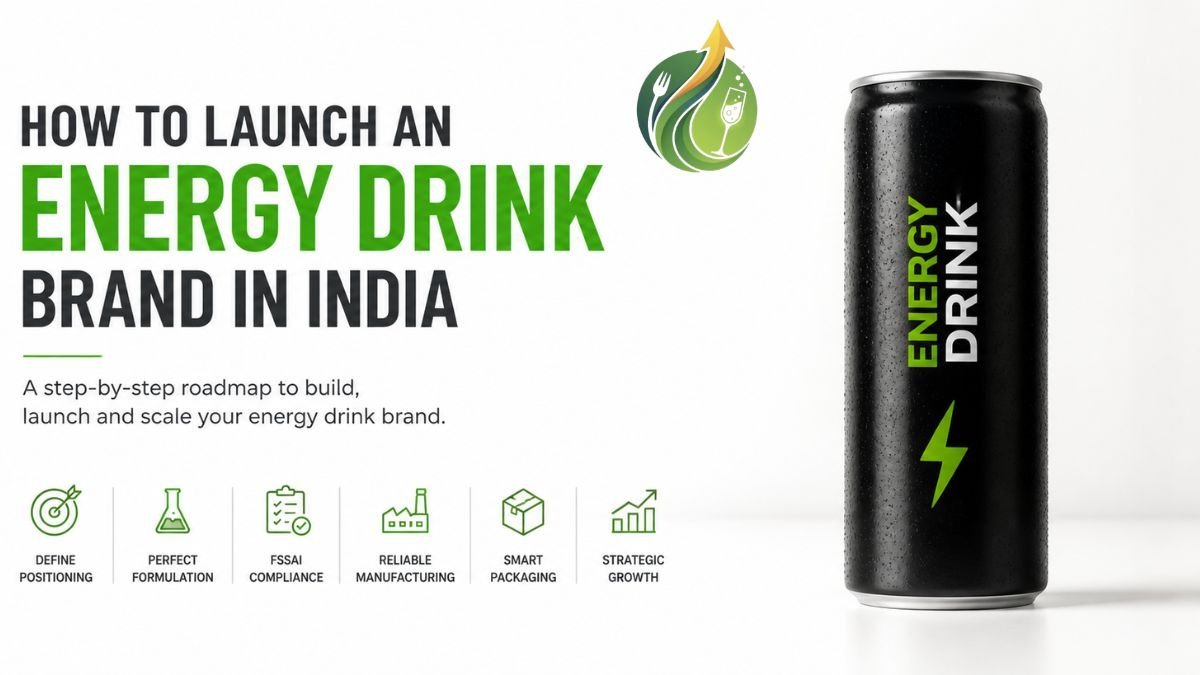
Launching successfully requires clarity across product formulation, compliance, manufacturing, and distribution. This guide breaks down each stage in detail.
1. Define Your Energy Drink Positioning
Before anything else, define:
- Target audience (gym users, gamers, professionals)
- Product type (high caffeine, herbal, sugar-free)
- Price positioning (mass vs premium)
Clear positioning helps in formulation, branding, and marketing decisions.
2.Develop the Right Formulation
Formulation is the foundation of your product.
Key considerations:
- Ingredient synergy
- Taste profile (critical for repeat purchase)
- Stability and shelf life
- Functional benefit validation
Common ingredients:
- Caffeine
- Taurine
- B Vitamins
- Sweeteners or sugar
- Herbal extracts (optional)
Weak formulation = poor retention, even if marketing is strong.
3. Conduct Trials & Stability Testing
Before scaling:
- Lab trials for taste consistency
- Shelf-life testing
- Packaging compatibility testing
Skipping this stage often leads to batch failures.
4. Get FSSAI Compliance & Approvals
To legally sell your energy drink in India:
- FSSAI license is mandatory
- Label must follow compliance norms
- Ingredients must be within approved limits
Any violation can delay launch or lead to penalties.
5. Choose a Contract Manufacturer
Most brands use beverage contract manufacturing in India to reduce cost and speed up launch.
- FSSAI + ISO certified facility
- Strong R&D support
- Flexible MOQ
- Experience in energy drinks
This decision directly impacts product quality and scalability.
6. Decide Packaging & Format
Packaging affects both cost and brand perception.
Options:
- Aluminum cans → premium energy drinks
- PET bottles → cost-effective
- Shot bottles → niche positioning
Strong packaging increases shelf visibility and conversions.
7. Understand Cost Structure
Estimated cost breakdown:
- Formulation: ₹50,000 – ₹3 lakh
- Manufacturing: ₹20 – ₹60 per unit
- Packaging: ₹10 – ₹30 per unit
- Branding & marketing: variable
Total investment:
₹5 lakh to ₹50 lakh+ depending on scale
Starting lean and scaling later is the most efficient approach.
8. Plan Your Go-To-Market Strategy
Channels to launch:
- D2C website
- Amazon / Flipkart
- Quick commerce (Blinkit, Zepto)
- Gyms & retail stores
Early traction depends more on distribution than product alone.
9. Build Brand & Marketing Engine
Focus on:
- Influencer marketing (fitness niche works best)
- Performance ads
- Sampling campaigns
- Strong packaging design
Energy drinks are highly brand-driven—visibility is key.
10. Scale Production & Distribution
Once validated:
- Increase batch size
- Expand to offline retail
- Optimize unit economics
Scaling too early without validation increases risk.
Common Mistakes to Avoid
- Poor formulation quality
- Ignoring compliance early
- Weak brand positioning
- Over-investing before validation
- Choosing the wrong manufacturer
Execution discipline separates successful brands from failed ones.
Final Thoughts
Launching an energy drink brand in India in 2026 is a strong opportunity—but success depends on structured execution.
Focus on:
- Strong formulation
- Reliable manufacturing partner
- Clear positioning
- Scalable distribution
Brands that combine product quality with smart go-to-market strategies will capture market share.
FAQs
1. How to start an energy drink business in India?
Start by defining your product concept, developing formulation, getting FSSAI approval, partnering with a manufacturer, and launching through online and offline channels.
2. What is the cost to launch an energy drink brand in India?
It typically ranges from ₹5 lakh to ₹50 lakh depending on scale, formulation, and branding.
3. Do I need FSSAI approval for energy drinks?
Yes, FSSAI approval is mandatory for manufacturing and selling energy drinks in India.
4. What is the minimum order quantity for energy drink manufacturing?
MOQ usually ranges from 1,000 to 10,000 units.
5. How long does it take to launch an energy drink brand?
It generally takes 4 to 8 weeks after formulation is finalized.
6. Can I create a custom energy drink formula?
Yes, custom formulation allows better differentiation and brand positioning.
7. Which packaging is best for energy drinks?
Aluminum cans are ideal for premium positioning, while PET bottles are more cost-effective.
8. Is contract manufacturing a good option for startups?
Yes, it reduces investment, speeds up launch, and minimizes operational complexity.