May 2026 · 19 min read
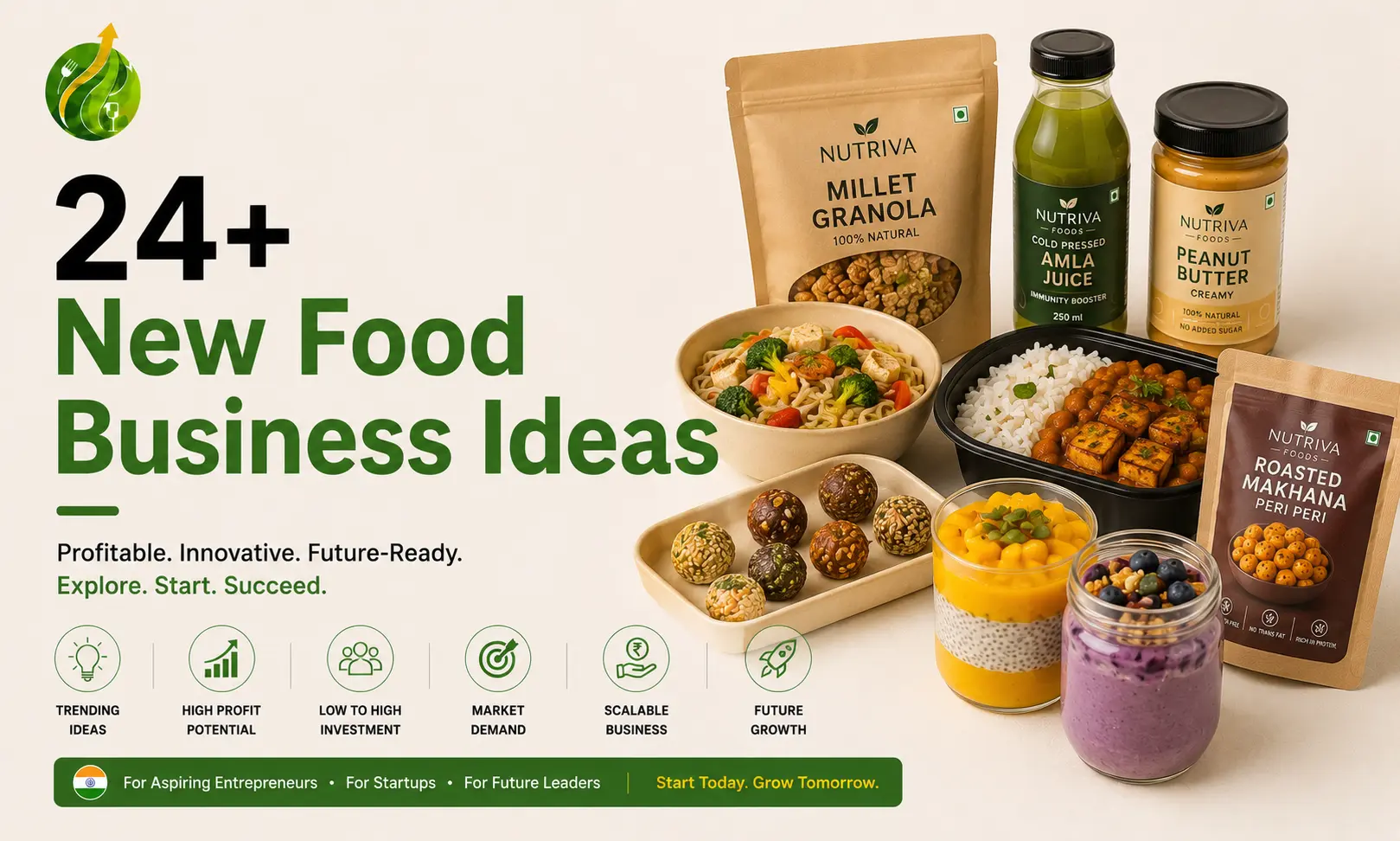
India’s food market is projected to reach USD 1.2 trillion by 2026, driven by urbanisation, rising incomes, digital retail penetration, and one of the world’s youngest consumer populations. Sixty-five percent of India’s population is under 35, and this cohort is reshaping food spending toward convenience, health, experience, and identity-driven eating.
The ideas in this guide to start a food business are not theoretical. Each is grounded in documented consumer demand, observable market signals, or demonstrated success by existing Indian food businesses in 2025 and 2026. Investment estimates, margin ranges, and channel guidance are based on actual market data, not optimistic projections.
How to Choose the Right Food Business Idea
Before reviewing the ideas, run each one through four questions relevant to your own situation. Do you have relevant domain or food product development experience cooking, supply chain, retail, food technology that gives you an edge in this category? Does the investment requirement match your available capital? Is the target consumer someone you understand personally or professionally? And does the business model generate repeat purchases, or is it dependent on one-time buyers?
The most durable food businesses in India are not those with the most innovative product. They are the ones with the most defensible repeat purchase pattern, the most efficient cost structure, and the clearest distribution advantage. Keep those three factors in mind as you read through the ideas below.
| Food Business Idea | Investment Range | Gross Margin | Time to First Revenue |
| 1. Hyperlocal Packaged Snack Brand | Rs 2–8 lakh | 45–60% | 60–90 days |
| 2. Cloud Kitchen (Delivery Only) | Rs 5–15 lakh | 30–45% | 30–60 days |
| 3. Healthy Breakfast Subscription | Rs 3–10 lakh | 40–55% | 45–75 days |
| 4. Retort-Packaged Curry Brand (D2C) | Rs 8–25 lakh | 35–50% | 90–150 days |
| 5. Plant-Based Protein Snacks | Rs 5–20 lakh | 40–55% | 90–120 days |
| 6. Specialty Spice and Masala Brand | Rs 2–10 lakh | 50–65% | 45–90 days |
| 7. Fermented Food Brand (Pickles, Kanji) | Rs 1–6 lakh | 55–70% | 30–60 days |
| 8. Functional Beverage Brand | Rs 10–30 lakh | 35–50% | 90–150 days |
| 9. Regional Sweet and Mithai Brand | Rs 3–12 lakh | 40–55% | 45–90 days |
| 10. Meal Kit Service | Rs 5–15 lakh | 35–50% | 45–75 days |
| 11. Keto and Low-Carb Food Brand | Rs 4–15 lakh | 40–58% | 60–100 days |
| 12. Baby and Toddler Food Brand | Rs 8–25 lakh | 45–60% | 90–150 days |
| 13. Premium Ghee and Dairy Brand | Rs 5–20 lakh | 40–55% | 60–90 days |
| 14. Millet-Based Product Line | Rs 3–12 lakh | 45–60% | 60–90 days |
| 15. Gut Health and Probiotic Foods | Rs 6–20 lakh | 42–58% | 90–130 days |
| 16. Artisan Chocolate Brand | Rs 4–15 lakh | 50–65% | 45–90 days |
| 17. Cloud Kitchen for a Niche Cuisine | Rs 5–18 lakh | 30–45% | 30–60 days |
| 18. Corporate Cafeteria Catering | Rs 3–10 lakh | 25–40% | 30–60 days |
| 19. Freeze-Dried Fruit and Vegetable Snacks | Rs 15–50 lakh | 45–60% | 120–180 days |
| 20. Indian Condiment and Sauce Brand | Rs 3–12 lakh | 50–65% | 60–90 days |
| 21. Sports and Gym Nutrition Snacks | Rs 8–25 lakh | 40–55% | 90–130 days |
| 22. Ready-to-Drink (RTD) Herbal Beverages | Rs 10–30 lakh | 38–52% | 90–150 days |
| 23. Pet Food (Healthy Treats and Meals) | Rs 5–20 lakh | 45–60% | 60–100 days |
| 24. Regional Street Food in Packaged Format | Rs 3–12 lakh | 45–60% | 60–90 days |
The Trending Food Business Ideas in Detail
Hyperlocal Packaged Snack Brand
India’s snack market is enormous and still fragmented at the regional level. The opportunity in 2026 is not to compete with Haldiram’s or Lay’s on their terms it is to own a specific regional identity at a premium. Bhujiawala in Bikaner, Murukku in Tamil Nadu, Chakli in Maharashtra each of these is a beloved product category with no dominant branded player at the Rs 150 to Rs 400 price point. A founder with deep access to authentic regional recipes, quality sourcing from local farms, and distinctive packaging can build a Rs 1 to Rs 3 crore D2C business within 18 months with relatively low capital.
Startup Investment: Rs 2–8 lakh | Gross Margin Potential: 45–60% | Primary Channel: D2C website, Instagram, quick-commerce
Cloud Kitchen (Delivery-Only Restaurant)
Cloud kitchens eliminate the single largest cost in the restaurant industry: real estate for dine-in. Operating from a commercial kitchen rented on a per-hour or monthly basis in co-working kitchen hubs in major Indian cities a cloud kitchen brand can run multiple virtual restaurant concepts from a single prep area. The critical success factors are a unique cuisine positioning (hyper-specific cuisines like Coorg food, Awadhi khana, or Kerala Christian non-veg outperform generic ‘multi-cuisine’ concepts on Zomato and Swiggy), fast delivery logistics, and relentless focus on maintaining the 4.2+ rating that drives platform algorithm placement.
Startup Investment: Rs 5–15 lakh | Gross Margin Potential: 30–45% | Primary Channel: Zomato, Swiggy, direct WhatsApp ordering
Healthy Breakfast Subscription
Urban India’s breakfast occasion is deeply underserved by existing brands. Working professionals between 25 and 40 particularly in metros are eating a bowl of cereal, skipping breakfast entirely, or spending Rs 80 to Rs 120 on vada pav. A weekly subscription of nutritionally complete, preparation-free breakfasts delivered to the door overnight oats kits, millet porridge sachets, high-protein idli mixes addresses a real daily frustration. Subscription businesses in food carry higher customer acquisition costs but also dramatically lower cost-per-repeat-purchase, making the unit economics attractive from month three onward.
Startup Investment: Rs 3–10 lakh | Gross Margin Potential: 40–55% | Primary Channel: D2C subscription, Instagram, quick-commerce
Retort-Packaged Indian Curry Brand (D2C)
The core insight here is simple: every urban Indian who grew up eating home-cooked meals has a deep emotional connection to specific regional flavours their grandmother’s dal, their mother’s sambhar. No packaged brand currently replicates those flavours with the authenticity and nutrition transparency that this consumer expects. A D2C retort curry brand that sources from regional culinary traditions, uses no artificial preservatives through retort processing, and communicates the food story behind each product can command Rs 150 to Rs 300 per serve and build a fiercely loyal subscriber base. The 12-to-24-month shelf life of retort products also enables export to the Indian diaspora in the US, UK, and UAE.
Startup Investment: Rs 8–25 lakh | Gross Margin Potential: 35–50% | Primary Channel: D2C, Amazon India, quick-commerce, NRI export
Plant-Based Protein Snacks
India’s plant-based food market, currently valued at Rs 500 crore, is projected to reach Rs 5,000 crore by 2028. The category is growing fastest not among ideological vegans a small segment but among flexitarians and fitness-focused urban consumers who are adding plant protein to their existing diet rather than replacing meat. High-protein snacks using soy, pea protein, chickpea, or legume bases that deliver 15 to 20 grams of protein per serving, taste genuinely good, and are priced within Rs 60 to Rs 150 per pack are the product format with the most consumer pull in this segment.
Startup Investment: Rs 5–20 lakh | Gross Margin Potential: 40–55% | Primary Channel: Gyms, quick-commerce, D2C, Amazon
Specialty Spice and Masala Brand
India is the world’s largest producer and exporter of spices, yet the domestic branded spice market remains dominated by commodity brands competing on price. The gap is in specialty and artisan masala blends authentic regional blends like Kolhapuri masala, Chettinad powder, Kashmiri mirch blends, or organic single-origin turmeric that command a 3x to 5x price premium over commodity spices. Sourcing directly from spice-growing regions in Kerala, Rajasthan, and Andhra Pradesh, and telling that sourcing story clearly on packaging, is the entire differentiation. The spice segment has among the highest gross margins of any packaged food category and the lowest barrier to FSSAI compliance.
Startup Investment: Rs 2–10 lakh | Gross Margin Potential: 50–65% | Primary Channel: D2C, Amazon, gourmet retail, NRI export
Fermented Food Brand
Gut health awareness among urban Indian consumers is driving a revival of traditional fermented foods and creating demand for products that never had a branded market: kanji, ambali, rice ferments, fermented tamarind, traditional pickles made without chemical preservatives. Fermented products have inherently long shelf life, require minimal processing investment, and carry a story of tradition and health that resonates strongly with the same consumer who is buying probiotic supplements. Early entrants in this space are seeing strong repeat purchase from health-conscious consumers in the 28-to-45 age group.
Startup Investment: Rs 1–6 lakh | Gross Margin Potential: 55–70% | Primary Channel: D2C, farmer’s markets, natural food stores
Functional Beverage Brand
India’s beverage sector is going through its most significant innovation cycle in two decades. Kombucha, electrolyte water, ashwagandha shots, moringa drinks, and probiotic-fortified lassi are all growing rapidly in urban markets. The segment that shows the most commercial momentum in 2026 is functional beverages positioned at the intersection of traditional Indian ingredients and sports/wellness use cases coconut water with electrolytes, turmeric shots, adaptogen-infused water. RTD (Ready-to-Drink) formats that can be distributed through quick-commerce and modern trade without cold chain dependency have a structural distribution advantage.
Startup Investment: Rs 10–30 lakh | Gross Margin Potential: 35–50% | Primary Channel: Modern trade, quick-commerce, gyms, D2C
Regional Indian Mithai Brand (Packaged)
Traditional Indian sweets barfi, laddoo, halwa, modak have been almost entirely neglected by modern food brands. The segment is dominated by unorganised local sweet shops with no food safety certification, no consistent shelf life, and no e-commerce presence. A founder who understands traditional mithai making and can build a brand around authentic regional sweets with proper FSSAI compliance, shelf-stable packaging, and clear ingredient transparency is addressing a market with extraordinary cultural resonance and almost no branded competition in the Rs 200 to Rs 600 per box price range.
Startup Investment: Rs 3–12 lakh | Gross Margin Potential: 40–55% | Primary Channel: D2C, gifting platforms, quick-commerce
Meal Kit Service
Meal kits pre-portion all ingredients for a specific recipe and deliver them with cooking instructions. The consumer cooks the meal in 20 to 30 minutes and gets a restaurant-quality outcome without the decision fatigue or wastage of grocery shopping. The segment works best for consumers who enjoy cooking but lack the time to plan and shop. Positioning around regional Indian cuisines a Punjabi thali kit on Monday, Hyderabadi biryani ingredients on Friday rather than global recipes differentiates from international players and builds cultural resonance. Weekly subscription is the preferred model, as it enables production planning and reduces unit logistics cost.
Startup Investment: Rs 5–15 lakh | Gross Margin Potential: 35–50% | Primary Channel: D2C subscription, Instagram
Keto and Low-Carb Food Brand
The keto and low-carb category in India is large enough to be commercially significant but insufficiently served by existing brands. Keto-compliant products in categories like biscuits, bread, desserts, and snacks made with almond flour, coconut flour, and natural sweeteners command 2x to 4x the price of conventional alternatives and attract a highly engaged consumer who actively researches and shares products online. The challenge in this category is flavour development, as low-carb baked goods must overcome significant texture and palatability barriers to achieve genuine consumer satisfaction.
Startup Investment: Rs 4–15 lakh | Gross Margin Potential: 40–58% | Primary Channel: D2C, Instagram, Amazon, gyms
Baby and Toddler Food Brand
Parents of children aged 6 months to 3 years are among the most anxious and brand-loyal buyers for baby food brands in India. They will pay a significant premium for products they trust, and they stay loyal if the product works. The category is growing rapidly as urban parents move away from homemade complementary foods due to time constraints and toward products that are nutritionally complete, free of artificial additives, and made from whole food ingredients. Millet porridges, multigrain khichdi mixes, and dried fruit powder are all growing sub-categories with limited branded competition.
Startup Investment: Rs 8–25 lakh | Gross Margin Potential: 45–60% | Primary Channel: D2C, Amazon, parenting communities
Premium Ghee and Traditional Dairy Brand
A2 ghee from specific indigenous cow breeds (Gir, Sahiwal, Red Sindhi), wood-fired ghee using traditional bilona methods, and regional dairy specialties like Malai paneer or Srikhand have created a premium tier in India’s dairy market that conventional dairy brands are not serving. The consumer for this category typically 30 to 55 years, health-conscious, with monthly household income above Rs 1 lakh is willing to pay Rs 800 to Rs 2,500 per kilogram for ghee that comes with traceable sourcing and an authentic production story. Cold chain for fresh dairy and refrigerated delivery are operational requirements.
Startup Investment: Rs 5–20 lakh | Gross Margin Potential: 40–55% | Primary Channel: D2C, farmer’s markets, gourmet retail
Millet-Based Product Line
India’s government declared 2023 the Year of Millets, and the subsequent consumer awareness campaign created lasting demand for millet-based products. Jowar, bajra, ragi, foxtail millet, and sorghum have moved from being seen as ‘poor man’s grain’ to a premium superfood in urban consumer perception. Products that integrate millets into familiar formats millet pasta, ragi biscuits, jowar bread, bajra energy bars outperform products that require consumers to change their cooking habits entirely. The millet category has strong government institutional buyer demand (ICDS, school mid-day meal programs) as well as urban D2C potential.
Startup Investment: Rs 3–12 lakh | Gross Margin Potential: 45–60% | Primary Channel: D2C, modern trade, institutional buyers
Gut Health and Probiotic Food Brand
Gut health has become one of the highest-engagement nutrition topics among Indian urban consumers. Brands offering probiotic dahi, kefir, kombucha, lacto-fermented vegetables, and prebiotic-enriched snacks are finding a consumer willing to pay significantly above commodity prices for products positioned around digestive wellness. Clinical evidence linking gut microbiome health to immunity, mental health, and metabolic function is increasingly understood by the target consumer, creating a science-backed positioning opportunity for brands that invest in content marketing around this evidence base.
Startup Investment: Rs 6–20 lakh | Gross Margin Potential: 42–58% | Primary Channel: D2C, pharmacies, modern trade
Artisan Chocolate and Cacao Brand
India grows significant quantities of cacao in Kerala and Tamil Nadu, yet the premium chocolate category is dominated by imported Swiss and Belgian brands. Domestic craft chocolate makers who source single-origin Indian cacao, process it using traditional methods, and package the product at a premium price point are building brands with genuine export potential alongside the domestic market. The category has among the highest emotional engagement of any food product chocolate is consumed for pleasure, gifting, and celebration making content marketing and influencer seeding particularly effective.
Startup Investment: Rs 4–15 lakh | Gross Margin Potential: 50–65% | Primary Channel: D2C, gourmet retail, corporate gifting
Cloud Kitchen for a Niche Regional Cuisine
The most successful cloud kitchen brands in India in 2025 are those with a specific, authentic culinary identity rather than broad cuisine coverage. Coorg pork curry, Goan xacuti, Andhra fish biryani, Rajasthani laal maas cuisines that urban migrants genuinely miss and cannot reliably find in their current city. A founder with personal roots in a specific culinary tradition and the ability to maintain authentic cooking quality at delivery scale has a cultural moat that no general cloud kitchen operator can replicate through menu engineering.
Startup Investment: Rs 5–18 lakh | Gross Margin Potential: 30–45% | Primary Channel: Zomato, Swiggy, community delivery groups
Corporate Catering and Cafeteria Management
Large corporate offices, IT parks, and manufacturing facilities require regular catering services that maintain consistent quality, food safety certification, and variety. The corporate catering segment is less glamorous than consumer brands but generates high-volume, predictable revenue with relatively low customer acquisition cost. FSSAI compliance, HACCP certification, and the ability to handle bulk quantities consistently are the three requirements that eliminate most competitors. A single corporate cafeteria contract at a 500-person office generates Rs 8 to Rs 15 lakh in monthly revenue.
Startup Investment: Rs 3–10 lakh | Gross Margin Potential: 25–40% | Primary Channel: Direct B2B sales, facility management companies
Freeze-Dried Fruit and Vegetable Snacks
Freeze-drying removes moisture from food while preserving structure, nutrition, and flavour producing a shelf-stable product that reconstitutes or can be eaten as a crunchy snack without rehydration. The technology produces premium products: freeze-dried mango slices, strawberry crisps, sweet corn snacks. The capital barrier is higher than most categories (freeze-drying equipment starts at Rs 15 to Rs 30 lakh), but so is the competitive barrier. Indian mango, pineapple, and banana have global export potential in freeze-dried form, particularly to the Middle East and Southeast Asia.
Startup Investment: Rs 15–50 lakh | Gross Margin Potential: 45–60% | Primary Channel: D2C, modern trade, export, airlines
Indian Condiment and Sauce Brand
Indian condiments chutneys, pickles, hot sauces, curry pastes are consumed at virtually every meal. Yet the branded condiment market at the Rs 150 to Rs 500 price point is remarkably thin, dominated by MTR, Veeba, and a handful of others. Regional condiments in branded, shelf-stable packaging represent one of the easiest paths to a viable food brand in India: relatively simple manufacturing, high margins, long shelf life, and a consumer who already buys this product category regularly. Small-batch, artisan positioning in condiments commands 3x to 5x the price of commodity alternatives.
Startup Investment: Rs 3–12 lakh | Gross Margin Potential: 50–65% | Primary Channel: D2C, quick-commerce, gourmet retail, export
Sports and Gym Nutrition Snacks
India’s fitness economy is growing rapidly. Gym memberships, fitness app subscriptions, and supplement spending are all rising across urban centres, including Tier 2 cities. The protein snack segment bars, cookies, puffs, and clusters delivering 15+ grams of protein per pack is generating strong D2C revenue for Indian brands like RiteBite, HYP, and Yoga Bar. The gap that remains is in affordable, genuinely tasty protein snacks at the Rs 60 to Rs 80 price point, which is where gym-going consumers in Tier 2 cities are willing to spend daily.
Startup Investment: Rs 8–25 lakh | Gross Margin Potential: 40–55% | Primary Channel: Gyms, D2C, Amazon, quick-commerce
Ready-to-Drink Herbal and Ayurvedic Beverages
Consumer interest in Ayurvedic ingredients ashwagandha, brahmi, shatavari, triphala, giloy has accelerated dramatically since 2020. However, the dominant formats (powders, tablets, kadha concentrates) require preparation and have limited palatability. RTD formats that deliver Ayurvedic benefits in a convenient, good-tasting beverage are converting this interest into a daily consumption habit. Brands like Kapiva and Jiva Ayurveda have demonstrated the category commercially. The opportunity for new entrants is in specific use cases sleep support, cognitive focus, menstrual wellness, digestive health rather than broad ‘immunity’ positioning.
Startup Investment: Rs 10–30 lakh | Gross Margin Potential: 38–52% | Primary Channel: D2C, pharmacies, modern trade, quick-commerce
Premium Pet Food (Dogs and Cats)
India’s pet food market is experiencing rapid growth as urban nuclear families increasingly treat pets as family members and invest in their nutrition accordingly. Homemade raw food, freeze-dried treats, grain-free kibble, and functional supplements (joint health, coat health, digestive health) are all growing segments with limited domestic branded options at the premium end. The regulatory framework for pet food in India is less complex than human food, making the compliance pathway faster. The target consumer urban, 25-to-45, pet parent, monthly household income above Rs 80,000 is an engaged online shopper who actively researches and shares product recommendations.
Startup Investment: Rs 5–20 lakh | Gross Margin Potential: 45–60% | Primary Channel: D2C, Amazon, pet specialty stores, Instagram
Packaged Regional Street Food
Momos in Nagaland, Vada pav in Maharashtra, Kachori in Rajasthan, Puchka in West Bengal India’s street food culture is one of the richest and most beloved in the world, and almost none of it exists in shelf-stable packaged format. The challenge is replicating the freshness and customisation of street food in a packaged product that works without the street vendor’s assembly. Brands that solve this typically through a combination of a shelf-stable base with separate condiment sachets, designed to be assembled by the consumer in under 5 minutes are addressing a genuine nostalgia-driven craving that no existing packaged food brand is meeting.
Startup Investment: Rs 3–12 lakh | Gross Margin Potential: 45–60% | Primary Channel: D2C, quick-commerce, modern trade
How to Evaluate Which Idea Is Right for You
| Evaluation Factor | Questions to Ask Yourself | Why It Matters |
| Your Unfair Advantage | Do you have culinary skill, supply chain access, or industry knowledge specific to this category? | Domain expertise reduces learning curve and sourcing cost significantly |
| Consumer Access | Can you put samples in front of 100 target consumers within 30 days without significant cost? | Validation speed determines how quickly you can iterate or pivot |
| Capital Availability | Does your available startup capital comfortably cover 6 months of operation plus 20% contingency? | Undercapitalization is the most common cause of food business failure |
| Repeat Purchase Potential | Will the same consumer want this product weekly or monthly, or is it an occasional purchase? | Repeat purchase drives sustainable unit economics and brand value |
| Regulatory Timeline | Does this product category require complex approvals (novel ingredients, nutraceutical claims) that extend time-to-market? | Complex regulatory categories can add 6-12 months to launch timelines |
The Idea Is the Smallest Part
The food businesses that succeed in India in 2026 are not the ones with the most novel idea. The category that performs best is the one the founder understands most deeply, operates most efficiently, and stays committed to long enough to compound the advantages that come with consumer trust, supply chain relationships, and brand recognition.
Starting small, validating quickly, and building operational discipline from day one rather than optimising for the perfect product before selling anything is the consistent pattern across India’s most successful food entrepreneur stories of the last five years. The market opportunity across all 24 categories above is real and documented. The question is which one you are positioned to execute with conviction.
Frequently Asked Questions
What are the best food business ideas in India for 2026?
Some of the best food business ideas in India for 2026 include Ready-to-Eat meals, healthy snacks, millet-based foods, protein products, cloud kitchens, private label brands, frozen foods, and functional beverages due to rising consumer demand and repeat purchase potential.
Which food business is most profitable in India?
High-margin food businesses in India often include packaged snacks, spices, sauces, peanut butter, bakery products, frozen foods, and private label food brands because they can scale through ecommerce and modern retail channels.
How much money do I need to start a food business in India?
A small food business in India can start with as little as Rs 50,000 to Rs 2 lakh for home-based or online models, while larger packaged food brands may require Rs 5 lakh to Rs 25 lakh depending on manufacturing and branding costs.
Can I start a food business from home in India?
Yes, many entrepreneurs start food businesses from home by selling snacks, baked products, pickles, sauces, meal boxes, and homemade packaged foods through Instagram, WhatsApp, ecommerce marketplaces, and local delivery apps.
Which food products are in highest demand in India?
High-demand food products in India include healthy snacks, Ready-to-Eat foods, protein-rich products, millet foods, instant mixes, frozen snacks, sugar-free foods, and convenience-based packaged products.