Jun 2026 · 9 min read
India’s functional beverage market has shifted from a niche health-store category to a mainstream commercial reality. Walk into any DMart, browse Blinkit, or scroll through Amazon Grocery — functional drinks are no longer the exception, they are the expectation for a growing segment of urban Indian consumers.
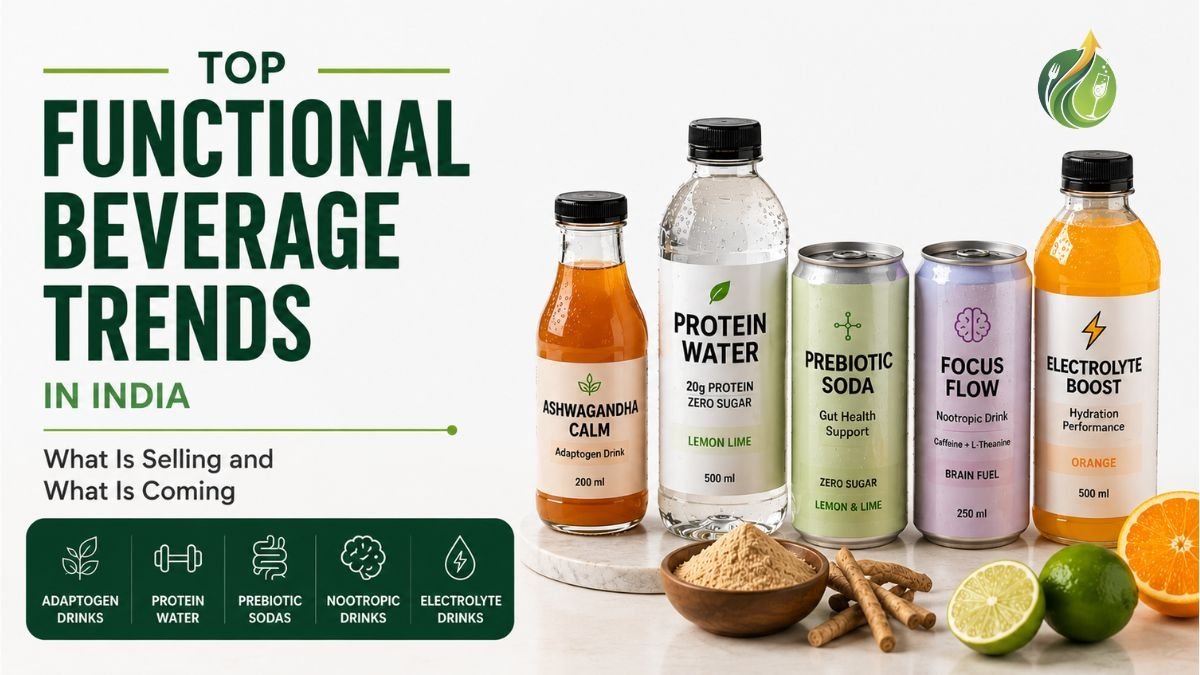
But “functional beverage” covers an enormous range of products. Immunity shots. Protein water. Adaptogen lattes. Prebiotic sodas. Nootropic focus drinks. Electrolyte sachets. The category is diverse, fast-moving, and increasingly competitive.
This guide cuts through the noise to tell you what is actually selling in India’s functional beverage market right now — and what the next wave of growth will be shaped by through 2026 and beyond.
Struggling to Turn First-Time Buyers Into Repeat Customers?
A beverage brand grows when customers reorder. If you’re facing low repeat purchases, weak customer retention, or poor subscription performance, our team can help improve product experience, positioning, packaging, and long-term consumer loyalty.
The State of India’s Functional Beverage Market in 2026
India’s functional beverage market is estimated to be growing at 15–20% CAGR — significantly faster than the overall packaged beverage category. Several converging forces are driving this:
Post-pandemic health consciousness that has not reversed. Indian consumers who started paying attention to nutrition, immunity, and preventive health during 2020–2021 have maintained those habits. Functional beverages sit directly in this shift.
Urban millennial and Gen Z spending patterns. The 22–38 age bracket in Indian metros spends proportionally more on wellness, fitness, and health products than any previous generation. Functional drinks are a natural fit.
Quick commerce enabling impulse health purchases. Blinkit, Zepto, and Swiggy Instamart have made it possible to buy a protein water or immunity shot within 10 minutes of wanting one. This has dramatically expanded trial occasions for functional beverages.
D2C enabling niche brand building. Brands that could not survive on retail shelf space alone can now build profitable businesses through D2C, Instagram, and quick commerce — lowering the barrier to functional beverage brand creation.
Trend 1: Adaptogens Entering the Mainstream
Adaptogenic ingredients — ashwagandha, tulsi, shatavari, brahmi, lion’s mane — have moved from Ayurvedic pharmacy to mainstream functional beverage. This is one of the most significant category shifts in Indian functional drinks in 2026.
What is selling: Ashwagandha-based stress and sleep beverages. Brahmi-based focus drinks. Multi-adaptogen “calm” beverages positioned for urban professional consumers dealing with work stress.
Why it is working: India’s cultural familiarity with Ayurvedic herbs removes the education barrier that these ingredients face in Western markets. An Indian consumer does not need to be told what ashwagandha is — they grew up with it. The challenge is form factor: making an adaptogen beverage that tastes good enough to buy again.
The commercial opportunity: Most adaptogen drinks currently available in India are either imported (expensive) or poorly formulated (unpalatable). A well-formulated, good-tasting ashwagandha or brahmi-based drink at an accessible price point has significant headroom.
For formulation guidance: Ashwagandha drink formulation and focus cognitive drink formulation.
Trend 2: Protein Water — The Fastest-Growing Niche Format
Clear protein drinks — transparent, lightly flavoured beverages containing 15–20g of whey protein isolate — have emerged as one of the fastest-growing formats in India’s functional beverage space.
What is selling: Single-serve 500ml WPI-based protein waters in citrus and tropical flavour profiles. Primarily through gyms, quick commerce, and fitness-adjacent D2C.
Why it is working: India’s fitness consumer is growing rapidly and is increasingly looking for protein beyond the traditional shake. Protein water solves the “I want protein but not a heavy shake” problem — lighter, more refreshing, easier to drink throughout the day.
The commercial opportunity: No Indian brand dominates this category yet. The technical barrier (keeping WPI clear at low pH) is real but solvable. First-mover advantage is still available.
See our complete protein water formulation guide.
Trend 3: Prebiotic Soda — The Zero-Sugar Alternative
Prebiotic sodas — carbonated beverages with added prebiotic fibre (inulin, FOS) and natural flavours, positioned as gut health-supporting alternatives to regular cola — have become one of the most significant functional beverage trends globally and are beginning to gain traction in India.
What is selling internationally (coming to India): Brands like Poppi and Olipop in the US have built significant businesses on this positioning. Indian equivalents are emerging.
Why it is working: It solves multiple consumer needs simultaneously — the fizzy, refreshing carbonated drink experience, with no sugar, and a gut health credential. Positions perfectly against regular cola and even against plain sparkling water.
The commercial opportunity: The category is very early in India — which means significant first-mover advantage for a brand that enters with a well-formulated, genuinely good-tasting prebiotic soda.
Related: Sparkling water brand formulation and FSSAI probiotic drink compliance.
Trend 4: Nootropic and Focus Drinks
Cognitive performance beverages — drinks containing L-theanine, Brahmi, Lion’s Mane, natural caffeine, and B vitamins — are growing as India’s competitive exam culture, urban professional productivity demands, and gaming community converge on “mental performance.”
What is selling: L-theanine + natural caffeine combinations in canned format. Brahmi-based Indian nootropic drinks with Ayurvedic heritage positioning.
Why it is working: The same consumer who drinks energy drinks for stimulation is increasingly looking for something that delivers focus without the crash. The “calm energy” positioning of L-theanine + caffeine is a genuine upgrade over standard energy drinks.
The commercial opportunity: The energy drink market in India is large and growing. A premium, clean-label cognitive drink that replaces the second energy drink of the day is a compelling proposition. See our focus cognitive drink formulation guide.
Trend 5: Traditional Indian Beverages in RTD Formats
The commercial revival of traditional Indian drinks — shikanji, jaljeera, aam panna, thandai, sattu, rose sharbat — as branded, shelf-stable RTD products is one of the most authentically Indian functional beverage trends of 2026.
What is selling: Premium packaged shikanji with black salt and real lime. Branded thandai in Tetra Pak format. Commercial sattu drink premixes positioned as protein-rich Indian energy drinks.
Why it is working: These are not new beverages — they are ancient beverages finally getting the branding and distribution they deserve. Consumer familiarity is 100%. The health credentials are real and documented. The emotional connection is deep.
The commercial opportunity: Paper Boat validated that Indian heritage flavours can build real businesses. But Paper Boat plays in the mass market. The premium, artisanal, genuinely functional traditional Indian drink segment remains largely unclaimed.
Related reading: Traditional drinks of India, sattu drink formulation, thandai commercial RTD.
Trend 6: Beauty and Skin Health Beverages
The “beauty from within” category — collagen drinks, hyaluronic acid water, biotin-infused beverages — is growing as Indian consumers extend their skincare habits to ingestible products.
What is selling: Marine collagen drinks in premium glass bottle format. Beauty water with Vitamin C and biotin targeting skin, hair, and nail health.
Why it is working: India’s skincare market is enormous and growing. The extension from topical skincare to ingestible beauty is a natural consumer journey. The Indian consumer who spends ₹2,000 on a serum is willing to spend ₹200–300 per day on a collagen drink.
Related: Collagen drink formulation and beauty water formulation.
Trend 7: Electrolyte and Hydration Formats Evolving
The electrolyte category is moving beyond ORS-style clinical formats into genuinely appealing hydration products — electrolyte powder sachets with Indian flavours (nimbu-jeera, aam, coconut), functional sparkling waters with electrolytes, and coconut water brands with enhanced mineral profiles.
What is selling: Flavoured electrolyte sachets in convenient travel formats. Coconut water with added electrolytes and clean label credentials.
Why it is working: India’s heat and humidity create year-round hydration need that goes well beyond the gym. The ORS market is huge but the product is unpalatable. A good-tasting electrolyte product has a massive addressable market.
Related: Electrolyte powder sachet brand and natural electrolyte drink recipe.
What Is Not Working in 2026
Understanding what is underperforming is as valuable as knowing what is growing:
Highly medicinal-tasting functional drinks — products that taste like medicine regardless of their functional credentials have poor repeat purchase rates. Flavour is non-negotiable.
Overclaimed products — “boosts immunity, reduces stress, improves sleep, burns fat” — consumers are increasingly sceptical of multi-claim products with no clear mechanism. Single, credible, specific benefit positioning outperforms.
Premium pricing without genuine differentiation — ₹250 for a beverage that is essentially flavoured water with trace amounts of a functional ingredient is not converting in India’s price-sensitive market.
Ignored FSSAI compliance — brands making non-compliant health claims are being flagged and delisted from platforms. See our FSSAI health claims guide before writing any label copy.
Ready to Build a Beverage Brand Customers Reorder?
From beverage formulation and flavour optimisation to packaging, positioning, subscription strategy, and D2C growth, Flavor Catalystz helps founders create products consumers genuinely come back for. Build stronger retention, higher lifetime value, and sustainable brand growth.
Ready to Build a Functional Beverage Brand in 2026?
The functional beverage market in India rewards brands that combine genuine formulation quality with smart commercial positioning. Getting the product right — meaningful ingredient doses, real flavour, FSSAI compliance — is the foundation that everything else is built on.
At Flavor Catalystz, we formulate functional beverages for commercial production.
FAQs: Functional Beverage Trends India 2026
What is the fastest-growing functional beverage category in India in 2026?
Adaptogen-based drinks (ashwagandha, brahmi), protein water, and prebiotic sodas are among the fastest-growing. Traditional Indian drink revivals (shikanji, sattu, thandai) are also showing strong commercial momentum.
What functional beverages are most popular in India?
Immunity shots (Vitamin C, ginger, turmeric), protein drinks, energy drinks with cleaner ingredient profiles, electrolyte products, and traditional Indian drinks in branded RTD formats are currently the most commercially active categories.
Is the functional beverage market growing in India?
Yes — at approximately 15–20% CAGR, significantly faster than the overall packaged beverage category. Driven by health awareness, urban millennial spending, quick commerce, and D2C brand building.
What are the biggest challenges for functional beverage brands in India?
FSSAI claim compliance (particularly around immunity and health claims), achieving palatability with functional ingredients, cold chain requirements for certain formats, and the high cost of customer acquisition in competitive digital channels.
What makes a successful functional beverage brand in India in 2026?
A single, credible, specific benefit claim. Genuine flavour quality that drives repeat purchase. FSSAI-compliant labelling. A format and price point matched to the target consumer. And a distribution channel strategy that reaches the right consumer at the right moment.