May 2026 · 10 min read
Starting a protein bar business in India in 2026 is one of the most attractive opportunities in the packaged food space. The Indian protein bar market is growing at strong double digit rates, the protein deficit among urban adults is well documented, and quick commerce platforms like Blinkit and Zepto are turning protein bars into a daily impulse buy. For founders with a clear plan, this category offers gross margins between thirty and fifty percent and a path to crore plus annual revenue within two to three years.
This guide walks through the full journey of how to start a protein bar business in India, covering market size, food product development, FSSAI licenses, manufacturing options, machinery cost, raw material sourcing, pricing, distribution, and the mistakes that sink first time founders.
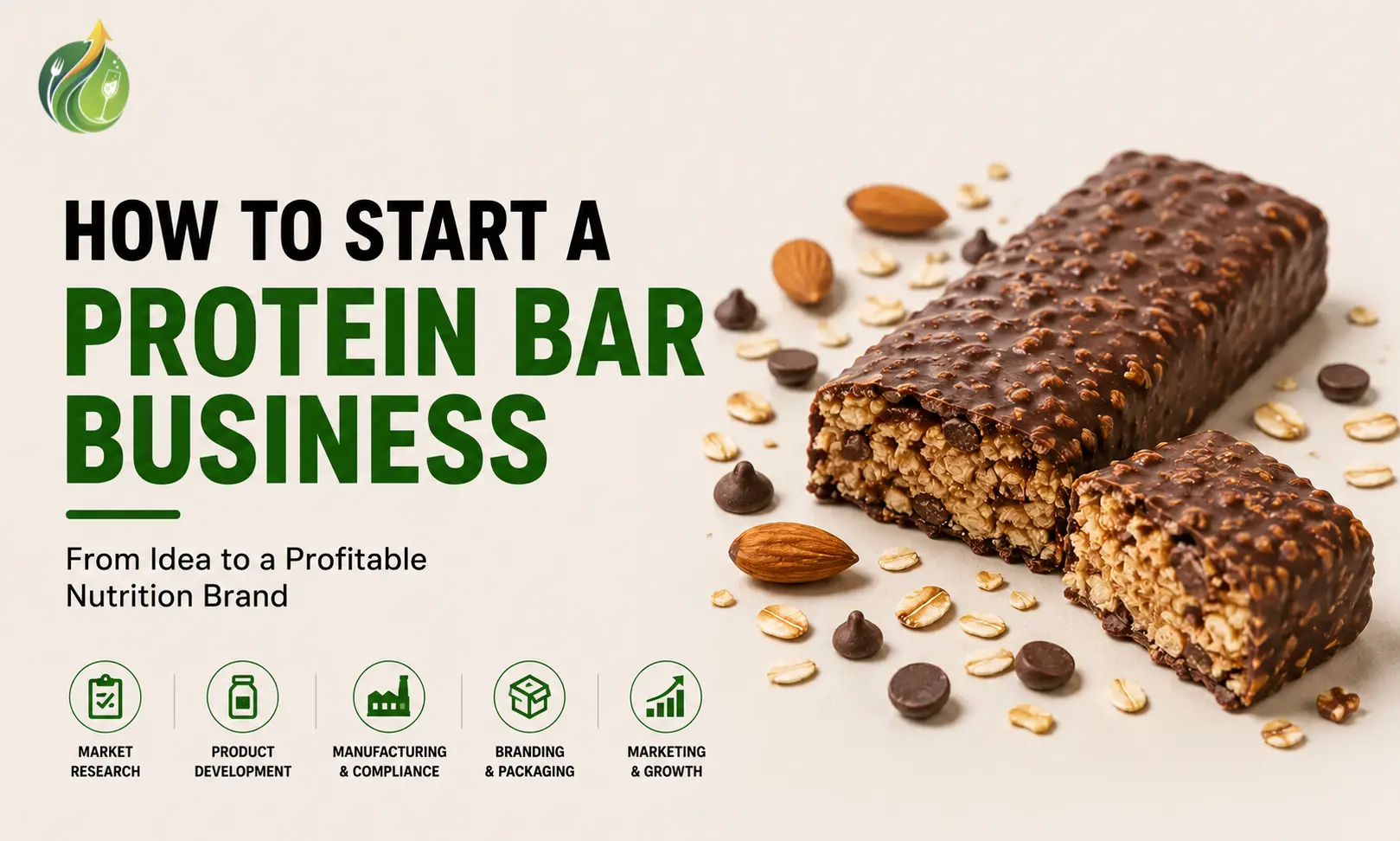
Protein Bar Business
Start a Protein Bar Business in India: Step-by-Step
Launch your protein bar brand with the right formulation, manufacturing, FSSAI setup, packaging, and scaling strategy to build a profitable nutrition business in India.
Is the Protein Bar Business Profitable in India?
Yes, the protein bar business in India is profitable when production, sourcing, and distribution are managed well. The India protein bars market is growing at a strong compound annual growth rate driven by rising health awareness, gym culture, corporate wellness programs, and the spread of quick commerce. Manufacturers earn gross margins between thirty and fifty percent on well positioned top 10 protein bars, with branded bars in the premium segment commanding even higher margins.
Why Protein Bars Are a High Demand Category in 2026
- Indian urban adults face a chronic protein deficit, fuelling demand for convenient sources.
- Fitness culture, gym memberships, and home workouts have grown rapidly post pandemic.
- Quick commerce platforms deliver bars in ten minutes, turning them into impulse snacks.
- Corporate wellness programs stock high protein, low sugar snacks in office pantries.
- FSSAI front of pack labelling on high sugar snacks is pushing buyers towards healthier bars.
Indian Protein Bar Market Size and Growth
The India protein bar segment sits inside the larger snack bar and protein supplements market. Industry reports place the protein supplements market in India near one billion US dollars in 2025, with strong double digit growth expected through 2033. Protein rich bars hold roughly forty percent of the energy bar share in India, and southern states are the fastest growing region.
| Market Indicator | Value or Estimate | Source Type |
| India protein supplements market 2025 | Around USD 1 billion | Industry research |
| Forecast CAGR 2026 to 2033 | Around 13 percent | Industry research |
| Protein rich bar share of energy bars | Around 40 percent | Mordor Intelligence |
| Fastest growing channel | Quick commerce and online | Industry reports |
| Typical gross margin | 30 to 50 percent | Industry benchmarks |
Step by Step: How to Start a Protein Bar Business in India
Below is the structured path most successful protein bar founders in India follow. Each step builds on the previous one, and skipping any stage usually leads to expensive reformulation later.
Step 1: Validate Your Niche and Target Customer
The protein bar shelf in India is no longer empty. Brands like RiteBite Max Protein, Yoga Bar, The Whole Truth, and SuperYou already compete for space. Founders need a sharp niche such as plant based protein, millet based bars, diabetic friendly, kids protein, or post workout recovery. A clear target customer like working professionals, gym goers, students, or new mothers shapes every later decision.
Step 2: Lock the Protein Bar Recipe
Recipe development is the heart of the protein bar business. A good bar has between ten and twenty grams of protein per serving, balanced fats and carbohydrates, low added sugar, soft texture, and a shelf life of six to nine months. Founders typically work with food technologists to develop the formula because protein bars fail in many ways: protein clumping, sugar bloom, moisture migration, hardening, and rancidity.
- Choose a protein source: whey, casein, soy, pea, or blended plant proteins.
- Add binders and humectants: dates, honey, glycerol, brown rice syrup.
- Pick texture builders: oats, puffed rice, puffed quinoa, crisp soy.
- Layer flavour: cocoa, peanut butter, dried fruits, natural extracts.
- Lock the moisture and water activity for shelf stability across Indian climates.
Step 3: Get FSSAI License and Other Approvals
Every protein bar manufacturer in India needs FSSAI registration. State or central license depends on turnover and whether you sell across states. Beyond FSSAI, founders need GST registration, trade license from the local municipality, trademark registration to protect the brand, and barcode registration to sell through modern trade and online platforms.
Step 4: Choose a Manufacturing Model
Founders typically pick between three manufacturing models. Each fits a different stage and budget.
| Manufacturing Model | Capex Required | Best For |
| Private label or contract manufacturing | Low: INR 3 to 10 lakh | First product launch, fast go to market |
| Semi automatic own unit | Medium: INR 8 to 20 lakh | Brands with proven demand and 1000+ bars per day |
| Fully automatic production line | High: INR 25 to 50 lakh+ | Established brands scaling to retail and exports |
Step 5: Set Up the Production Line
A protein bar production line is built around a logical chain: mixing, forming or extrusion, cutting, optional coating, cooling, and packaging. Small to medium machines can produce five hundred to fifteen hundred bars per hour, which works well for a startup. Capex for a semi automatic line runs between eight and twenty lakh rupees, with packaging machines adding another three to seven lakh.
Step 6: Source Raw Materials Smartly
Raw materials account for sixty five to seventy five percent of the cost of a protein bar. Bulk contracts with whey or plant protein suppliers, direct buying of dates and nuts, and local sourcing of oats and millets cut costs sharply. Founders who skip bulk contracts and buy retail end up with thin or negative margins.
Step 7: Plan Packaging and Labelling
Protein bar packaging needs a moisture and oxygen barrier to protect the bar through Indian summers and monsoons. Common formats are flow wrap pouches in three layer laminates. Labels must show protein per bar, full nutrition panel, allergen warnings, FSSAI logo and license number, manufacturing and best before dates, batch number, and the address of the manufacturer.
Step 8: Build a Distribution Strategy
Distribution can make or break a protein bar brand. Most successful Indian protein bar brands start with direct to consumer on their own website and Amazon, then expand to quick commerce, modern trade, gyms, cafes, and finally general trade. Each channel has different margins, return policies, and shelf demands.
- Direct to consumer: highest margins, full control of customer data.
- Amazon and Flipkart: large reach, lower margins due to platform fees.
- Quick commerce: Blinkit, Zepto, Swiggy Instamart with fast scale and high impulse buys.
- Gyms, cafes, and corporate pantries: bulk orders with predictable demand.
- Modern trade and general trade: long payment cycles but national visibility.
Cost of Starting a Protein Bar Business in India
Total investment depends on whether founders go private label or set up their own unit. A lean private label launch can begin between five and ten lakh rupees. An own manufacturing setup with semi automatic machines starts around twenty five lakh rupees and can scale higher with packaging and inventory.
| Cost Head | Approximate Range | Notes |
| Recipe development | INR 1 to 3 lakh | Food technologist and trials |
| FSSAI and licenses | INR 10,000 to 1 lakh | State or central license |
| Machinery semi automatic | INR 8 to 20 lakh | Mixer, forming, cutter, packing |
| Initial raw material stock | INR 2 to 5 lakh | Protein, binders, packaging |
| Branding and packaging design | INR 1 to 3 lakh | Logo, label, dieline |
| Working capital and marketing | INR 3 to 10 lakh | Launch ads, samples, listings |
Cost per bar at production usually lands between fourteen and twenty eight rupees depending on ingredients and protein content. Typical retail price ranges from forty five to ninety nine rupees per bar in 2026, leaving healthy margins after platform fees and distributor cuts.
Common Mistakes Protein Bar Founders Make
Most protein bar startups fail not because the market is weak but because of a handful of repeatable mistakes. Founders who avoid these from day one save lakhs in rework and lost shelf space.
- Skipping shelf life testing and discovering mould or rancidity after launch.
- Promising protein numbers on the label that the lab cannot consistently hit.
- Launching too many flavours and SKUs before fixing the production process.
- Using packaging that fails in Indian summer or monsoon humidity.
- Ignoring quick commerce and building only for modern trade, which slows scale.
- Pricing too low to win customers but killing margins for distributors and platforms.
Protein Bar Business Trends to Watch in 2026
Indian protein bar consumers are getting more selective. The brands winning shelf space in 2026 align their formulation, packaging, and marketing around clear trends.
- Millet protein bars: jowar, ragi, and bajra blended with plant or whey protein.
- Plant protein dominance: pea, soy, and brown rice replacing whey for vegan buyers.
- Low sugar and zero added sugar bars to avoid front of pack red labels.
- Functional bars with adaptogens like ashwagandha and herbs for energy or sleep.
- Kids protein bars in school friendly formats with parental claims and clean labels.
Where Flavor Catalystz Fits In
Flavor Catalystz supports food founders through the technical side of launching a protein bar brand, from formulation trials to FSSAI ready labels and pilot batches. Founders who plan formulation, compliance, and pilot production together usually launch faster and with fewer reformulation cycles.
Final Insights on Starting a Protein Bar Business
The Indian protein bar market in 2026 rewards founders who treat the business as a science problem first and a marketing problem second. A locked formula, a clean FSSAI label, a reliable production line, and a sharp distribution plan are the four pillars. Skip any one and the business stalls. Get all four right and a single hero protein bar can grow into a multi crore brand within three years.
Frequently Asked Questions
Is the protein bar business profitable in India?
Yes. Well managed protein bar brands earn gross margins between thirty and fifty percent. Net margins after marketing and distribution usually settle between fifteen and twenty five percent at scale.
How much investment is needed to start a protein bar business in India?
A lean private label launch starts at around five to ten lakh rupees. An own manufacturing setup with semi automatic machinery typically needs twenty five to forty lakh rupees including machinery, licenses, raw material, and working capital.
How much does it cost to manufacture one protein bar in India?
Manufacturing cost per bar typically falls between fourteen and twenty eight rupees depending on protein type, nuts, dates, and packaging. Retail prices range from forty five to ninety nine rupees per bar.
What licenses are needed to start a protein bar business?
Founders need FSSAI registration or license, GST registration, trade license from the local municipality, trademark registration, and barcode registration for retail and online sales.
What machinery is needed for a protein bar startup?
A basic protein bar line needs a planetary or ribbon mixer, an extruder or forming machine, a cutting machine, a cooling tunnel, and a flow wrap packaging machine. Semi automatic lines cost between eight and twenty lakh rupees.
Can I start a protein bar business from home in India?
Small scale home production is possible with a basic FSSAI license, but commercial production for retail or online sales needs a licensed facility, food safety controls, and machinery that delivers consistent weight and shelf life.
Which protein source is best for an Indian protein bar?
Whey protein concentrate works well for fitness buyers, soy and pea protein suit vegan products, and casein is used for slow release bars. Plant protein blends are gaining share fast in 2026 due to lactose intolerance and vegan demand.
How do I sell protein bars online in India?
Most brands start on their own Shopify or WordPress website, then list on Amazon and Flipkart, and finally enter quick commerce platforms like Blinkit, Zepto, and Swiggy Instamart once production can support fast turnover.
How long does it take to launch a protein bar brand?
From idea to first batch, six to nine months is a realistic timeline. Recipe development takes two to three months, shelf life testing two to three months, FSSAI compliance one to two months, and pilot production another month.