May 2026 · 11 min read
The protein bar market in India is booming. Urban consumers, fitness enthusiasts, working professionals, and students are looking for snacks that do more than just fill hunger. They want protein, clean ingredients, and a product that fits their health goals without tasting like cardboard.
Makhana protein bars sit at the intersection of two strong market trends: the rise of makhana as a mainstream health snack and the rapid growth of the Indian protein supplement market. Makhana is already trusted by Indian consumers as a healthy, natural food. Adding protein to it creates a product that is nutritionally functional and culturally familiar.
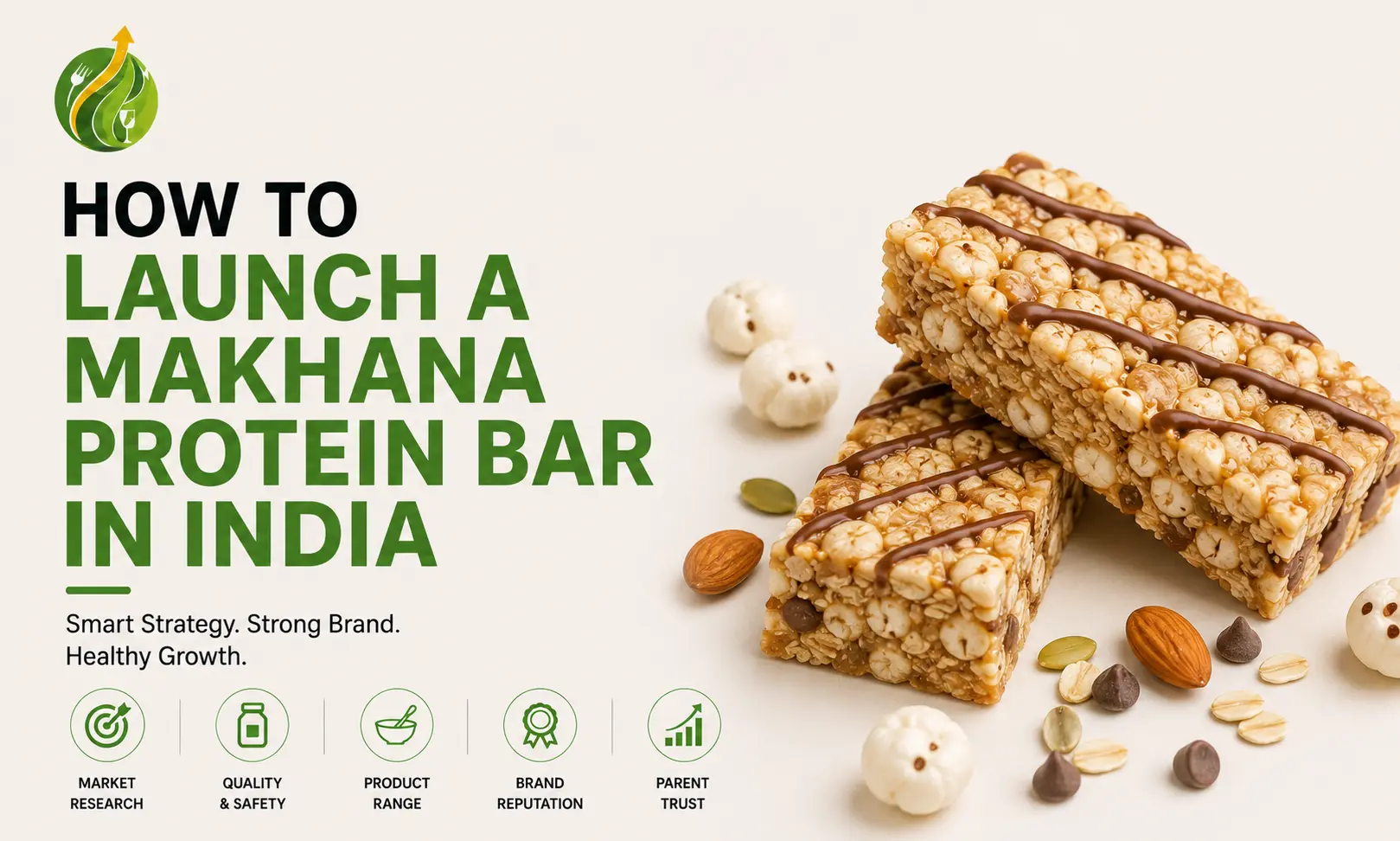
This guide covers everything you need to know to launch a makhana protein bar brand in India in 2026. From food product development and protein source selection to FSSAI compliance, packaging, cost planning, and go-to-market strategy.
Latest Makhana Protein Bar Market Opportunity in India
India’s protein bar market was valued at approximately Rs. 1,200 crore in 2024 and is growing at over 25 percent annually. Yet the market is dominated by international-style bars with whey protein and oats as the primary ingredients. No dominant Indian brand has built a protein bar category specifically around makhana.
That gap is the opportunity. Makhana brings several advantages as a protein bar ingredient. It is familiar and trusted by Indian consumers. It is gluten-free, which appeals to the growing gluten-sensitive segment. It has a clean, neutral flavor that works well with multiple taste profiles. And its Indian origin allows for a sourcing story that imported protein bars cannot match.
- The Indian protein supplement market is expected to cross Rs. 5,000 crore by 2027.
- Awareness of protein requirements is rising significantly in tier two and tier three cities.
- Plant-based and vegan protein bars represent the fastest growing sub-segment.
- Corporate gifting of health food products, including protein bars, is an emerging premium channel.
- Fitness club memberships and gym culture in India are growing, creating a natural B2B channel for protein bar brands.
Formulation: Building the Right Makhana Protein Bar
Getting the formulation right is the most critical step. A makhana protein bar needs to deliver genuine nutritional value, taste good, hold together structurally, and have enough shelf life for retail and e-commerce distribution.
The Base: Makhana
Makhana forms the identity of your bar. It can be used in its puffed and roasted form as texture elements within the bar, or ground into a flour to form part of the binding structure. Using whole puffed makhana pieces inside the bar creates a distinctive crunch that differentiates from conventional oat-based bars. Makhana flour contributes protein and body without heavy grain flavor.
The Protein Boost
Makhana alone provides approximately 9 to 11 gm of protein per 100 gm. To reach the 10 to 20 gm protein per bar targets that fitness consumers expect, you need an additional protein source. Your choice of protein significantly affects taste, texture, cost, and consumer positioning.
| Protein Source | Protein per 100g | Suitability | Taste Impact | Cost Level |
| Whey Protein Concentrate | 70 to 80 gm | Non-vegetarian buyers, gym segment | Mild, blends well | Medium |
| Whey Protein Isolate | 85 to 90 gm | Lactose-sensitive, premium bars | Very mild, clean | High |
| Pea Protein Isolate | 80 to 85 gm | Vegan, plant-based consumers | Earthy, needs masking | Medium-High |
| Brown Rice Protein | 75 to 80 gm | Vegan, allergen-free products | Mild, slightly grainy | Medium |
| Makhana Protein (base) | 9 to 11 gm | All segments as base ingredient | Neutral, slightly nutty | Low |
| Soy Protein Isolate | 85 to 90 gm | Vegan, budget-conscious brands | Strong, can be off-putting | Low-Medium |
Binders and Texture
Protein bars need binding agents to hold the bar shape without baking. Common binders used in Indian protein bars include dates paste, jaggery syrup, honey, brown rice syrup, and chicory root fiber. Each binder affects sweetness, calorie density, and texture differently. Dates and jaggery give a naturally sweet, Indian-flavor-compatible binding. Chicory fiber is used in low-sugar formulations because it adds sweetness without glucose impact.
Flavor Profile
The most commercially successful makhana protein bar flavors in the Indian market are those that balance familiar Indian taste profiles with international appeal. Options include dark chocolate and sea salt, almond and dates, mango and chia, peanut butter and jaggery, and mixed berry and vanilla. Your flavor lineup should have at least one chocolate variant, which consistently drives the highest sales in the protein bar category globally and in India.
Shelf Life Targets
For D2C and e-commerce distribution, you need a minimum of 6 months shelf life. For modern trade, 9 to 12 months is standard. Achieving this requires packaging with oxygen barrier properties, water activity control in the formulation (keeping Aw below 0.65), and potentially nitrogen flushing. Your contract manufacturer or food technologist should validate shelf life through accelerated shelf life testing before launch.
Manufacturing Options for Makhana Protein Bars
There are two main production routes for launching a makhana protein bar brand in India.
Contract Manufacturing
Working with a food contract manufacturer that produces nutrition bars and protein snacks. They handle ingredient procurement, mixing, forming, cutting, and packaging. You provide the recipe specification and brand packaging. This is the most capital-efficient route and the best choice for first-time food entrepreneurs. Look for manufacturers with experience in protein bars specifically, since the formulation and processing requirements differ from standard snack bars.
Own Production
Setting up your own production unit requires investment in mixing equipment, bar-forming or cutting machines, packaging equipment, and a licensed commercial kitchen or factory space. This gives you full control over quality and recipe confidentiality. It is a better option once you have validated demand and are producing at volumes above 10,000 units per month.
Cost Breakdown for Launching a Makhana Protein Bar in India
Here is a realistic investment estimate for launching a makhana protein bar brand through contract manufacturing in 2026.
| Cost Component | Estimated Range (Rs.) | One-time / Annual | Notes |
| Recipe and formulation development | Rs. 30,000 to Rs. 1,50,000 | One-time | Food technologist fees, ingredient testing |
| FSSAI license (brand entity) | Rs. 7,500 to Rs. 25,000 | Annual | State or Central based on scale |
| First production batch (3,000 bars) | Rs. 1,00,000 to Rs. 3,50,000 | Per batch | Includes ingredients, processing, packaging |
| Packaging (wrapper per bar) | Rs. 3 to Rs. 12 per unit | Per unit | Printed flexible film wrapper |
| Packaging design (print-ready files) | Rs. 20,000 to Rs. 70,000 | One-time | Per SKU, professional design |
| Lab testing (nutrition label, shelf life) | Rs. 20,000 to Rs. 50,000 | Per product | NABL-accredited lab testing |
| Protein ingredient sourcing | Rs. 300 to Rs. 1,200 per kg | Per batch | Whey, pea, or rice protein depending on spec |
| Marketing and launch budget | Rs. 2,00,000 to Rs. 8,00,000 | First year | D2C, influencer, gym sampling |
| Total first-year estimated investment | Rs. 5 lakh to Rs. 18 lakh | All-in | Contract manufacturing route, two SKUs |
FSSAI Compliance for Makhana Protein Bars
Makhana protein bars that contain added protein concentrates or isolates are classified under FSSAI’s proprietary food category. This means they need additional compliance steps beyond standard packaged food regulations.
- FSSAI Proprietary Food Approval: Required if your bar contains ingredients or combinations not covered by existing FSSAI standards. This involves submitting your formulation for review and approval before commercial sale.
- Nutritional label: Must show protein content per 100 gm and per bar (serving). Nutritional analysis must be done at an NABL-accredited lab.
- Protein source declaration: The source of protein (whey, pea, rice, soy) must be clearly declared in the ingredient list.
- Health claims: If you make claims like high protein, you must meet the FSSAI criteria that the product provides at least 20 percent of the Recommended Daily Intake of protein per serving.
- Allergen declaration: Whey is a dairy derivative and must be declared. Soy must be declared. Tree nuts must be declared if used.
Packaging for Makhana Protein Bars
The packaging format for a protein bar is as important as the product itself. Your wrapper is what sells the bar on the shelf and on a product page.
Flexible Film Wrapper
Most protein bars use a printed flexible film wrapper that is heat-sealed. This format is cost-effective, lightweight, and allows for excellent print quality. The wrapper should be made with an oxygen barrier layer to extend shelf life.
Label Design Priorities
The front of pack needs to communicate the protein per bar clearly and prominently. This is the number one thing protein bar buyers look for. Your makhana ingredient story should be visible on the front or prominently on the back. Flavor should be obvious at a glance. If you are certified organic, gluten-free, or vegan, these symbols should be visible.
Multi-Pack and Gifting Formats
Selling bars in packs of 6 or 12 increases average order value and reduces per-unit shipping costs for D2C. Gifting boxes with 10 to 15 bars in multiple flavors are effective during festive seasons and for corporate gifting programs.
Go-to-Market Strategy for Makhana Protein Bars
| Bar Type | Target Consumer | Key Claim | Price Range (Rs.) | Best Channel |
| High-protein fitness bar | Gym-goers, athletes | 15 to 20g protein per bar | 80 to 180 per bar | GNC, Amazon, gyms |
| Plant-based protein bar | Vegans, health-conscious | 100 percent plant protein | 100 to 200 per bar | D2C, health stores |
| Kids nutrition bar | Children aged 5 to 14 | No sugar, added calcium | 40 to 100 per bar | Modern trade, D2C |
| Weight management bar | Dieters, PCOD, lifestyle health | Low calorie, high satiety | 80 to 160 per bar | D2C, pharmacies |
| Diabetic-friendly bar | Pre-diabetics, diabetics | Low sugar, low GI | 100 to 200 per bar | Pharmacies, D2C |
| Premium gifting bar | Corporate gifting, festive | Artisan, clean label | 150 to 300 per bar | D2C, gifting platforms |
Start with Gyms and Fitness Studios
Gyms and fitness studios are the most natural sampling and first-purchase environment for protein bars. Partner with gyms to place your bars at the reception or nutrition counter. Offer introductory trial pricing. Gym-goers who discover and like your bar will reorder online and become loyal subscribers.
Build D2C Before Modern Trade
Modern trade listings require marketing spend support, listing fees, and margin structures that are challenging for early-stage brands. Start by building your brand through your own website, Amazon, and quick commerce platforms. Once you have strong reviews, consistent sales velocity, and a proven product, approach modern trade from a position of demonstrated demand.
Content Marketing and Influencer Seeding
Fitness influencers on Instagram and YouTube are an effective and cost-efficient way to build awareness for a protein bar brand. Send free samples to micro-influencers in the fitness and health space and encourage honest reviews. Video content showing the protein content, taste test, and ingredient story performs very well in this category.
Launch Your Own Makhana Protein Bar Brand in India
Launching a makhana protein bar brand in India does not need a big setup.
We at Flavor Catalystz handle food formulation, shelf life testing, and FSSAI compliance so you can launch your first batch on Amazon and quick commerce platforms without the hassle.
The brands that win are the ones with a clean ingredient story. We help you build the right protein profile, source quality makhana, and get your packaging shelf-ready. If you are ready to launch your makhana protein bar, reach out to Flavor Catalystz at +91 9711730492.
Frequently Asked Questions
Is a makhana protein bar a good business idea in India?
Yes. The protein bar market is growing at over 25 percent annually, and no dominant brand has built a category specifically around makhana. The combination of a trusted Indian ingredient with genuine protein functionality creates a differentiated product opportunity in a large and growing market.
How much protein can a makhana protein bar have?
By adding whey, pea protein, or brown rice protein to a makhana base, a standard 40 to 50 gm bar can be formulated to deliver 10 to 20 gm of protein. The exact protein content depends on the recipe and which protein source you choose.
What is the cost to launch a makhana protein bar brand?
Using contract manufacturing, the first year investment is typically Rs. 5 lakh to Rs. 18 lakh, covering recipe development, FSSAI licensing, first production batch, packaging design, lab testing, and initial marketing.
What FSSAI license is needed for a protein bar?
Protein bars with added protein concentrates fall under FSSAI’s proprietary food category. You need a State or Central FSSAI license and may need to submit your formulation for proprietary food approval before commercial sale. Nutritional content must be verified at an NABL-accredited laboratory.
What is the best flavor for a makhana protein bar?
Dark chocolate variants consistently drive the highest sales in the protein bar category. For Indian consumers, chocolate and peanut butter, almond and dates, and mango or tropical flavors also perform well. Launching with two to three flavors, including one chocolate variant, is a strong starting strategy.