Apr 2026 · 5 min read
Hydration is often reduced to a simple idea: drink more water. However, if you have ever experienced fatigue after a workout, long travel, or exposure to heat, you may have noticed that water alone does not always restore your energy levels. This is where electrolytes come into play.
Electrolytes are essential minerals that regulate fluid balance, support muscle function, and maintain nerve activity. When the body loses these minerals through sweat or dehydration, simply drinking water may not be enough to restore balance.
As a result, many consumers are moving away from conventional sports drinks—which are often high in sugar and artificial additives—and looking for natural electrolyte drink recipes that are effective, clean, and easy to prepare.
What Is an Electrolyte Drink?
An electrolyte drink is a fluid designed to replenish key minerals lost by the body. The most important electrolytes include:
- Sodium – helps retain fluids and maintain hydration
- Potassium – supports muscle contraction and recovery
- Magnesium – contributes to energy production and nerve function
In practical terms, electrolytes enable the body to absorb and utilize water more efficiently. Without them, hydration remains incomplete—especially during periods of physical stress or heat exposure.
A Simple Natural Electrolyte Drink Recipe
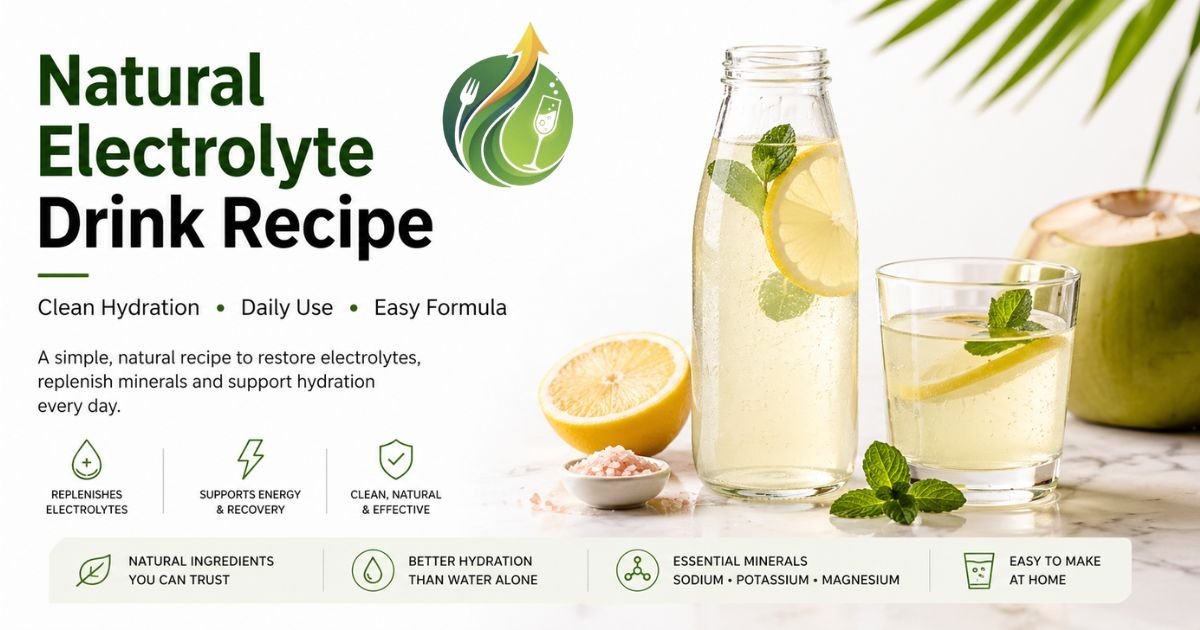
For daily hydration or light recovery, a basic natural electrolyte drink can be prepared using minimal ingredients:
Ingredients:
- 1 glass coconut water
- ½ teaspoon fresh lemon juice
- A pinch of pink or sea salt
- 1 teaspoon honey (optional)
Method:
Combine all ingredients in a glass, stir well, and consume immediately.
This formulation works because it provides a balanced combination of:
- Natural potassium from coconut water
- Sodium from salt
- Acidity and freshness from lemon
- A small amount of glucose (if honey is added) to support absorption
The result is a clean, functional hydration drink without unnecessary additives.
Why This Recipe Works
Hydration is not solely about fluid intake; it is about fluid retention and absorption. Sodium plays a key role in maintaining fluid balance, while a small amount of glucose enhances the body’s ability to absorb water in the intestines.
Coconut water serves as a natural base due to its inherent mineral content, particularly potassium. When combined with sodium and a mild carbohydrate source, the drink becomes significantly more effective than plain water.
This is the same principle used in many commercial hydration products, though often with synthetic ingredients.
Variations Based on Use Case
Different situations require slightly different formulations. A single recipe does not suit every need.
1. Low-Sugar Electrolyte Drink
For individuals monitoring sugar intake:
- Coconut water
- Lemon juice
- Salt
This version removes added sweeteners while still maintaining electrolyte balance.
2. Post-Workout Hydration Drink
For recovery after intense activity:
- 50% coconut water + 50% plain water
- Lemon juice
- Slightly increased salt
- 1 teaspoon honey
This formulation supports faster recovery by replacing both fluids and electrolytes lost through sweat.
3. Daily Summer Hydration Drink
For general hydration in hot climates:
- Chilled water
- Lemon juice
- Rock salt
- Fresh mint leaves
This version is lighter and suitable for frequent consumption.
Homemade vs Commercial Electrolyte Drinks
It is important to understand how homemade drinks compare with commercially available options.
Commercial sports drinks typically offer:
- Long shelf life
- Consistent taste
- Convenience
However, they often contain:
- High levels of sugar
- Artificial flavors and colors
- Preservatives
Homemade electrolyte drinks provide:
- Fresh preparation
- Control over ingredients
- Clean-label formulation
The primary limitation is shelf life. Natural drinks should ideally be consumed immediately, as they lack stabilizers and preservatives.
Who Should Use Electrolyte Drinks?
Electrolyte drinks are particularly beneficial in the following situations:
- After physical exercise or sports
- During hot weather with excessive sweating
- While traveling, especially in dehydrating conditions
- During mild fatigue or recovery
For individuals with a sedentary lifestyle, regular water intake is usually sufficient, and electrolyte supplementation may not be necessary on a daily basis.
Practical Formulation Insights (Industry Perspective)
From a product development standpoint, creating an effective electrolyte drink involves more complexity than a simple recipe.
1. Taste vs Function Balance
Higher mineral content improves functionality but can result in a salty or unpleasant taste. Achieving a balance requires careful flavor design.
2. The Role of Sugar
While often viewed negatively, small amounts of sugar play a functional role in improving hydration efficiency. Eliminating it entirely can compromise both taste and absorption.
3. Stability Challenges
Natural ingredients are prone to:
- Oxidation
- Flavor degradation
- Reduced shelf life
This is why commercial formulations rely on controlled processing techniques.
4. Cost Considerations
Clean-label ingredients such as natural extracts, coconut water, and mineral salts are relatively expensive. Scaling such products while maintaining quality requires strategic sourcing and formulation expertise.
From Recipe to Market-Ready Product
For individuals or brands looking to develop a commercial electrolyte beverage, a basic recipe is only the starting point. Scaling a product requires attention to:
- Ingredient standardization
- Flavor consistency
- Shelf-life stability
- Packaging compatibility
- Regulatory compliance (such as FSSAI in India)
This is where professional formulation becomes essential. The transition from a kitchen recipe to a market-ready beverage involves both scientific precision and consumer insight.
Final Perspective
Electrolyte drinks are no longer limited to athletes or sports recovery. They are increasingly positioned within the broader category of functional beverages, where hydration intersects with health and performance.
Consumers today are more informed and selective. They seek products that offer:
- Clean ingredients
- Balanced taste
- Real, measurable benefits
Natural electrolyte drinks meet these expectations when formulated correctly. Whether prepared at home or developed as a commercial product, the key lies in maintaining the right balance between functionality and experience.
If you are planning to develop a commercial electrolyte beverage, formulation accuracy, taste optimization, and scalability are critical. Flavor Catalystz supports brands in building clean-label, market-ready beverage formulations aligned with current consumer demand.
Frequently Asked Questions
- How can I make an electrolyte drink at home?
You can prepare a simple version using coconut water, lemon juice, salt, and an optional natural sweetener like honey. - Are natural electrolyte drinks better than sports drinks?
They are generally lower in sugar and free from artificial additives, making them suitable for regular consumption. - Can electrolyte drinks be consumed daily?
Yes, but intake should be based on individual hydration needs and activity levels. - Do electrolyte drinks require sugar?
A small amount can improve absorption, but it is not mandatory. - What is the best natural source of electrolytes?
Coconut water is widely considered one of the most balanced natural sources. - Are electrolyte drinks effective for dehydration?
Yes, they help restore both fluids and essential minerals lost by the body. - Is a homemade electrolyte drink safe?
Yes, provided the ingredients are used in balanced quantities.