Apr 2026 · 14 min read
Protein bars are one of the fastest growing segments in Indian food and nutrition in 2026. What started as a product for gym-goers and competitive athletes has crossed over into mainstream snacking. Office professionals, students, travelers, and health-conscious families are all reaching for protein bars as a meal replacement, post-workout snack, or simply a better alternative to biscuits and chips.
This shift has created a genuine market opportunity. But it has also created a crowded space. The brands that win in 2026 are the ones that get product quality right, develop a clear positioning, and build consumer trust through consistent taste and performance.
If you are building a protein bar brand in India, contract manufacturing is almost certainly your fastest and most capital-efficient route to market. This guide covers everything you need to know about protein bar contract manufacturing in India, from market data, food formulation, and product types to the development process, ingredient choices, cost breakdown, compliance, and how to choose the right manufacturing partner.
Start a Protein BAR Business
Protein Bar Contract Manufacturing / Product Development
Build a scalable protein bar brand with expert contract manufacturing, high-protein formulation, flavour development, packaging support, and food product development solutions.
India Protein Bar Market in 2026
The Indian sports nutrition market was valued at approximately USD 800 million in 2024 and is growing at a CAGR of over 12 percent, making it one of the fastest growing nutrition segments in Asia. Within this, protein bars are one of the highest growth sub-segments, driven by increasing fitness culture, rising protein awareness, and the expansion of quick commerce as a purchase channel.
The consumer base for protein bars in India has diversified significantly. Gym and fitness enthusiasts remain the core buyers, but the addressable market now includes corporate professionals looking for clean energy snacks, college students on the go, and urban families seeking healthier alternatives to traditional snacks.
| Metric | Data |
| India Sports Nutrition Market (2024) | Approximately USD 800 million |
| Projected CAGR (2024 to 2030) | Over 12 percent |
| Fastest Growing Sub-Segment | Protein bars and functional snack bars |
| Key Consumer Segments | Gym enthusiasts, office professionals, students, travelers |
| Top Sales Channels | D2C, gyms, Blinkit, Zepto, Amazon, modern trade |
| Average Retail Price (60 to 70 gm bar) | Rs. 90 to Rs. 250 depending on protein content and positioning |
| Fastest Growing Formats (2026) | Plant-based, keto, high-protein low-sugar |
Types of Protein Bars You Can Manufacture
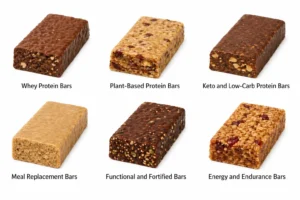
Protein bar manufacturing in India has become sophisticated enough to support multiple product types, each targeting a different consumer and use case. Understanding the different bar types helps you decide which category your brand should enter.
Whey Protein Bars
The most widely consumed protein bar category in India. Whey protein, derived from milk, offers a complete amino acid profile and is highly bioavailable. Whey concentrate is the most cost-effective option, while whey isolate offers higher protein content per gram with lower fat and lactose. These bars are well-suited for post-workout recovery and are most popular with gym-going consumers.
Plant-Based Protein Bars
The fastest growing segment in the protein bar category in 2026. Plant-based bars use pea protein, brown rice protein, hemp protein, or blended plant proteins. They serve both the vegan consumer and the large vegetarian population in India that avoids dairy-based products. Plant protein technology has improved significantly, and well-formulated plant bars can match whey bars in texture and taste.
Keto and Low-Carb Protein Bars
Targeted at consumers following ketogenic or low-carbohydrate diets. These bars typically contain high fat content from nuts and seeds, moderate to high protein, and minimal net carbohydrates. Sugar alcohols like erythritol or monk fruit are used as sweeteners. This is a premium segment with strong D2C demand and high price points.
Meal Replacement Bars
Designed to replace a light meal with a balanced macronutrient profile. These bars carry higher calorie content, adequate fiber, and a blend of protein sources. They target busy professionals and travelers who need a convenient but nutritionally adequate on-the-go option.
Functional and Fortified Bars
An emerging premium segment that adds functional ingredients like collagen, ashwagandha, probiotics, or specific micronutrients to a protein bar base. These products command higher margins and target health-conscious consumers who want benefits beyond pure protein intake.
Energy and Endurance Bars
Designed for athletes and active individuals who need sustained energy during physical activity. These bars emphasize complex carbohydrates alongside protein, with added electrolytes or B vitamins for endurance support.
Protein Sources and How to Choose the Right One
| Protein Source | Protein Per 100 gm | Key Advantage | Best Used In |
| Whey Concentrate | 70 to 80 gm | Complete amino acids, affordable | Mass market bars |
| Whey Isolate | 85 to 95 gm | High purity, low lactose | Premium bars |
| Pea Protein | 75 to 85 gm | Vegan, allergen-friendly | Plant-based bars |
| Brown Rice Protein | 70 to 80 gm | Digestible, hypoallergenic | Blended plant bars |
| Soy Protein | 85 to 90 gm | Complete amino acids, vegetarian | Budget and mid-range bars |
| Casein | 80 to 85 gm | Slow-digesting, sustained release | Nighttime recovery bars |
The Protein Bar Manufacturing Process
Protein bar manufacturing involves more technical complexity than most snack categories. The interaction between protein, sweeteners, binders, fats, and moisture determines whether you get a bar with the right texture, taste, and shelf life. Here is how the process works from concept to production.
Stage 1: Product Brief and Target Specification (1 to 3 days)
Define the target protein content per bar, calorie range, macronutrient split, intended consumer, positioning, flavor direction, texture preference (chewy, crunchy, or soft), price point, and target retail format. A clear brief reduces iteration cycles in the R&D stage significantly.
Stage 2: Formulation and R&D (14 to 21 days)
Food scientists develop the protein matrix, select binding agents (dates, sugar syrups, or glycerin), test flavoring systems, and calibrate the fat and fiber content. Achieving the right bar texture without making it crumbly or too dense requires significant technical expertise. Multiple lab-scale batches are produced and evaluated for taste, texture, protein content, and visual appeal.
Stage 3: Shelf Life and Stability Testing (14 to 30 days)
Water activity measurement is one of the most critical tests for protein bars. Water activity above 0.75 creates conditions for microbial growth, while very low water activity can result in dry, crumbly texture. Accelerated shelf life testing evaluates how the product holds up across different storage conditions. Protein bars typically target a shelf life of 9 to 18 months.
Stage 4: Enrobing and Finishing (5 to 10 days)
Many protein bars are enrobed in dark chocolate, compound chocolate, or yogurt coating. The enrobing process must be calibrated for uniform coverage, clean edge finishing, and compatibility with the bar’s texture and shelf life. Drizzle toppings, nut inclusions, and seed coatings are also handled at this stage.
Stage 5: Packaging Selection and Label Compliance (5 to 10 days)
Protein bars are typically packaged in flow wrap or pillow pack formats, often with a second outer carton for retail. The packaging must provide moisture barrier protection, tamper evidence, and a shelf presentation that communicates the product’s positioning. FSSAI-compliant labels must include the nutritional information panel, ingredient list, allergen declarations, protein claims substantiation, FSSAI license numbers, and all mandatory markings.
Stage 6: Pilot Batch and Approval (5 to 10 days)
A pilot batch is produced on full-scale production equipment. Review the pilot batch carefully for texture consistency across bars, uniform enrobing, correct weight per bar, packaging integrity, and flavor consistency. Any deviations from your approved lab sample must be resolved before full production begins.
Stage 7: Full Production and Dispatch (7 to 21 days)
Full batch production with inline quality checks including weight verification, visual inspection, enrobing coverage, and nutritional compliance testing. Every batch should be accompanied by a certificate of analysis confirming protein content, fat content, moisture, water activity, and microbiological safety.
Cost of Protein Bar Contract Manufacturing in India (2026)
|
Cost Component |
Typical Range (2026) |
Notes |
|
Per-Unit Manufacturing Cost |
Rs. 35 to Rs. 120 per bar |
Varies by protein source, coating, and bar weight. Whey concentrate bars at lower end, plant-based or enrobed bars higher |
|
Minimum Order Quantity |
500 to 5,000 units per SKU |
Higher volumes bring per-unit cost down significantly |
|
Formulation and R&D |
Rs. 1,00,000 to Rs. 3,50,000 |
Protein matrix development, flavor creation, texture engineering, multiple sample rounds |
|
Shelf Life and Water Activity Testing |
Rs. 30,000 to Rs. 80,000 |
Microbiological, water activity, protein content verification |
|
Packaging Design and Print |
Rs. 25,000 to Rs. 90,000 |
Flow wrap design, carton design, FSSAI-compliant print-ready files |
|
FSSAI Registration |
Rs. 5,000 to Rs. 25,000 |
Brand owner FSSAI license |
|
Total First Launch Budget |
Rs. 4,00,000 to Rs. 10,00,000 | Approximate all-in for one SKU first batch |
FSSAI and Regulatory Requirements for Protein Bars
Protein bars fall under FSSAI’s standards for proprietary food products and sports nutrition. Understanding the regulatory requirements before you start formulation saves significant time and money.
- Both your brand and your manufacturing partner must hold valid FSSAI licenses, and both numbers must appear on the packaging
- A mandatory nutritional information panel showing energy, protein, fat, carbohydrates, sugar, and sodium per 100 gm and per serving is required on every pack
- Protein claims such as high protein or 20 gm protein per bar must be accurate and verifiable. FSSAI requires that protein content claims be substantiated by lab testing from an accredited testing laboratory
- All ingredients including protein source, sweeteners, binding agents, and coatings must be listed in descending order by weight
- Allergen declarations are mandatory. Whey, soy, and nut-containing bars must clearly declare these on the label
- If your bar makes functional claims such as muscle recovery, fat burning, or energy enhancement, these require careful review against FSSAI’s health claims standards
- For bars imported from the USA, EU, or other markets, additional import regulations and destination-country labeling compliance apply
Trending Protein Bar Formats and Positioning in 2026
|
Bar Type |
Target Consumer |
Key Differentiator |
|
High Protein, Low Sugar |
Gym-goers, weight management |
20 gm+ protein, under 5 gm sugar |
|
Plant-Based Protein |
Vegetarian, vegan, dairy-free consumers |
Pea or rice protein, no animal ingredients |
|
Keto and Low-Carb |
Keto dieters, carb-restricted consumers |
Under 5 gm net carbs, high fat from nuts |
|
Indian Flavor Variants |
Urban India, first-time protein bar buyers |
Mango, kesar pista, coffee, choco-chai flavors |
|
Functional and Adaptogen |
Wellness-focused, 28 to 45 age group |
Ashwagandha, collagen, probiotic additions |
|
Kids and Teen Protein |
Parents of active children and teenagers |
Lower protein, natural sweeteners, familiar flavors |
How to Choose the Right Protein Bar Manufacturer
Protein bar manufacturing requires a specific combination of food science expertise, ingredient sourcing capability, and production infrastructure. Not every contract manufacturer can produce a high-quality protein bar. Here is how to evaluate a potential partner.
- Ask specifically about their experience in protein bar or nutrition bar manufacturing. This is a specialized category with different requirements from standard baked snacks
- Ask about their protein ingredient sourcing. Grade and purity of the protein source significantly affects both cost and product performance
- Check their water activity monitoring capability. A manufacturer that cannot measure and control water activity during production is not equipped to make shelf-stable protein bars
- Ask about their enrobing capability if you want a chocolate-coated bar. Chocolate enrobing requires specific temperature-controlled equipment
- Confirm that they can provide a certificate of analysis with actual protein content verification from an accredited lab on every batch
- Ask for 2 to 3 client references specifically in the protein or nutrition bar category and contact them independently
- Evaluate their R&D capability for texture engineering. The difference between a great protein bar and a mediocre one is largely a formulation and process science question
- Ask how they handle batch failures or ingredient quality variations. Their answer tells you a lot about their quality culture
- Check their packaging capability for flow wrap or pillow pack formats, as these are standard in the protein bar category
Who Should Consider Protein Bar Contract Manufacturing
- Fitness and nutrition brands that want to add a protein bar to their product range without building a dedicated manufacturing facility
- Gym chains and fitness studios that want to private label a protein bar for in-house retail and build a new revenue stream
- D2C food brands that see an opportunity to enter the nutrition segment with a differentiated product targeting specific consumer needs
- Supplement brands that want to extend from powders and capsules into the bar format to broaden their consumer appeal
- Corporate wellness companies that want to supply branded protein bars to corporate clients as part of employee health programs
- Export-oriented businesses targeting Indian diaspora markets in the USA, UK, UAE, and Australia where demand for Indian-made nutrition products is growing
- Retail chains developing store-brand protein bars to compete with national brands at competitive price points
What Makes a Protein Bar Brand Succeed in 2026
The Indian protein bar market has matured enough that taste and texture are now the primary purchase drivers, not just protein content. The brands that are growing fastest in 2026 share a few consistent characteristics.
Taste first, protein second. The brands that prioritize eating enjoyment alongside nutritional credentials consistently outperform those that compromise on taste to hit a macro target. Indian consumers in 2026 have been disappointed too many times by bad-tasting protein bars and are now willing to pay more for a product that actually tastes good.
Clean label transparency. The generation buying protein bars in 2026 reads labels. Brands that have short, recognizable ingredient lists and do not hide behind proprietary blends are building stronger consumer trust than brands with complex ingredient decks.
Indian flavor innovation. Most protein bars in India until 2023 were vanilla, chocolate, and peanut butter. Brands that have introduced kesar pista, mango, masala chai, and coconut-based flavors have found genuinely underserved demand and built loyal repeat-purchase audiences.
Channel strategy matters. The brands growing fastest are managing multiple channels purposefully, with specific packaging formats, price points, and positioning for D2C, quick commerce, gym retail, and modern trade. A single strategy across all channels rarely performs optimally.
Ready to Launch Your Protein Bar Brand
The Indian protein bar market in 2026 is one of the most commercially attractive categories in food and nutrition. The consumer demand is there, the distribution infrastructure has matured, and the opportunity to build a brand that earns genuine loyalty through product quality and smart positioning is real.
What most brands underestimate is how much the quality of the manufacturing partner determines the quality of the final product. Protein bar manufacturing is not a commodity process. Formulation expertise, protein ingredient sourcing, water activity control, and consistent production quality all make a material difference to what ends up in the consumer’s hand.
Flavor Catalystz brings deep expertise in nutrition product manufacturing, strong relationships with quality protein ingredient suppliers, and an R&D team that understands what makes a great-tasting protein bar. We work with brands from first concept through to commercial production.
Contact us today at +91 9711730492 to discuss your protein bar concept, get a transparent development plan and cost estimate, and take the first step toward building a protein bar brand that earns real market share in India’s growing nutrition market.
Frequently Asked Questions
What is the minimum order quantity for protein bar contract manufacturing in India?
MOQ for protein bar manufacturing in India typically ranges from 500 to 5,000 units per SKU depending on formulation complexity, protein source, and packaging format. Some manufacturers offer lower MOQs for startups launching their first batch to test market response.
How much protein should a good protein bar contain?
A standard protein bar typically contains 10 to 25 grams of protein per bar. Premium performance bars can reach 20 to 30 grams. The right protein content depends on the target consumer, intended use case, and overall calorie and macronutrient profile of the bar.
What protein sources are used in protein bar manufacturing in India?
Common protein sources include whey protein concentrate and isolate, pea protein, brown rice protein, soy protein, casein, and blended plant proteins. Whey is the most widely used for its complete amino acid profile and bioavailability. Pea protein is the leading plant-based alternative for vegan and vegetarian products.
How long does it take to develop and launch a protein bar?
From concept to first production batch, protein bar development typically takes 45 to 90 days. This covers formulation and sampling (14 to 21 days), texture and shelf life testing (14 to 30 days), packaging finalization (5 to 10 days), and production (7 to 21 days).
Can I make a vegan protein bar through contract manufacturing in India?
Yes. Plant-based protein bars using pea protein, brown rice protein, or blended plant proteins are fully achievable through contract manufacturing. Vegan protein bars are one of the fastest growing segments in the Indian sports nutrition market and are being actively developed by both established brands and D2C startups.
What certifications does a protein bar manufacturer need in India?
A valid FSSAI Central License is mandatory. ISO 22000, GMP, and HACCP certifications are important for quality assurance and for meeting the requirements of modern trade retailers and institutional buyers. For sports nutrition claims, look for manufacturers that can provide verified protein content testing from NABL-accredited laboratories.