Jun 2026 · 9 min read
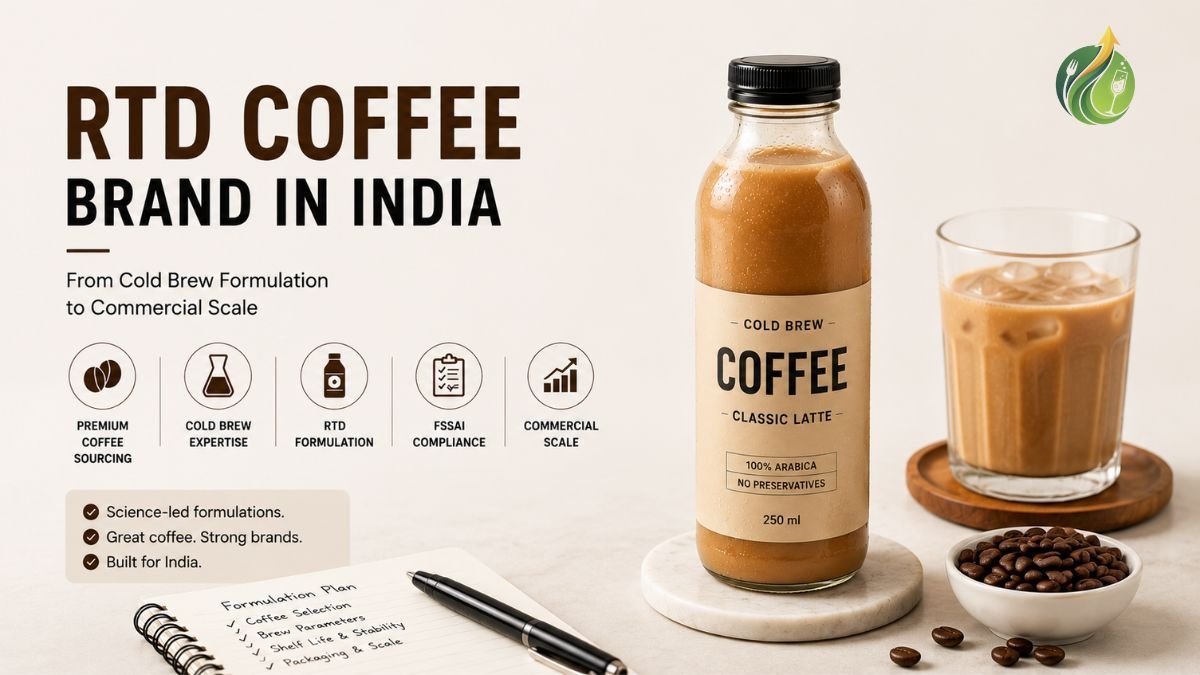
India’s relationship with coffee is shifting. The traditional filter coffee of the south and the instant coffee sachet of the mass market are now being joined by a rapidly growing category: ready-to-drink coffee. Cold brew concentrates, canned espresso-based drinks, nitro coffee, protein coffee, and milk coffee RTDs are all finding consumer traction in India’s metros and Tier 1 cities.
The numbers reflect a genuine trend. Urban Indian consumers — particularly in the 22–38 age bracket — are increasingly coffee-literate. They know the difference between arabica and robusta. They have tried cold brew at a specialty cafe. And they are willing to pay a premium for a chilled coffee experience that travels with them.
The RTD coffee market in India is early enough that significant first-mover advantage exists, but active enough that the consumer behaviour is already established. If you are planning to launch an RTD coffee brand, this is the right time — and this guide covers the formulation, compliance, and commercial strategy you need.
The RTD Coffee Landscape in India: Where the Opportunity Is
The RTD coffee category globally splits into several distinct segments — each with different formulation requirements, target consumers, and commercial dynamics:
Cold Brew: Coffee brewed with cold or room-temperature water over 12–24 hours. Lower acidity than hot-brewed coffee, smooth flavour, naturally sweeter. The premium end of the RTD coffee market. Strong in urban specialty coffee consumers.
Canned Espresso-Based Drinks: Espresso or concentrated coffee combined with milk or water, canned and shelf-stabilised. Similar to the Nescafé or Georgia brand formats dominant in Japan and Korea. Mass market potential in India.
Nitro Coffee: Cold brew infused with nitrogen gas — creates a creamy, Guinness-like texture with a natural sweetness. Visually distinctive. Premium positioning, niche but loyal consumer base.
Protein Coffee RTD: Cold brew + whey or plant protein. Growing rapidly among fitness consumers who want both caffeine and protein in one convenient format.
Milk Coffee RTD: Coffee + dairy or plant milk, sweetened. Most accessible flavour profile. Targets consumers transitioning from instant coffee to RTD. Largest volume potential.
For most new Indian RTD coffee brands, cold brew or milk coffee RTD is the recommended starting point — established consumer understanding, relatively straightforward formulation, and clear commercial channels.
Flavor Catalystz
Planning to launch an RTD coffee or cold brew brand?
From coffee sourcing and cold brew optimisation to shelf life, packaging, and FSSAI compliance — we help founders build commercially scalable RTD coffee brands.
Cold Brew Coffee Formulation: The Technical Foundation
Cold brew is not just “coffee left in cold water.” Commercial cold brew formulation requires precise control of several variables to achieve a consistent, shelf-stable, commercially viable product.
Coffee Selection
Arabica vs. Robusta: Arabica produces a smoother, more nuanced cold brew with lower bitterness and natural fruity or floral notes. Robusta is higher in caffeine, more bitter, and less complex in flavour — but lower cost. Most premium cold brew brands use 100% arabica or a high-arabica blend.
Roast level: Medium to medium-dark roast works best for cold brew. Very dark roasts can produce harsh, bitter cold brew. Very light roasts produce acidic, underdeveloped flavour. Medium roast gives the balance of chocolate, caramel, and mild acidity that works commercially.
Origin: Single-origin positioning (Coorg, Chikmagalur, Araku) is a powerful brand differentiator for premium Indian RTD coffee. India produces excellent arabica coffee — using domestic single-origin is both a quality and brand story advantage.
Grind size: Coarser grind than hot brew. Standard cold brew grind is approximately 600–800 microns. Too fine increases bitterness and over-extraction; too coarse under-extracts.
Brew Parameters
Ratio: Typically 1:5 to 1:8 (coffee:water by weight) for cold brew concentrate; 1:10 to 1:15 for ready-to-drink strength.
Temperature: Cold water (4°C) or room temperature (~22°C). Cold water extraction takes longer but produces the smoothest flavour. Room temperature extraction is faster but requires careful process control.
Time: 12–24 hours. Longer extraction increases strength and caffeine content but can introduce bitterness beyond 24 hours at room temperature.
Filtration: Two-stage filtration — coarse filter (muslin or stainless steel) to remove grounds, followed by fine filter (0.5–1 micron) for clarity. Clarity affects shelf life (particulates accelerate spoilage) and visual appeal.
Shelf Life and Processing
Cold brew has high water activity and near-neutral pH — ideal conditions for microbial growth. Without proper processing, cold brew spoils within days at ambient temperature.
Commercial shelf life solutions:
HPP (High Pressure Processing): The gold standard for premium cold brew. Kills pathogens without heat — preserves fresh cold brew flavour with a clean label. Provides 45–90 days refrigerated shelf life. Requires HPP facility access (toll processing available in India).
HTST Pasteurisation + Aseptic Fill: Heat treatment followed by aseptic filling. Provides longer ambient shelf life (6–12 months) but causes some flavour degradation from heat. Common for mainstream canned and bottled formats.
Acidification + Cold Fill: Reduce pH to below 4.0 using citric acid or malic acid — limits pathogen growth. Combined with refrigeration provides 30–60 days shelf life. May slightly affect flavour but less than heat treatment.
Nitrogen flush: Purging headspace with nitrogen prevents oxidation and extends shelf life of cold brew significantly — used in conjunction with other preservation methods.
Milk Coffee RTD: Formulation Considerations
Milk coffee RTD combines brewed coffee with dairy or plant milk. Additional formulation considerations:
Emulsion stability: Coffee and milk can separate over time — particularly with temperature fluctuations. A stabiliser system (carrageenan for dairy; gellan gum or xanthan for plant milk) prevents separation and maintains a homogeneous product through shelf life.
Protein denaturation: Heat treatment (UHT processing) can cause milk proteins to denature and produce a “cooked milk” flavour. This is managed by using UHT-grade dairy ingredients or careful temperature optimisation.
Sugar and sweetness: The ideal sweetness level for milk coffee RTD varies by format — a canned coffee targeting mass market typically has higher sweetness than a cold brew with oat milk targeting specialty consumers. Brix target of 8–12° is typical for sweetened milk coffee RTD.
Plant milk versions: Oat milk, almond milk, and coconut milk are all viable bases. Each has different flavour compatibility with coffee — oat milk is the most neutral and coffee-compatible; coconut adds sweetness and tropical notes; almond adds mild nuttiness.
Protein Coffee RTD: The Fitness Market Opportunity
Protein coffee — combining cold brew with whey or plant protein — targets a fitness consumer who wants to consolidate their morning coffee and protein shake. The category has grown rapidly in international markets.
Formulation challenges:
- Protein instability at cold brew pH (typically 4.5–5.5 for coffee) — some proteins precipitate in acidic conditions. Micellar casein and certain whey protein isolates have better acid stability than standard whey concentrate.
- Flavour masking: protein powders can add a chalky, beany note. High-quality protein isolate + cold brew flavour strength tends to mask this effectively.
- Target protein per serving: 15–20g is standard for fitness positioning.
Market opportunity: India’s fitness beverage market is growing rapidly. A protein + caffeine RTD that tastes like good coffee targets a consumer currently buying both a coffee and a protein shake separately. The convenience story and premium positioning support ₹150–300 per serving price points.
FSSAI Compliance for RTD Coffee
Standard cold brew / coffee RTD: Falls under FSSAI’s beverage standards. Standard business licence applies. Label must declare caffeine content if making caffeine claims. If making any nutrient claims (e.g., protein content for protein coffee), full nutritional panel declaration is required.
Caffeine declaration: FSSAI does not mandate caffeine declaration for all caffeinated beverages (unlike energy drinks), but it is good practice and increasingly expected by consumers. Declare mg per serving.
Dairy ingredients: If using milk, full dairy labelling applies — including declaration of milk proteins (potential allergen in some consumers).
Proprietary food: If adding functional ingredients (protein, vitamins, adaptogens), the product may require proprietary food approval. Standard cold brew or milk coffee RTD without functional additions typically does not.
FSSAI licence type: Central FSSAI Licence for manufacturers above ₹20 crore turnover or multi-state distribution. See our FSSAI beverage licence guide for the full process.
Commercial Strategy for an RTD Coffee Brand in India
Channel strategy:
- Specialty cafes and coffee shops: Natural home for premium cold brew. Strong for brand building and trial.
- Quick commerce (Blinkit, Zepto, Swiggy Instamart): Growing rapidly for RTD beverages. Key channel for urban millennial consumers.
- Modern trade: DMart, Reliance, BigBasket for milk coffee RTD targeting mass market.
- D2C subscriptions: Cold brew subscription (weekly delivery) works well for the quality-conscious consumer segment.
- Corporate/office: Office pantry placement for RTD coffee targeting working professionals.
Packaging differentiation: Most Indian RTD coffee brands use PET bottles. Moving to aluminium cans or premium glass immediately differentiates on shelf. Cans also have better shelf life characteristics for coffee.
Ready to Launch Your RTD Coffee Brand?
The RTD coffee market in India is at the stage where category-defining brands get built — early enough to establish leadership, active enough that consumer demand is proven.
At Flavor Catalystz, we formulate RTD coffee products — cold brew, milk coffee, nitrogen coffee, and protein coffee formats — for commercial production and FSSAI compliance. Talk to our team today.
FAQs: RTD Coffee Brand India
What is cold brew coffee and how is it different from regular coffee?
Cold brew is made by steeping coarsely ground coffee in cold or room-temperature water for 12–24 hours. Unlike hot-brewed coffee, cold brew is never exposed to heat — resulting in lower acidity, smoother flavour, and natural sweetness. It contains more caffeine per volume than drip coffee.
How long does commercial cold brew RTD last?
HPP-processed cold brew: 45–90 days refrigerated. HTST-pasteurised aseptic fill: 6–12 months ambient. Acidified cold fill: 30–60 days refrigerated. Shelf life depends heavily on processing method and packaging.
Does RTD coffee need FSSAI approval?
Standard RTD coffee (cold brew, milk coffee) falls under standard FSSAI beverage regulations and requires a business licence but not typically a separate product approval. If functional ingredients are added (protein, vitamins, adaptogens), proprietary food product approval may be required.
What coffee is best for cold brew production in India?
Medium-roast arabica from Indian origins (Coorg, Chikmagalur, Araku) produces excellent cold brew with a smooth, naturally sweet flavour profile. Single-origin positioning is a strong brand differentiator in the premium segment.
How much does it cost to start an RTD coffee brand in India?
Starting with contract manufacturing and private label: ₹15–30 lakh for product development, FSSAI compliance, packaging, and initial production run. Own cold brew production setup (small scale): ₹10–20 lakh for equipment.
See our beverage formulation cost guide for detailed breakdown.