May 2026 · 8 min read
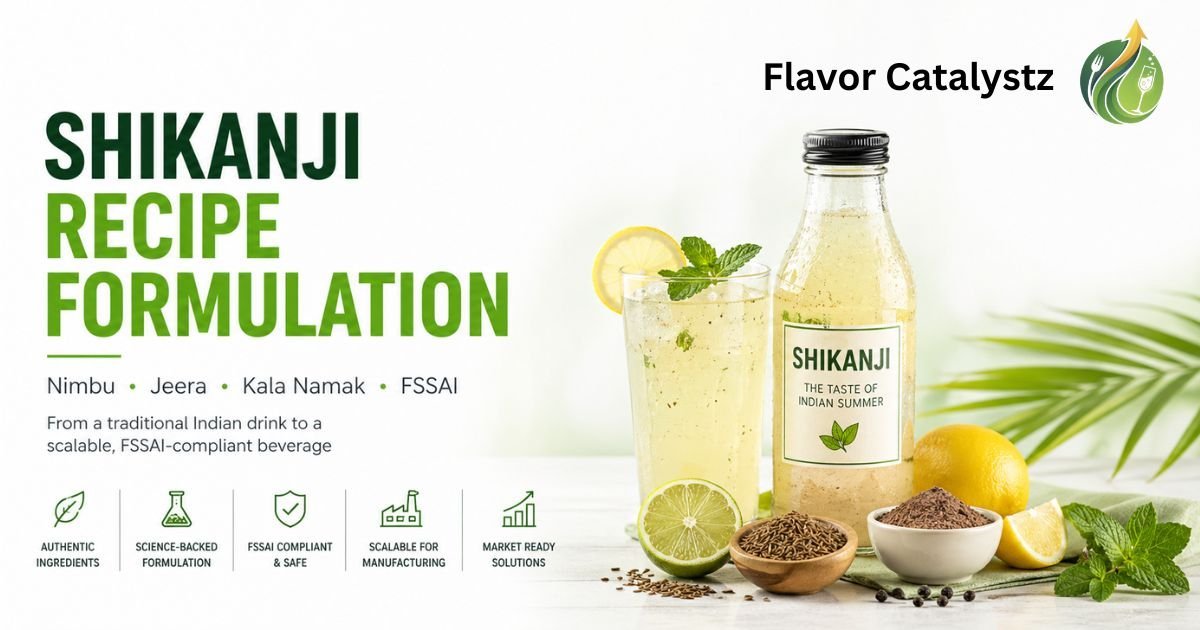
Every summer, millions of Indians reach for one thing — a tall glass of Shikanji. This spiced lemonade, made with nimbu, kala namak, jeera, and a pinch of chaat masala, has been quenching thirst for centuries. But what if the humble Shikanji recipe could be more than a home drink? What if it could be bottled, branded, and sold across India as a premium RTD (Ready-To-Drink) beverage?
At Flavor Catalyst, we help beverage entrepreneurs do exactly that — take a beloved Indian recipe and transform it into a commercially viable, FSSAI-compliant product. This blog walks you through the authentic Shikanji recipe, its formulation science, and the path from your kitchen to a scalable beverage brand.
What Is Shikanji? More Than Just Nimbu Paani
Many people use “Shikanji” and “Nimbu Paani” interchangeably — but there’s a meaningful difference. Nimbu Paani is simply lemon water with sugar and salt. Shikanji, on the other hand, is a spiced, layered drink with a distinct flavor profile rooted in North Indian street food culture.
What makes Shikanji unique:
- Kala Namak (Black Salt) — adds sulphurous depth and enhances the digestive profile
- Roasted Jeera Powder — earthy, warm aroma that defines the drink
- Chaat Masala — a blend of dried mango powder, asafoetida, and spices for a tangy kick
- Ginger (optional) — adds a sharp, functional layer
- Mint leaves — freshness and visual appeal
This complexity is exactly what makes Shikanji an exciting candidate for beverage formulation — it already has layered taste, functional ingredients, and mass cultural appeal.
The Authentic Shikanji Recipe (Base Formula)
Before we talk commercial formulation, let’s lock in the base recipe that any food technologist or entrepreneur should understand:
| Ingredient | Quantity (per 300ml glass) | Functional Role |
| Fresh Lemon Juice | 30–40 ml | Primary acid — citric profile |
| Sugar / Jaggery | 20–25 g | Sweetness & mouthfeel |
| Kala Namak | 0.5–1 g | Umami, digestive benefit |
| Regular Salt | 0.3 g | Taste balance |
| Roasted Jeera Powder | 0.5 g | Aroma, digestive |
| Chaat Masala | 0.3–0.5 g | Tangy complexity |
| Ginger Juice (optional) | 5 ml | Heat, functional boost |
| Water (chilled) | 200–220 ml | Carrier base |
| Mint Leaves | 4–5 leaves | Freshness, visual |
From Recipe to Formulation: The Science of Scaling Shikanji
A home recipe and a commercial formulation are fundamentally different. When you scale Shikanji to 10,000 bottles per batch, you face challenges that no home cook has to think about: shelf stability, pH control, microbial safety, taste consistency, and regulatory compliance.
Key Formulation Challenges:
1. Lemon Juice Standardization
Fresh lemon juice has seasonal variation in Brix (sugar content) and titratable acidity. A formulator must standardize using lemon juice concentrate (typically 400-500g per litre NFC or FCOJ) with citric acid as a backup acidulant to hit the target pH of 2.8–3.2.
2. Spice Extraction & Stability
Raw jeera and chaat masala can cause cloudiness, sedimentation, and off-notes in a bottled product. The solution is to use standardized oleoresins or spray-dried spice extracts that offer consistent flavor without visual defects. Kala namak must be tested for hydrogen sulfide levels to ensure it stays within sensory-acceptable limits at scale.
3. Sweetener System
For mass market appeal, a blend of sugar + stevia or sugar + erythritol helps reduce caloric load while maintaining authentic taste. A jaggery-based variant can target the health-conscious D2C segment at a premium price point.
4. Preservation & Shelf Life
Shikanji is naturally acidic (pH < 3.5), which helps. But for 6–12 months shelf life, you’ll need a hurdle technology approach: low pH + pasteurization (tunnel or flash) + sodium benzoate/potassium sorbate within FSSAI limits (up to 250 ppm). Hot fill or aseptic filling is preferred for PET bottles.
FSSAI Compliance for Shikanji as a Commercial Beverage
Any Shikanji product manufactured and sold in India must comply with the Food Safety and Standards Authority of India (FSSAI) regulations under FSS Act 2006. Specifically, it would fall under:
- Category 14.1.4 – Water-based flavoured drinks (non-carbonated)
- Or Category 14.1.2.2 – Fruit juice-based drinks if lemon content exceeds 10%
Key compliance requirements include label declarations (ingredients, nutritional info, FSSAI license number, best-before date), additive compliance (preservatives, colors, flavors within permitted limits), and microbiological standards.
Refer to our detailed guide on FSSAI beverage compliance in India to understand exactly what documents and approvals you need before your product goes to market.
Shikanji Variants Worth Developing for the Indian Market
Once your base Shikanji formulation is stable, you can build a product range around it. Here are variants that align with current market trends:
- Classic Shikanji — The OG kala namak + jeera formula — mass market RTD
- Ginger-Shikanji — Added adrak for digestive positioning — target health segment
- Jaljeera Shikanji — Infused with pudina and amchur — pairs with summer snacking
- Sparkling Shikanji — Carbonated version — competes with lemon-flavored sodas
- Jaggery Shikanji — Replaces refined sugar — D2C health premium product
- Immunity Shikanji — Added Vitamin C, zinc, and tulsi extract — functional beverage
Beverage Formulation Cost: What Does It Actually Take?
One of the most common questions from beverage entrepreneurs is: “How much does it cost to develop and produce a Shikanji beverage commercially?”
Typical cost buckets include:
- R&D & Formulation Development: ₹50,000 – ₹2,00,000 depending on complexity and iterations
- Lab Testing (microbiological, nutritional): ₹15,000 – ₹50,000 per variant
- Contract Manufacturing (per unit at 10,000 units): ₹10 – ₹25 per 200ml bottle
- Packaging Design + Printing: ₹30,000 – ₹1,50,000 for initial run
- FSSAI License + Compliance Docs: ₹5,000 – ₹20,000
Read our full breakdown of beverage formulation cost in India for a stage-by-stage investment map.
How Flavor Catalyst Helps You Launch Your Shikanji Brand
Flavor Catalyst is India’s end-to-end beverage development partner. We work with startups, FMCG brands, and regional manufacturers to take their recipe ideas and build market-ready products. For a Shikanji brand, we offer:
- Flavor Profiling & Recipe Standardization — We analyze your base recipe, stabilize it for industrial production, and run taste panels.
- Ingredient Sourcing & Vendor Identification — From lemon juice concentrate to food-grade kala namak, we help you source at scale.
- Shelf Life Testing & pH Optimization — Real accelerated testing, not estimates.
- Contract Manufacturing Linkage — We connect you with FSSAI-licensed co-manufacturers across India.
- Label & Compliance Support — Ensure your product is legally market-ready from day one.
Whether you want to launch a single SKU or a full summer beverage range, our non-alcoholic beverage development services are built to get you from concept to shelf — faster, cheaper, and with fewer surprises.
Also Read: Related Guides From Flavor Catalyst
- Cold Drink Recipe Formulation
- Beverage Recipe Formulation
- Functional Beverage Development India
- Natural Electrolyte Drink Recipe
Conclusion: Your Shikanji Could Be the Next Big Indian RTD Brand
India’s RTD beverage market is growing rapidly, and culturally rooted drinks like Shikanji have an enormous authenticity advantage over imported flavors. The Shikanji recipe formulation is not complicated — but scaling it commercially requires the right technical partner, compliant processes, and a clear product-market fit strategy.
If you’re sitting on a great Shikanji recipe and wondering how to turn it into a brand — Flavor Catalyst is ready to help. Reach out to us for a free formulation consultation and let’s build India’s next beloved summer drink together.
Ready to Formulate Your Shikanji Brand? Contact Flavor Catalyst today for end-to-end beverage development support.
FAQs: Shikanji Recipe Formulation
Q1. What are the main ingredients of a commercial Shikanji formulation?
A commercial Shikanji formulation includes lemon juice concentrate, sugar or alternative sweeteners, kala namak, standardized jeera extract, chaat masala oleoresin, citric acid as pH adjuster, and water. Preservatives like potassium sorbate may be added within FSSAI-permitted limits for shelf stability.
Q2. What is the difference between Nimbu Paani and Shikanji in terms of formulation?
Nimbu Paani is a two-ingredient preparation — lemon juice and sweetened water. Shikanji adds kala namak, roasted jeera, chaat masala, and often ginger or mint. In formulation terms, Shikanji has a far more complex flavor matrix, a distinct umami note from kala namak, and better sensory differentiation for branding.
Q3. What is the ideal pH for a bottled Shikanji drink?
The ideal pH for a bottled Shikanji RTD beverage is between 2.8 and 3.4. This range ensures natural microbial inhibition due to acidity, reduces the need for heavy preservatives, and remains within FSSAI guidelines for acidic beverages.
Q4. What FSSAI license is required to manufacture and sell Shikanji commercially?
You need a Central or State FSSAI Manufacturing License (depending on scale) under Schedule 4 for beverages. For turnover above ₹20 lakhs, a Central license is required. Your product label must include the FSSAI logo, license number, nutritional facts, and best-before date.
Q5. Can Shikanji be made carbonated without affecting its taste?
Yes. Carbonation (2.5–3.0 volumes of CO₂) actually enhances the sour-spicy character of Shikanji and gives it a refreshing mouthfeel. The spice levels may need to be slightly reduced since carbonation amplifies perceived spiciness. Sparkling Shikanji can compete directly with lime-flavored sodas in the market.
Q6. What are common mistakes in developing a Shikanji formulation?
The most common mistakes include: using raw spice powders (causes sedimentation and spoilage), neglecting pH standardization across batches, not accounting for kala namak’s sulfur compounds at scale (can cause off-odor), and skipping accelerated shelf-life testing before launch. Working with a professional formulation partner eliminates most of these risks.
Q7. How long does it take to develop a commercially viable Shikanji product?
A typical formulation development timeline is 6–12 weeks: 2 weeks for base recipe R&D, 2–3 weeks for trials and iteration, 2–4 weeks for stability and lab testing, and 1–2 weeks for FSSAI paperwork and label compliance. Contract manufacturing setup can run in parallel.
Q8. What spices are commonly used in Shikanji and are they safe in a commercial beverage?
The key spices — roasted jeera (cumin), kala namak, and chaat masala — are all GRAS (Generally Recognized As Safe) when used within standard limits. In commercial production, these are typically used as standardized extracts or oleoresins rather than raw powders to ensure consistency and food safety compliance.