Jul 2026 · 9 min read
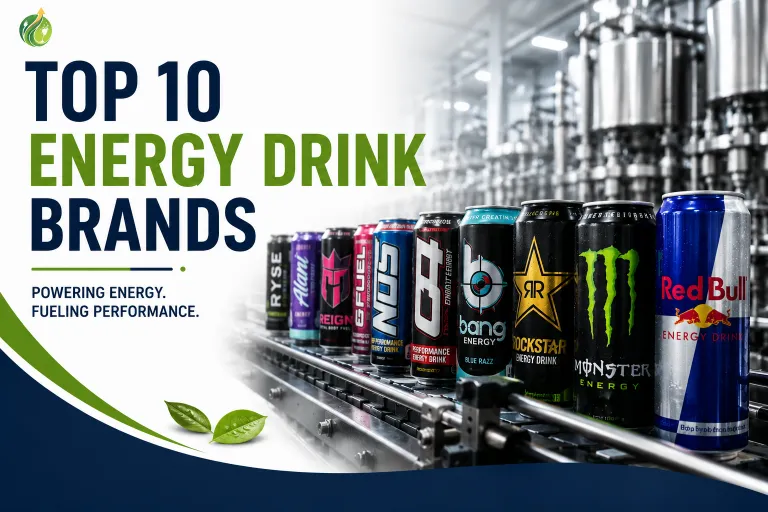
The top 10 energy drink brands are ranked here by U.S. retail sales and volume, led by Red Bull and Monster Energy, followed by Celsius, Rockstar, Bang, Reign, Alani Nu, Ghost Energy, NOS, and Full Throttle. Rankings combine case-volume and dollar-sales tracking from industry reports, since no single official registry ranks brands. The output is a comparative list with caffeine content and positioning per brand. The key limitation is that rankings shift by metric — volume, dollars, or region — so “top” can mean different things depending on which number is cited.
Key Takeaways
- Red Bull and Monster hold the top two spots in the U.S., though their order flips depending on whether the metric is volume or dollar sales.
- Celsius has moved into a clear third position, driven by zero-sugar and fitness-oriented positioning rather than price competition.
- Caffeine content across the top 10 ranges from about 80 mg to 300 mg per serving, so rank order does not track caffeine dose.
- Legacy brands like Rockstar and Bang have lost share to newer entrants such as Alani Nu and Ghost Energy over the past two years.
- Global rankings differ from U.S. rankings because Red Bull’s international volume outweighs its U.S. position relative to Monster.
Ranking energy drink brands depends heavily on which number gets cited — a brand can lead in global volume and still trail domestically. This list ranks the top 10 brands using U.S. retail sales and volume data, then explains the caffeine content and positioning that separates them. It also covers where “top brand” claims commonly go wrong, such as mixing global and domestic figures, and how to check a ranking before repeating it.
What Are the Top 10 Energy Drink Brands?
Red Bull and Monster Energy lead the U.S. energy drink category, followed by Celsius, Rockstar, Bang, Reign, Alani Nu, Ghost Energy, NOS, and Full Throttle. This order reflects combined U.S. retail volume and dollar-sales tracking as of early 2026, and it changes slightly depending on which metric a given report uses. The sections below cover each brand’s positioning, typical caffeine content, and what currently drives or limits its growth.
1. Red Bull
Red Bull leads on brand recognition and distribution rather than on caffeine dose, since its standard can carries a comparatively modest amount. A standard Red Bull contains about 80 mg of caffeine per 8.4 oz serving, well below several competitors. Globally, Red Bull holds approximately 43% of the market by volume, generating roughly $12 billion in annual energy drink revenue, though in the U.S. specifically, Monster edges ahead with about 35% share versus Red Bull’s 32%.
2. Monster Energy
Monster Energy holds the top or second U.S. position depending on the metric, supported by a wide portfolio of sub-brands. Monster’s main namesake brand grew nearly 5% year over year, while some of its owned brands like Reign and Bang saw declines. Its original formula carries about 160 mg of caffeine per 16 oz, double Red Bull’s standard dose per equivalent volume.
3. Celsius
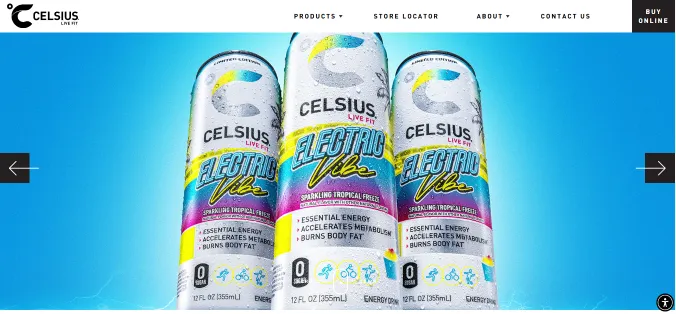
Celsius energy drink has grown faster than any other major brand by targeting fitness-conscious, sugar-free consumers. Celsius grew from under $100 million in sales in 2019 to over $2 billion in 2024, capturing roughly 10% of the U.S. market. Its formulas typically run at the higher end of standard energy drinks, around 200 mg of caffeine per can, positioned toward pre-workout use rather than casual sipping.
4. Rockstar
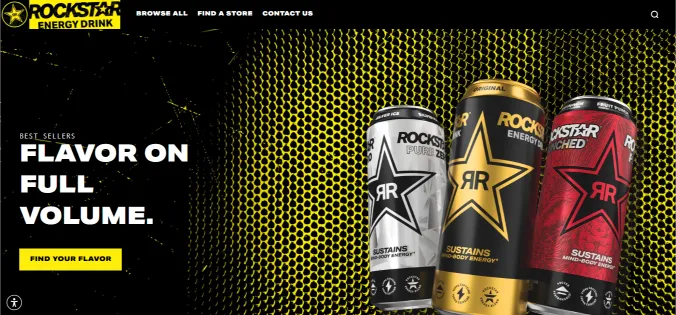
Rockstar energy drink was once a top-three global brand but now trails newer challengers in growth. Rockstar held a 10% global market share in 2020, third-highest after Red Bull and Monster, but its U.S. sales dropped about 7% year over year more recently. Ownership has also shifted: PepsiCo acquired Rockstar in 2020, and Celsius Holdings acquired the brand’s U.S. and Canada rights in 2025.
5. Bang Energy
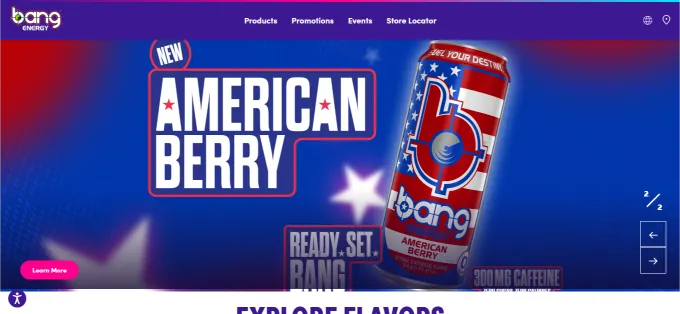
Bang differentiates on high caffeine dose and zero-sugar formulation rather than broad flavor variety. Bang contains 300 mg of caffeine and zero grams of sugar per 16 oz, sweetened with sucralose. Since Monster acquired the brand in 2023, Bang’s sales have continued to soften, down over 4% year over year in recent tracking.
6. Reign Total Body Fuel
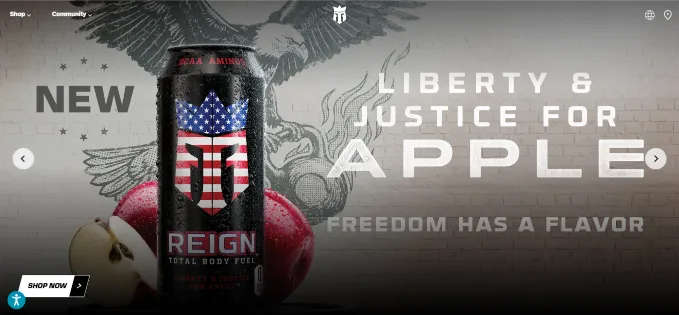
Reign competes directly with Bang on caffeine dose and functional-ingredient claims. Reign delivers 300 mg of caffeine with zero sugar, plus BCAAs and CoQ10, targeting pre-workout and high-alertness occasions. Despite the similar formula, Reign’s sales dropped 7.1% year over year, with its Reign Inferno line down nearly 50%.
7. Alani Nu
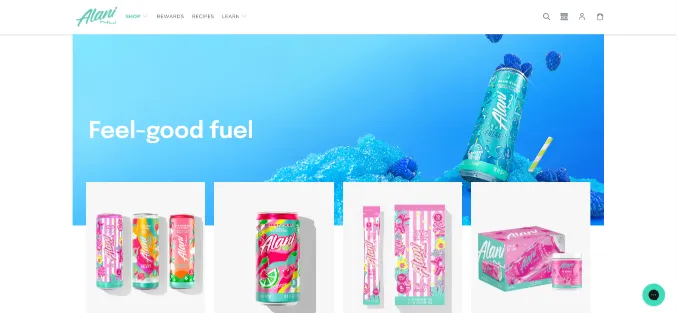
Alani Nu energy drink has built its position primarily among women, a demographic legacy brands skew away from. Alani Nu’s mental market share nearly quadruples among women (about 6.5%) compared with men (about 1.7%), and it converts awareness into brand consideration as efficiently as Red Bull does among the people who know it. Its formulas run in the same 200 mg range as Celsius.
8. Ghost Energy

Ghost Energy holds a smaller but growing share, built on flavor collaborations and fitness-audience marketing. Ghost Energy has posted more than 15% year-over-year growth in recent tracking, positioning it among the faster-growing challenger brands rather than the largest by volume. Its caffeine content sits in the standard 200 mg high-caffeine tier alongside Celsius and Alani Nu.
9. NOS
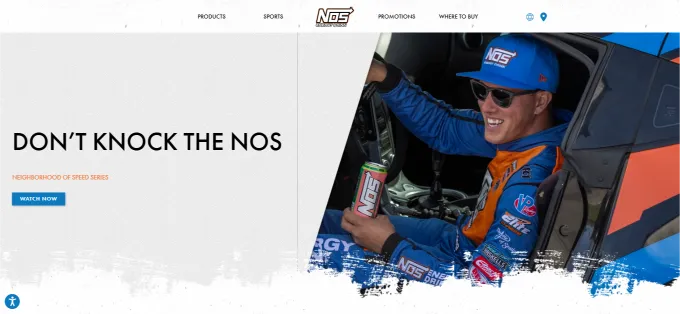
NOS energy drink ranks by consistent volume rather than brand buzz, since it rarely appears in marketing-driven coverage. NOS posted slight sales gains year over year even as several higher-profile brands declined. Its caffeine content matches Monster’s original formula, and its lower shelf price supports steady, if unglamorous, volume.
10. Full Throttle
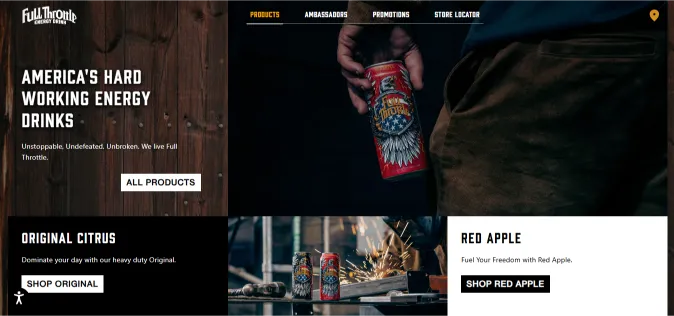
Full Throttle holds its position through steady incremental growth rather than a specific differentiator. Full Throttle’s sales were up almost 3% year over year, a modest but positive result compared with the declines seen among several higher-ranked competitors. It competes mainly on price and wide convenience-store distribution.
How Are Energy Drink Brand Rankings Determined?
Energy drink rankings typically combine retail case-volume data with dollar-sales tracking, most often sourced from NielsenIQ or similar syndicated panels. Reports differ, however, in whether they measure global or domestic sales, which changes the order at the top. Red Bull leads globally by volume, but Monster leads in the U.S. specifically, and both statements are accurate for their respective scope.
Rankings also shift between channels. Convenience-store data can favor different brands than grocery or e-commerce data, since shopper behavior differs by channel. A ranking pulled from one retail channel should not be presented as the definitive market order without noting which channel it covers.
Energy Drink Development
Ready to Launch Your Own Energy Drink Brand?
From custom energy drink formulation and flavor development to contract manufacturing, packaging, and commercial production, our experts help you build a high-performance energy drink brand that stands out in a competitive market.
Failure Modes in Energy Drink Brand Rankings — and How to Fix Them
The most common failure mode is citing a global ranking as if it applies to the U.S. market, or vice versa. Since Red Bull and Monster swap places depending on scope, the fix is to state the geography every time a rank or share figure appears.
A second failure mode is treating a single year’s growth rate as a permanent ranking. Celsius and Alani Nu grew quickly in recent tracking periods, but growth rates compound from different bases, so a fast grower is not automatically catching the leader. The fix is to report both the growth rate and the underlying base (dollar or volume figure) together.
A third failure mode is conflating caffeine content with market rank, implying that higher-caffeine brands sell more. Bang and Reign carry the highest caffeine doses in this list but rank below lower-caffeine Red Bull and Monster. The fix is to keep caffeine data and sales rank as separate columns, never inferred from one another.
| Ranking Stage | Data Source / Method | Output | Failure Mode | Fix |
| Brand ordering | NielsenIQ / syndicated retail panels | Ranked list by volume or dollars | Mixes global and domestic figures into one order | Label each rank with its geographic scope |
| Growth comparison | Year-over-year % change reports | Growth rate per brand | Presents % growth as proof of overtaking the leader | Report growth rate alongside the base dollar/volume figure |
| Caffeine comparison | Brand nutrition/supplement labels | mg per serving | Implies higher caffeine equals higher sales rank | Keep caffeine data in a separate column from sales rank |
| Channel attribution | Convenience, grocery, or e-commerce data | Channel-specific share | Generalizes one channel’s ranking to the whole market | State which retail channel the ranking covers |
Conclusion
The top 10 energy drink brands split into two tiers: Red Bull and Monster as established leaders, and a faster-growing group — led by Celsius, Alani Nu, and Ghost Energy — gaining share through sugar-free and audience-specific positioning. Legacy mid-tier brands like Rockstar, Bang, and Reign have lost ground over the past two years. Because rankings depend on geography, channel, and metric, any “top brand” claim should specify which of those it’s measuring before being treated as definitive.
This list ranks established consumer brands by retail sales, not the formulation and manufacturing side of the industry. Founders building a new energy drink brand instead work with beverage formulation and compliance partners — firms like Flavor Catalystz, for example, focus on caffeine-system design, flavor development, and regulatory compliance (such as FSSAI in India) rather than competing for retail shelf share directly.
FAQs
What is the difference between the global and U.S. top energy drink brand?
Red Bull leads globally with roughly 43% volume share, while Monster leads in the U.S. with about 35% versus Red Bull’s 32%. Both figures are correct for their stated scope, so citing one without the geography can mislead readers.
Which top 10 brand has the highest caffeine content?
Bang and Reign each carry around 300 mg of caffeine per 16 oz can, among the highest in the mainstream category. That figure approaches, but stays under, the FDA’s 400 mg daily guidance for healthy adults.
Is Celsius now bigger than Rockstar or Bang?
By U.S. dollar sales, yes — Celsius has surpassed both Rockstar and Bang in recent tracking after growing from under $100 million in 2019 to over $2 billion in 2024. It has not overtaken Red Bull or Monster, which remain the top two.
Why isn’t PRIME on this top 10 list?
PRIME saw a viral sales spike in 2022–2023 but has since declined sharply, with sales down nearly 65% year over year in recent tracking. Its current volume no longer places it among the top 10 by sustained U.S. sales.
Do all top 10 brands disclose caffeine content the same way?
No. Disclosure depends on whether a brand is classified as a conventional food or a dietary supplement, which determines whether it uses a Nutrition Facts or Supplement Facts panel. Always check the panel type before comparing caffeine figures across brands.