May 2026 · 13 min read
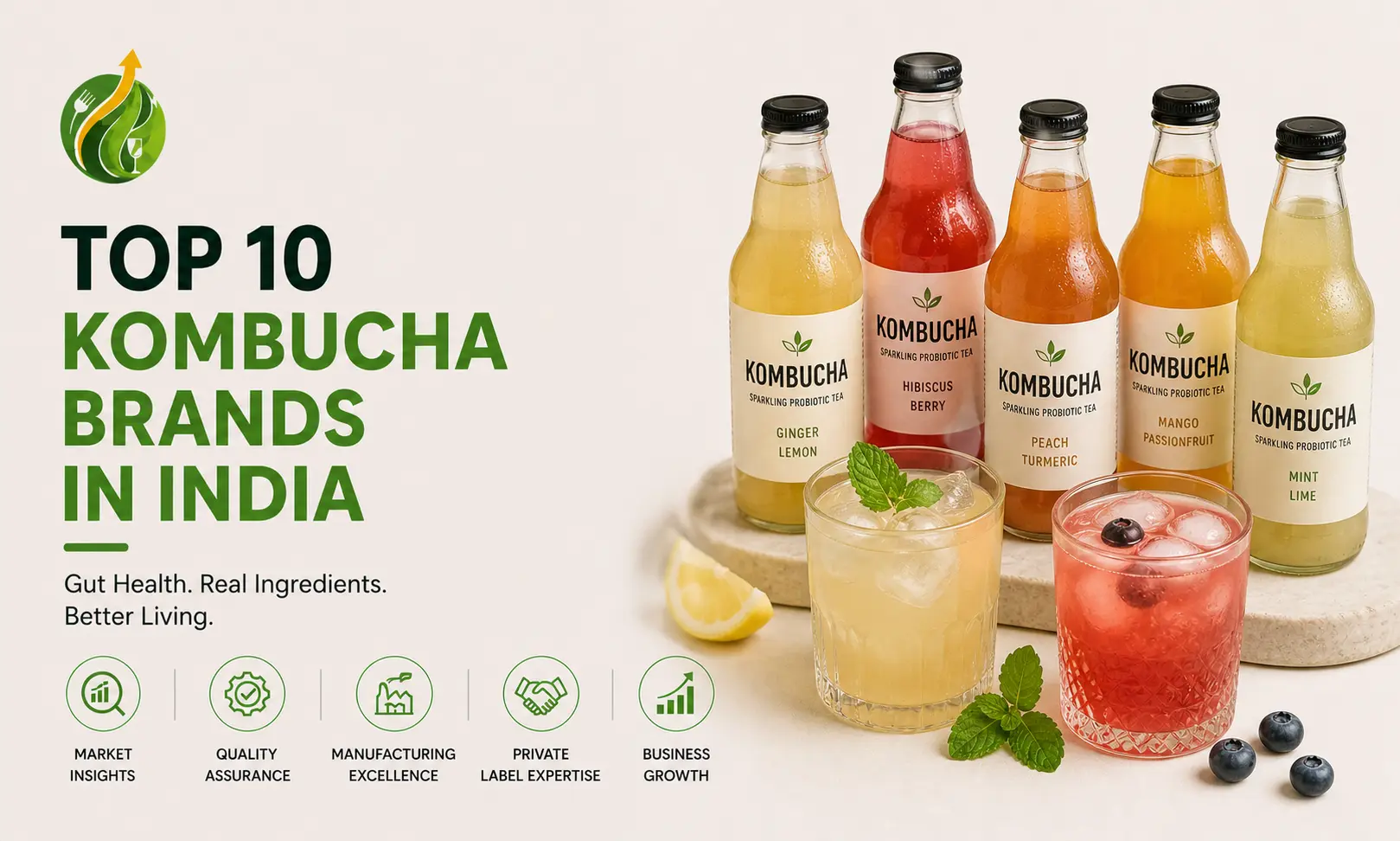
Kombucha has gone from a wellness curiosity to a mainstream functional beverage option in India over the past three years. What used to be something you stumbled across in an organic food store in Mumbai or Bangalore is now available on quick commerce in most metros, stocked in modern trade chains, and consumed by a growing community of health-conscious Indians who want something more interesting than water but do not want the sugar load of juice or the calories of a smoothie.
The Indian kombucha market is still maturing, and there is a meaningful quality difference between brands. Some brands produce raw, unpasteurized kombucha with genuine live cultures. Others pasteurize for shelf stability, which kills most of the live cultures but extends the product’s distribution window. Some use quality tea bases with interesting botanicals; others produce a generic fermented tea with artificial flavors, reflecting gaps in food product development.
Got a Kombucha Idea?
Launch Your Own Profitable Kombucha Brand?
Build a scalable kombucha brand with expert support in formulation, live culture stability, flavour innovation, packaging development, and FSSAI-ready beverage manufacturing solutions.
If you are trying to figure out which kombucha brand to spend your money on, or if you are considering building your own kombucha brand, this guide gives you the full picture: what makes good kombucha, the top brands operating in India in 2026, and what each one does well.
What Is Kombucha and How Is It Made
Kombucha is fermented tea. The process starts with sweetened black or green tea (or a blend) that is inoculated with a SCOBY, which stands for Symbiotic Culture Of Bacteria and Yeast. The SCOBY consumes the sugar over one to three weeks, producing organic acids, B vitamins, enzymes, and a small amount of natural carbonation.
The result is a tangy, slightly effervescent drink with a complex flavor profile that varies depending on the tea base, fermentation duration, temperature, and any additional ingredients added during a secondary fermentation (called F2), where fruit juices, ginger, herbs, or other botanicals are added to create flavored variants.
Good kombucha is a living product. Raw, unpasteurized kombucha contains live probiotic cultures that are sensitive to heat. This creates a cold chain and shelf life challenge that distinguishes premium kombucha production from standard beverage manufacturing.
Raw vs Pasteurized Kombucha: What Is the Difference
This distinction matters a lot when evaluating kombucha brands and is often glossed over in brand marketing.
Raw Kombucha
Unpasteurized and contains live bacteria and yeast cultures. This is the traditional form of kombucha and what most functional health benefits are associated with. Raw kombucha requires cold chain distribution (refrigeration from production through retail) and has a shorter shelf life, typically 30 to 90 days. It continues to ferment slowly even in the bottle, which means it needs to be consumed relatively quickly after reaching consumers.
Pasteurized Kombucha
Heat-treated to kill live cultures, extending shelf life to 6 to 12 months and eliminating the need for cold chain distribution. This makes pasteurized kombucha more practical for national distribution but removes most of the live probiotic content that the health-conscious consumer is looking for. Some brands add probiotics back after pasteurization, though the stability of added cultures in an acidic beverage environment varies.
As a consumer, if gut health benefits are your primary reason for drinking kombucha, raw kombucha from a brand that maintains cold chain is the more credible choice.
Top 10 Kombucha Brands in India 2026
1. Bhu Kombucha
Bhu kombucha is one of the most recognized kombucha brands in India with a strong D2C presence and availability in modern trade. Bhu brews their kombucha from whole leaf tea and offers a range of flavors including ginger lemon, hibiscus rose, and tropical variants. They position strongly on the raw and live cultures angle with cold chain distribution maintained through their primary channels.
Their packaging is clean and appealing, their flavor range is well-developed for Indian taste preferences, and they have built genuine brand recall among the urban health-conscious consumer segment. Available online and in select retail in metros.
2. Bombucha
Bombucha is a Mumbai-based brand known for consistently fermented, well-balanced kombucha with interesting botanical additions. They work with quality tea bases and have developed a loyal following in the Mumbai and Pune health food community.
Their product range covers classic ginger kombucha alongside more experimental variants with Indian botanical ingredients. Bombucha is a good example of a brand that prioritizes fermentation quality over aggressive expansion, which shows in the product consistency.
3. The Fermented Story
A newer entrant that has made an impression with its emphasis on traditional fermentation practices and high-quality ingredient sourcing. The Fermented Story is known in food enthusiast communities for its authentic, complex kombucha flavors and its transparent communication about the fermentation process.
This brand appeals particularly to consumers who have tried multiple kombucha products and want something that takes fermentation seriously. Their D2C channel is their primary sales route.
4. Indie Booch
Indie Booch has built a following in South India, particularly in Bangalore, with its range of locally-inspired kombucha flavors. Their approach to flavor development incorporates South Indian ingredients and flavor profiles in a way that makes the product feel genuinely local rather than a derivative of international kombucha trends.
They maintain cold chain distribution through their primary channels and have expanded beyond Bangalore into other metros through D2C shipping.
5. Soul Kombucha
Soul Kombucha operates with a focus on gut health education alongside product sales. They have invested significantly in content around gut health, the science of fermentation, and how to incorporate kombucha into a daily wellness routine. This education-first approach has built them a loyal consumer base that understands and values what they are buying.
Their product range is well-considered, and they are available across D2C, quick commerce, and selected retail in major cities.
6. KombuchaKraft
A brand known for its artisanal approach and focus on small-batch production quality. KombuchaKraft limits their SKU range to maintain fermentation quality across their lineup. Their ginger and turmeric kombucha has been particularly well-received for its flavor balance and functional ingredient addition.
Their distribution is more limited than some larger brands but the product quality is consistent and the brand has a dedicated following among functional beverage enthusiasts.
7. Dope Kombucha
Dope Kombucha has leaned into bold branding and a younger consumer audience. Their packaging and marketing are more irreverent than the wellness-heavy positioning of most kombucha brands, which has helped them stand out in a category that can feel quite earnest.
They offer a solid core range of kombucha flavors and have focused on quick commerce and D2C channels to reach their target consumer. Available in metros with strong quick commerce presence.
8. April Kombucha
April Kombucha is a Bangalore-based brand that has expanded distribution more broadly in recent years. They offer a clean, well-executed range with good flavor development across their product lineup. Their hibiscus variant and their classic ginger kombucha are among their best-received products.
They have been consistent in maintaining their raw, unpasteurized positioning while working to improve distribution reach, which is the right priority sequence for a premium kombucha brand.
9. Kombucha Brew
A brand that has focused on the corporate wellness and office pantry channel alongside retail, positioning their kombucha as a healthier desk drink alternative to carbonated beverages and packaged juices. This channel focus has given them a different customer acquisition path than most kombucha brands.
Their flavors are calibrated for broader accessibility, with less challenging vinegar forward profiles that work well for first-time kombucha drinkers. Available in select metros and growing their D2C presence.
10. Prana Kombucha
Prana Kombucha positions strongly on the Ayurvedic ingredient angle, incorporating adaptogenic herbs and traditional Indian botanicals into their kombucha range. Ashwagandha, amla, and tulsi variants distinguish their product range from Western-influenced kombucha brands.
This positioning resonates strongly with the segment of Indian consumers who want the gut health benefits of kombucha alongside traditional wellness ingredients they already trust. Available through D2C and select health food stores.
| Brand | USP | Best Flavor | Distribution | Raw or Pasteurized |
| Bhu Kombucha | Strong D2C, good retail reach | Ginger Lemon | D2C, modern trade, online | Raw |
| Bombucha | Fermentation quality, botanical range | Classic Ginger | D2C, Mumbai and Pune retail | Raw |
| The Fermented Story | Traditional fermentation, authentic taste | Tropical variants | D2C primary | Raw |
| Indie Booch | South Indian flavor identity | Local botanical variants | D2C, Bangalore retail | Raw |
| Soul Kombucha | Gut health education, consistent quality | Classic and ginger | D2C, quick commerce | Raw |
| KombuchaKraft | Small batch, artisanal quality | Ginger Turmeric | D2C, specialty stores | Raw |
| Dope Kombucha | Bold branding, young consumer | Tropical variants | Quick commerce, D2C | Pasteurized |
| April Kombucha | Consistent quality, good flavor range | Hibiscus | D2C, modern trade | Raw |
| Kombucha Brew | Corporate wellness channel focus | Accessible classic | Corporate pantry, D2C | Pasteurized |
| Prana Kombucha | Ayurvedic ingredients, Indian botanicals | Ashwagandha Amla | D2C, health stores | Raw |
How to Choose the Right Kombucha for You
With multiple brands now available, here is a practical framework for choosing the right kombucha.
- If gut health is your primary goal: Choose a raw, unpasteurized kombucha from a brand that maintains cold chain. The live cultures are what drive gut health benefits, and pasteurization significantly reduces them.
- If you are new to kombucha: Start with a ginger or a lightly flavored variant. The vinegar-forward taste of unflavored kombucha can be an acquired taste. Fruit-forward second fermentation variants are often more accessible for first-timers.
- If you prefer Indian flavors: Prana Kombucha and Indie Booch both offer Indian botanical variants that incorporate familiar flavors from Ayurvedic and regional Indian traditions.
- If convenience and availability matter most: Bhu Kombucha and Soul Kombucha have the widest distribution networks among raw kombucha brands. For pasteurized, Dope Kombucha has strong quick commerce presence.
- If you are looking for a zero-alcohol option: All reputable kombucha brands in India produce products with alcohol content well below 0.5 percent (the FSSAI limit for non-alcoholic beverages). However, if you are sensitive to any alcohol content, check the brand’s published alcohol content, as some raw kombucha can exceed 0.5 percent if over-fermented.
The Indian Kombucha Market: Numbers and Trends
The Indian kombucha market is still small in absolute terms but growing quickly. The category is estimated at USD 8 to 12 million in 2024 and is growing at approximately 25 to 30 percent annually, making it one of the fastest growing functional beverage segments.
Three trends are shaping the market in 2026. First, quick commerce adoption has significantly lowered the barrier to trial. A consumer can order a single 250 ml bottle of kombucha on Blinkit in 10 minutes. This trial accessibility is driving new consumer acquisition faster than traditional retail could. Second, the gut health narrative has entered mainstream wellness consciousness in India. Kombucha benefits from this broader trend alongside other fermented foods like kefir and probiotic supplements. Third, the alternative to alcohol segment is growing, with kombucha positioning as an adult, sophisticated non-alcoholic beverage for social occasions. This is driving kombucha into restaurants and bars as a mocktail base and a table beverage option.
Starting Your Own Kombucha Brand in India
If this guide has made you think about building a kombucha brand rather than just buying from one, here is a brief overview of what that involves.
Kombucha production starts with quality SCOBY culture management, which takes time and expertise to develop and maintain. The fermentation process requires temperature-controlled environments and consistent monitoring. Flavor development through secondary fermentation adds another layer of process management.
The cold chain requirement for raw kombucha is the biggest operational challenge for new brands. You need refrigerated storage at your production facility, cold chain logistics for distribution, and refrigeration at every retail touchpoint. This limits the distribution radius and adds cost compared to ambient beverages.
- FSSAI compliance: Kombucha falls under fermented beverages. The natural alcohol content must stay below 0.5 percent for FSSAI classification as a non-alcoholic beverage. Alcohol content must be tested and documented per batch.
- Shelf life and stability: Raw kombucha shelf life is 30 to 90 days depending on formulation and packaging. Maintaining consistent pH and carbonation across batches is a production quality challenge.
- Packaging: Glass bottles are standard for premium kombucha. HDPE or PET are used for some formats. Packaging must be able to handle carbonation pressure.
- Investment: A small-batch kombucha brand launching via own production typically starts with Rs. 10 lakh to Rs. 30 lakh in initial investment covering fermentation equipment, cold storage, packaging, FSSAI licensing, and launch marketing.
What Makes a Kombucha Brand Win in India
The brands that are building real market share in Indian kombucha in 2026 have a few things in common.
Fermentation integrity is non-negotiable. Consumers who care about kombucha care deeply about whether the product is genuinely raw and contains live cultures. Brands that can communicate this authentically, not just as marketing language but with transparent process information, build trust that is very difficult for less committed competitors to replicate.
Flavor accessibility matters as much as functional credentials. The brands growing fastest are those that have developed flavors specifically for Indian taste preferences rather than importing Western kombucha flavor profiles unchanged. Indian consumers respond well to ginger, hibiscus, tamarind, tulsi, and tropical fruit directions.
Education builds loyalty. Kombucha is still a product that requires some consumer education for first-time buyers. Brands that invest in explaining the fermentation process, the role of probiotics in gut health, and how to incorporate kombucha into a daily routine consistently report higher repeat purchase rates than brands that focus only on transactional marketing.
| What to Look For | Why It Matters | How to Check |
| Raw vs pasteurized declaration | Raw has live cultures; pasteurized does not | Check the label and brand website |
| Cold chain distribution | Indicates the brand maintains live culture integrity | How is it delivered: refrigerated or ambient? |
| SCOBY source and fermentation details | Quality of culture determines product quality | Look for brand transparency on process |
| Alcohol content declaration | Should be below 0.5% for FSSAI non-alcoholic classification | Check label or ask the brand directly |
| Ingredient quality | Tea base, sugar source, and botanicals affect flavor and quality | Read the ingredient list carefully |
Thinking About Launching Your Own Kombucha Brand
The Indian kombucha market is at an exciting inflection point in 2026. Consumer awareness has been built, distribution infrastructure is improving, and the window to build a meaningful brand before the category matures is still open.
Flavor Catalystz works with fermented beverage brands and functional food startups on formulation development, contract manufacturing of food, FSSAI compliance, and packaging. If you are building in the fermented beverage space and need a manufacturing partner who understands the technical requirements of live culture products, reach out at +91 9711730492.
Frequently Asked Questions
What is kombucha?
Kombucha is a fermented tea beverage made by fermenting sweetened tea with a SCOBY (Symbiotic Culture Of Bacteria and Yeast). It produces organic acids, B vitamins, probiotics, and natural carbonation, resulting in a tangy, slightly fizzy drink.
Is kombucha good for you?
Kombucha contains live beneficial bacteria, organic acids, and antioxidants from tea. Regular consumption may support gut health. It is not a medicine and benefits vary individually. It contains a small amount of natural alcohol (typically below 0.5 percent).
Which is the best kombucha brand in India?
Strong options in 2026 include Bhu Kombucha, Bombucha, The Fermented Story, Indie Booch, and Prana Kombucha. The best choice depends on your flavor preference, location, and whether you prefer raw or pasteurized kombucha.
Where can I buy kombucha in India?
Kombucha is available on D2C brand websites, Blinkit, Zepto, Amazon, and selected modern trade stores like Nature’s Basket and Foodhall. Availability varies by brand and city.