Apr 2026 · 15 min read
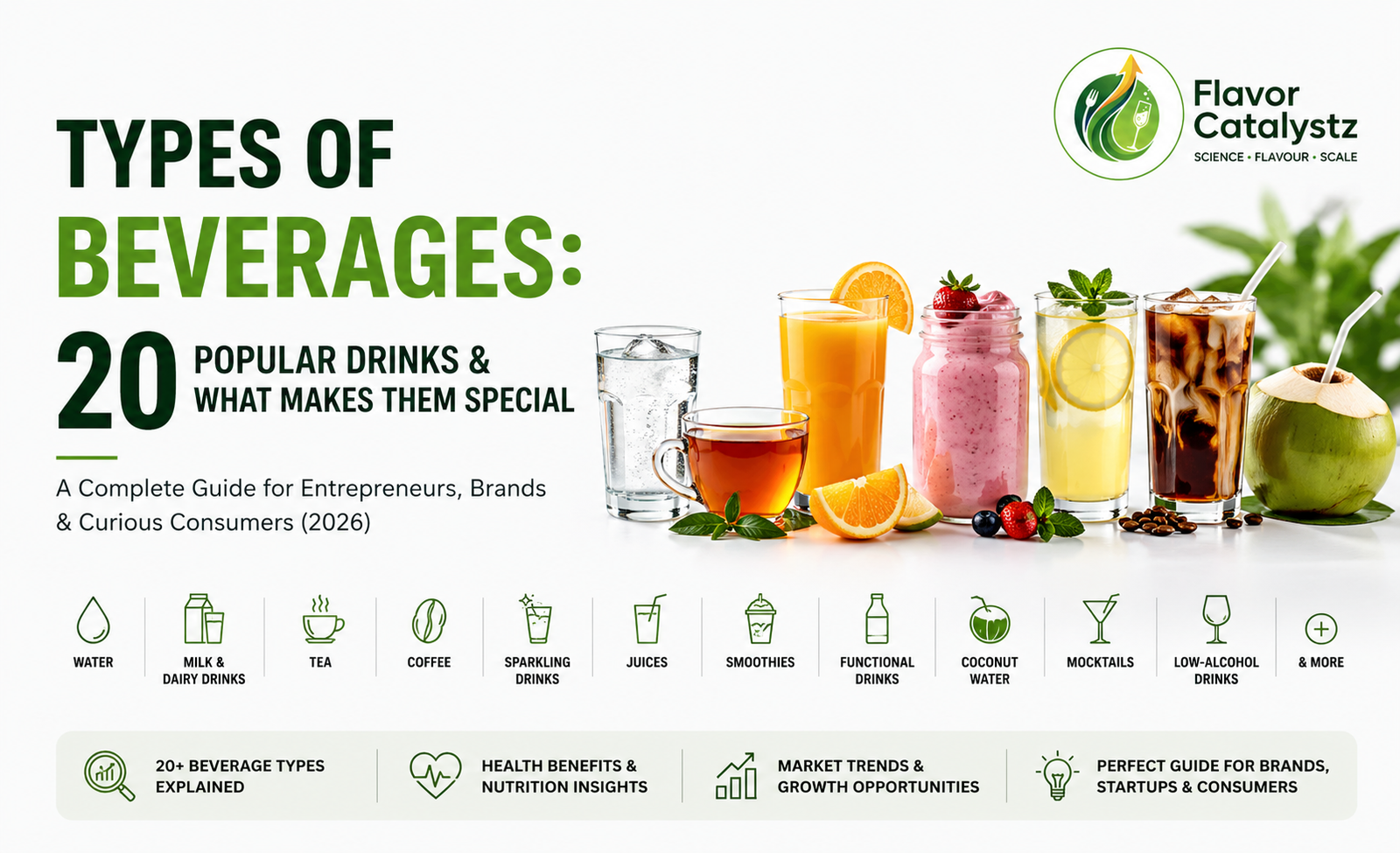
Whether you are an entrepreneur planning to enter the drinks market, a brand owner exploring new product lines, or simply a curious consumer — understanding the different types of beverages is the first step toward making smarter choices. From everyday water and tea to trending functional drinks and low-alcohol options, the beverage world is evolving faster than ever.
India’s beverage market alone is projected to cross $47.6 billion in 2026, driven by health-conscious urban consumers, rising disposable incomes, and the explosive growth of functional and ready-to-drink (RTD) categories. If you are thinking of entering this market, partnering with an experienced beverage consultant or working with a professional beverage formulation team — like Flavor Catalystz — can be the difference between a product that sells and one that sits on the shelf.
In this comprehensive guide, we cover every major category of beverages — their definition, health benefits, market relevance, and how they connect to real product development opportunities in India.
| Key Insight: The global non-alcoholic beverage market crossed USD 1.4 trillion in 2025. Functional beverages now account for the fastest-growing sub-segment, with India seeing 12%+ annual growth in this category. |
What is a Beverage? Definition & Scope
A beverage is any drinkable liquid that humans consume for hydration, nutrition, pleasure, or therapeutic benefit. Beverages form a core part of the Food & Beverage (F&B) industry and span an enormous range — from plain water and freshly squeezed juice to craft beer, probiotic sodas, and fortified vitamin drinks.
In 2026, the definition of ‘beverage’ has expanded significantly to include functional beverages — drinks engineered with added health benefits such as probiotics, adaptogens, electrolytes, vitamins, and plant-based extracts. This shift is being driven by growing consumer awareness around wellness, immunity, gut health, and clean-label ingredients.
Classification of Beverages: 3 Main Types
All beverages can be broadly grouped into three primary categories:
| Category | Examples | Key Feature |
| Non-Alcoholic | Water, tea, coffee, juice, milk, smoothies | Below 0.5% alcohol |
| Functional Beverages | Energy drinks, probiotic sodas, vitamin water, adaptogen drinks | Added health benefits |
| Alcoholic Beverages | Beer, wine, cider, spirits, cocktails | Above 1% ethanol; fermented/distilled |
Each category serves a different consumer need, price point, and regulatory requirement. Brands entering any of these spaces must invest in proper beverage formulation to ensure product safety, taste consistency, shelf stability, and regulatory compliance — especially in India under FSSAI guidelines. Flavor Catalystz offers end-to-end support across all three categories.
12 Popular Types of Non-Alcoholic Beverages
Non-alcoholic beverages are the largest and most diverse segment. Here is a detailed breakdown of the most consumed types:
1. Water — The World’s Most Essential Drink
Water is the foundation of life and the single most consumed beverage globally. It accounts for about 70% of the human body’s composition, making adequate hydration non-negotiable. From a business perspective, packaged drinking water, mineral water, and sparkling water collectively represent one of the most stable and recession-proof product categories in the beverage industry.
Variants include still, sparkling, mineral, alkaline, and flavored water. Alkaline water and hydrogen water are emerging premium sub-categories gaining traction in urban India.
2. Milk & Dairy-Based Drinks
Milk is a nutritional powerhouse rich in calcium, vitamin D, phosphorus, and protein. Dairy-based beverages including flavored milk, lassi, buttermilk, and plant-based milk alternatives (oat milk, almond milk, soy milk) are seeing strong growth in India’s health-oriented consumer segment.
For brands interested in beverage formulation, plant-based milk alternatives offer one of the most exciting product development opportunities in 2026, driven by lactose intolerance awareness and vegan lifestyle trends. Flavor Catalystz’s formulation team has deep expertise in this space.
3. Tea — From Chai to Specialty Brews
Tea is India’s most beloved beverage and one of the top three most-consumed drinks globally. It is made by steeping tea leaves, herbs, or spices in hot water. The five primary types — black, green, white, oolong, and pu-erh — each offer distinct flavor profiles and health properties.
Green tea is rich in antioxidants (catechins) linked to reduced risk of heart disease and cancer. RTD (ready-to-drink) tea is one of the highest-growth categories in beverage formulation, especially for cold brew and kombucha-style tea drinks.
4. Coffee — The Global Energy Ritual
Coffee remains among the most consumed types of beverages worldwide. It provides a natural caffeine boost and contains antioxidants that support cellular health. Studies suggest moderate coffee consumption may reduce the risk of Type 2 diabetes and Alzheimer’s disease.
Cold brew, nitro coffee, specialty espresso, and RTD coffee are the fastest-growing sub-categories. In India, the premiumization of coffee is driving a boom in cafe culture and packaged coffee products. RTD coffee is a high-potential area for beverage formulation and contract manufacturing — exactly where Flavor Catalystz specializes.
5. Sparkling Drinks & Sodas
Sparkling beverages — carbonated soft drinks (CSDs) — remain among the top-selling beverage types globally. Carbonation improves taste perception and delivers a refreshing mouthfeel. Leading brands include Coca-Cola, Pepsi, Thums Up, and Limca in India.
New-age sparkling drinks with lower sugar, natural flavors, and functional ingredients (like sparkling probiotic sodas) represent a significant reformulation opportunity. Brands reformulating CSDs should work with a qualified beverage consultant to balance carbonation, pH, sweetness, and preservation.
6. Fruit Juices & Nectars
Fruit juices are extracted from fruits and vegetables, delivering vitamins, minerals, and natural sugars. Popular variants in India include mango, orange, guava, mixed fruit, and amla juice. Cold-pressed juice is rapidly gaining market share among premium urban consumers.
Important distinction: 100% juice vs. nectar vs. juice drink (with added sugar/water). From a formulation standpoint, juice products require careful handling of shelf life, FSSAI-compliant labeling, and Brix-acid balance.
7. Energy Drinks
Energy drinks contain caffeine, B vitamins, taurine, and herbal extracts (like guarana and ginseng) to boost alertness and physical performance. They are one of the highest-growing beverage categories globally.
In India, energy drink formulation requires FSSAI compliance, especially around caffeine limits (max 320 mg/L for energy drinks) and mandatory label declarations. Both carbonated and non-carbonated formats are available. Brands looking to launch energy drinks must invest in proper regulatory-compliant formulation — Flavor Catalystz offers dedicated Energy Drink Formulation services.
8. Mocktails — Non-Alcoholic Cocktails
Mocktails are blended non-alcoholic beverages that mimic cocktail flavors using fresh juices, syrups, herbs, and sodas. They cater to health-conscious consumers, pregnant women, teetotalers, and underage audiences.
The global mocktail market is growing at 7%+ CAGR, driven by the ‘sober curious’ movement. In India, mocktails at restaurants and weddings are increasingly replacing traditional cocktails. Premixed mocktail pouches and RTD mocktail cans are emerging product formats.
9. Milkshakes & Flavored Milk
Milkshakes combine milk with ice cream, chocolate, fruit, or flavored syrups to create thick, indulgent cold beverages. India’s organized milkshake and flavored milk market is growing steadily through quick-service restaurants, dairy brands, and retail chains.
From a formulation perspective, milkshakes require attention to emulsification, viscosity, and cold-chain packaging to maintain consistency and shelf appeal.
10. Smoothies — Nutrition in a Cup
Smoothies blend fruits, vegetables, nuts, seeds, yogurt, or protein powders into nutrient-dense beverages. They are positioned as meal replacements or post-workout nutrition. The Indian smoothie market is rising on the back of gym culture, health apps, and awareness of clean eating.
Brands looking to create functional beverage products — such as protein smoothies or probiotic fruit blends — can benefit enormously from professional beverage formulation support to ensure nutritional accuracy, taste, and shelf stability.
11. Cocoa & Hot Chocolate Drinks
Cocoa beverages are made from cocoa powder or melted chocolate mixed with milk or hot water. Beyond their indulgent taste, cocoa is rich in flavonoids that support cardiovascular health and cognitive function. Drinking cocoa regularly may reduce blood pressure and cholesterol levels.
In India, the hot chocolate and premium cocoa beverage market is growing alongside the cafe culture expansion. RTD cocoa drinks and protein-fortified cocoa mixes present strong product development opportunities.
12. Tonic Water & Functional Infused Waters
Tonic water is a carbonated soft drink containing quinine — originally used for malaria prevention. Today it serves as a mixer in cocktails (especially gin and tonic) and as a standalone sparkling drink. Functional infused waters — containing vitamins, electrolytes, or plant extracts — are a major growth segment in 2026.
5 Functional Beverages Driving Market Growth in 2026
Functional beverages are one of the most exciting categories in modern beverage formulation. These drinks go beyond basic hydration to deliver targeted health benefits. The global functional beverage market is growing at a CAGR of over 8%, with India emerging as a major growth market.
1. Probiotic & Gut-Health Drinks
Probiotic beverages contain live beneficial bacteria (like Lactobacillus and Bifidobacterium) that support gut microbiome health. Kombucha, kefir, and probiotic lassi are key examples. India’s awareness around gut health is accelerating demand for these products.
2. Electrolyte & Sports Drinks
Designed for athletes and active consumers, these beverages replenish sodium, potassium, magnesium, and other electrolytes lost through sweat. The protein & sports drink formulation space in India is growing rapidly alongside the fitness and gym culture boom.
3. Adaptogen Drinks
Adaptogens are natural substances (like ashwagandha, tulsi, and brahmi) that help the body manage stress and anxiety. Adaptogen-infused beverages are gaining traction among India’s urban professionals and wellness-oriented consumers. This is a major opportunity for brands working with a beverage consultant to develop innovative formulations rooted in Ayurvedic science — a specialty of Flavor Catalystz.
4. Vitamin & Immunity-Boosting Drinks
Vitamin waters and immunity-boosting drinks fortified with Vitamin C, Zinc, Elderberry, or Turmeric extract are among the fastest-growing beverage types post-COVID. Indian consumers actively seek out products that claim to boost immunity — making this a commercially viable category with strong marketing angles.
5. Collagen & Beauty Drinks
Collagen-infused beverages targeting skin, hair, and nail health represent an emerging premium segment. While still nascent in India, the ‘beauty drink’ category has already found a strong consumer base in metro cities among health-conscious women aged 25-40.
Top Alcoholic Beverage Categories
Alcoholic beverages contain ethanol produced through fermentation or distillation. While the global trend toward moderation is growing, premium alcoholic beverages continue to perform strongly.
Beer
Beer is the world’s most-consumed alcoholic beverage, typically containing 4-6% alcohol by volume. It is produced by fermenting cereal grains (barley, wheat, corn) with yeast. Ales and lagers are the two primary styles, with over 400 recognized varieties globally. India’s craft beer market is booming, offering product development opportunities for specialty and low-alcohol beers.
Wine
Wine is made by fermenting grapes or other fruits. Red wine contains polyphenols and resveratrol — antioxidants linked to cardiovascular benefits when consumed in moderation. India’s wine market — especially from Nashik, Maharashtra — is growing as premiumization trends reshape consumer preferences.
Cider
Cider is produced by fermenting apple juice and contains polyphenols that may help combat oxidative stress. While still a niche category in India, hard cider is gaining attention among younger urban consumers looking for alternatives to beer.
Cocktails & Spirits
Spirits — including whiskey, vodka, gin, rum, and tequila — are produced by distilling fermented liquids. They typically contain 40%+ alcohol by volume. Ready-to-drink (RTD) cocktail cans are one of the fastest-growing product formats in the premium alcohol segment, appealing to convenience-driven millennials.
Top 3 Trending Beverage Categories for 2026
1. Bubble Tea
Invented in Taiwan in the 1980s, bubble tea became a global phenomenon in the 2010s. The market is projected to reach $4.3 billion by 2026. Its popularity stems from its wide variety of flavors (200+ combinations), customizable sweetness levels, and its appeal among younger consumers. Healthier versions using organic soy milk, fresh green tea, and reduced sugar are emerging as the next wave.
2. Alcohol-Free & Low-Alcohol Beverages
The ‘sober curious’ movement is reshaping the global alcohol industry. Non-alcoholic beers, alcohol-free wines, and zero-proof spirits are seeing explosive growth. Non-alcoholic beers and spirits generated $280 million globally in recent years, with 7.1%+ growth projected through 2025-26. In India, this trend is aligned with health-consciousness among millennials and Gen Z consumers.
If you are planning to develop a non-alcoholic beverage for the Indian market, working with an expert beverage consultant like Flavor Catalystz ensures your product hits the right formulation, taste, and regulatory benchmarks.
3. Ready-to-Drink (RTD) Functional Beverages
RTD beverages — pre-packaged, shelf-stable drinks ready for immediate consumption — are seeing the strongest growth across all categories. RTD tea, RTD coffee, RTD protein drinks, and beverages with substantiated health claims are the three key drivers of RTD adoption in 2026.
Why Professional Beverage Formulation Matters for Your Brand
Launching a beverage is not as simple as mixing a few ingredients and bottling them. Every successful drink brand in India has invested in professional beverage formulation to ensure:
- Product safety and FSSAI regulatory compliance
- Consistent taste, texture, and appearance across batches
- Optimized shelf life and packaging compatibility
- Cost-effective ingredient sourcing and scaling
- Differentiated health claims backed by science
Working with an experienced beverage consultant gives your brand access to R&D expertise, ingredient knowledge, pilot batching, and regulatory guidance — all under one roof. Whether you are developing a functional energy drink, a probiotic kombucha, an RTD tea, or a premium milkshake, professional beverage formulation ensures your product is launch-ready, scalable, and market-competitive.
| At Flavor Catalystz, our beverage experts have helped brands across India develop, test, and launch drinks that perform at retail, foodservice, and D2C channels. From concept to commercialization, we handle every stage of the product development lifecycle. Explore our services: Beverage Formulation | Beverage Consultant in India | Functional Drink Development | Energy Drink Formulation | Non-Alcoholic Beverage Development | |
Conclusion: Choose the Right Beverage Strategy for Your Brand
The beverage industry offers extraordinary opportunities — but only for brands that understand the market, invest in the right formulation, and build products that meet consumer needs. Whether you are developing a functional health drink, reformulating a classic soft drink, or launching an entirely new beverage category in India, the foundation is always professional-grade product development.
The types of beverages covered in this guide represent the full commercial spectrum — from everyday essentials like water and tea to high-margin functional drinks and premium RTD products. Each category demands a different approach to ingredients, flavor science, shelf life, and regulatory compliance.
| Ready to launch your beverage brand? Contact Flavor Catalystz’s beverage experts today for a free consultation on beverage formulation, product development, and market entry strategy. |
Frequently Asked Questions
FAQ 1: What are the main types of beverages?
The main types of beverages are non-alcoholic beverages (water, tea, coffee, juice, milk, smoothies, energy drinks), functional beverages (probiotic drinks, sports drinks, vitamin waters, adaptogen drinks), and alcoholic beverages (beer, wine, cider, spirits, cocktails). Each category serves different consumer needs and business opportunities.
FAQ 2: What is beverage formulation and why is it important?
Beverage formulation is the scientific process of developing a drink product — selecting ingredients, defining their ratios, optimizing taste and texture, ensuring shelf stability, and meeting regulatory requirements. It is essential for any brand that wants to launch a consistent, safe, and market-ready beverage. Professional beverage formulation reduces the risk of product failure, speeds up time-to-market, and ensures FSSAI compliance in India.
FAQ 3: What does a beverage consultant do?
A beverage consultant is a specialist who guides brands through the entire drink development process — from ideation and ingredient selection to formulation, pilot production, regulatory compliance, and commercial launch. A beverage consultant saves time and cost by leveraging existing market knowledge, lab capabilities, and supplier networks.
FAQ 4: What are functional beverages?
Functional beverages are drinks formulated with added ingredients that deliver specific health benefits beyond basic nutrition. Examples include energy drinks (caffeine + B vitamins), probiotic sodas (live cultures), vitamin waters (Vitamin C, D, Zinc), adaptogen drinks (ashwagandha, tulsi), and sports drinks (electrolytes). The functional beverage market in India is growing at 12%+ annually.
FAQ 5: What is the difference between a juice, nectar, and juice drink?
A 100% juice contains only fruit juice with no added sugar or water. A nectar contains 25-99% fruit juice mixed with water and sometimes sugar. A juice drink contains less than 25% fruit juice with added water, sugar, and flavors. From a beverage formulation standpoint, each requires different ingredient management, labeling, and FSSAI compliance.
FAQ 6: What are non-alcoholic beverages?
Non-alcoholic beverages are drinks with less than 0.5% alcohol content by volume. They include water, tea, coffee, fruit juices, milk, smoothies, energy drinks, mocktails, probiotic drinks, and sparkling waters. The non-alcoholic beverage market in India is one of the fastest-growing segments. Flavor Catalystz’s non-alcoholic beverage development service helps brands create products from scratch.
FAQ 7: What are the top trending types of beverages in 2026?
The top trending beverage types in 2026 include bubble tea (projected $4.3B market), non-alcoholic and low-alcohol beverages (driven by the sober curious movement), ready-to-drink (RTD) functional drinks, adaptogen and stress-relief beverages, and probiotic sodas. In India specifically, RTD coffee, coconut water, and immunity drinks are among the fastest-growing categories.
FAQ 8: How do I start a beverage brand in India?
Starting a beverage brand in India involves: (1) selecting your product category and target consumer, (2) working with a beverage consultant to develop and finalize your formulation, (3) getting FSSAI licensing and label approvals, (4) partnering with a beverage contract manufacturer for production, (5) building your supply chain and distribution strategy, and (6) launching with a focused marketing plan.
FAQ 9: What is the FSSAI rule for energy drinks in India?
Under FSSAI regulations, energy drinks in India must comply with Food Safety and Standards (Food Products Standards and Food Additives) Regulations. Key rules include: maximum caffeine limit of 320 mg/L, mandatory declaration of caffeine content on the label, and warnings for children, pregnant women, and people sensitive to caffeine. A certified beverage consultant can guide brands through all FSSAI compliance requirements for energy drink formulation.
FAQ 10: What is RTD (Ready-to-Drink) beverage formulation?
RTD beverage formulation is the development of pre-packaged beverages that are shelf-stable and ready for immediate consumption without mixing or preparation. RTD formats include cans, PET bottles, Tetra Pak, and pouches. Formulating RTD beverages requires careful management of pH, water activity, preservative systems, carbonation (if applicable), and filling/packaging technology. Flavor Catalystz specializes in RTD tea and coffee formulation and other RTD product formats.