May 2026 · 16 min read
Food is one of the most fundamental parts of human life. Yet, most people never stop to think about how many distinct types of food exist or how they are organised by nutritionists, chefs, and food scientists. Whether you are planning a balanced meal, building a food product, or simply curious about what ends up on your plate, understanding the major food categories gives you a much clearer picture of nutrition, cooking, and the global food system.
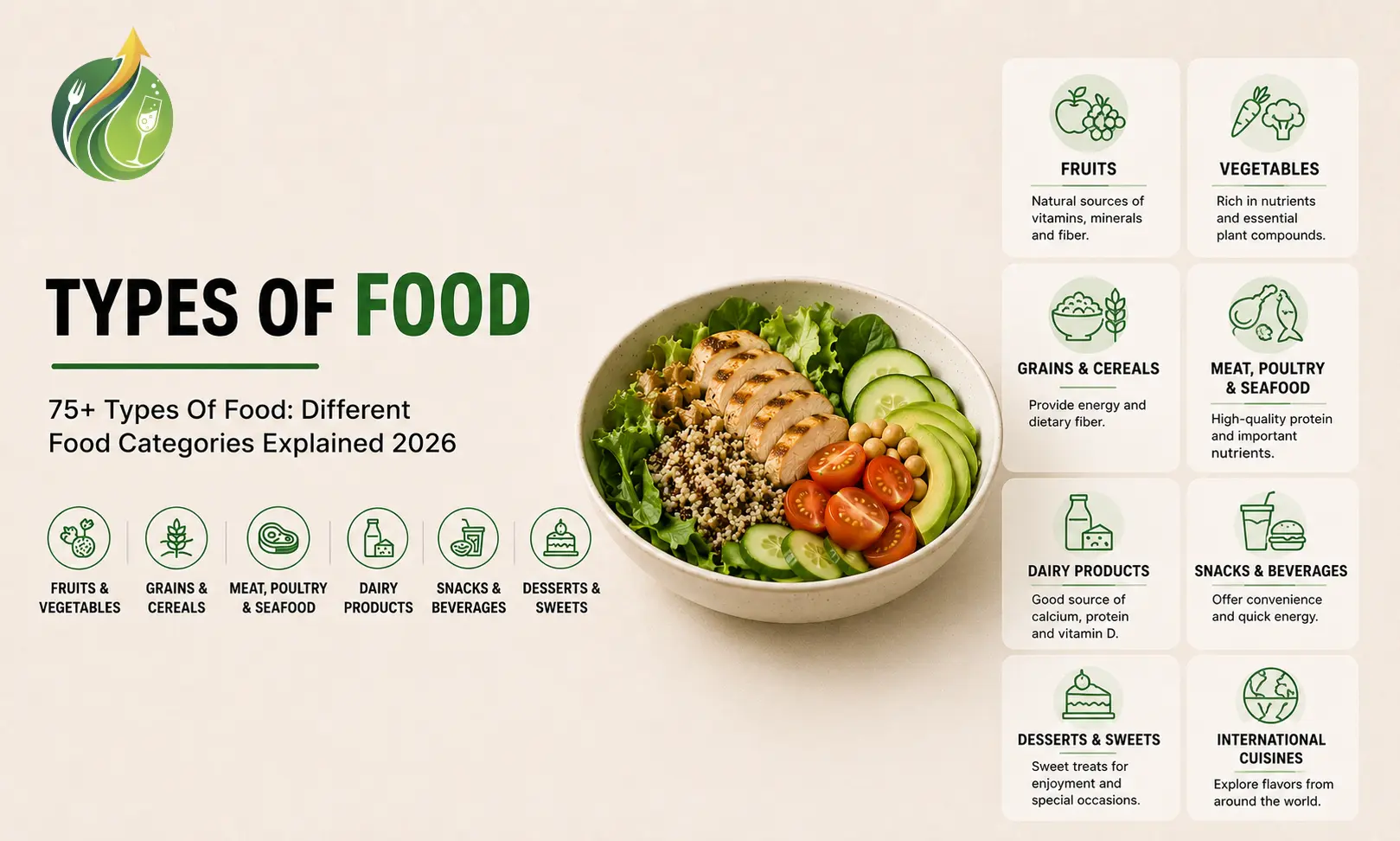
This guide covers 75+ types of food across all the major food categories, explaining what each one contains, why it matters, and how different foods fit into a healthy diet.
Launch a Food PRODUCT
Launch A Food Product As Per Your Idea
Launch a scalable food brand with expert support in product formulation, flavour coating, shelf-life optimization, FSSAI compliance, and ready-to-scale manufacturing solutions.
What Are Food Categories and Why Do They Matter?
Food categories are classification systems that group foods based on their source, nutrient profile, biological origin, processing level, or culinary use. The most widely used system in nutrition science is the USDA MyPlate framework, which organises all foods into five core groups: fruits, vegetables, grains, protein foods, and dairy. However, in practice, food can also be grouped by cooking method, cultural origin, processing level, or macronutrient content.
Food categories matter for several reasons. They help dietitians and public health professionals communicate dietary guidelines clearly. They allow manufacturers to position products correctly in the market. They guide home cooks in building balanced meals. And they help researchers track nutritional gaps in population diets.
For food businesses and startups, a clear understanding of food categories is the first step toward product formulation, labelling compliance, and market positioning. Teams at organisations like Flavor Catalystz use this foundational knowledge to guide food product development from concept to commercialisation.
The Five Core Food Groups
The five core food groups form the backbone of every major dietary guideline published around the world. Here is what each one includes and why it belongs in a daily diet.
1. Fruits
Fruits are the edible products of flowering plants. They are rich in natural sugars, dietary fibre, vitamins C and A, potassium, and antioxidants. Dietary guidelines recommend consuming whole fruits rather than fruit juices, as juices lack the fibre present in whole fruit. The World Health Organisation recommends at least 400 grams of fruits and vegetables combined per day.
Types of fruits include:
- Citrus fruits: Oranges, lemons, limes, grapefruits, and mandarins. High in vitamin C and flavonoids.
- Berries: Strawberries, blueberries, raspberries, blackberries, and cranberries. Among the highest antioxidant-containing foods available.
- Tropical fruits: Mangoes, papayas, pineapples, guavas, jackfruit, and bananas. Popular across South Asian and Southeast Asian cuisines.
- Stone fruits (drupes): Peaches, plums, cherries, apricots, and nectarines. Named for the hard pit or stone at the centre.
- Melons: Watermelons, cantaloupes, and honeydew melons. High water content makes them hydrating foods.
- Pome fruits: Apples, pears, and quinces. Crunchy texture with a central seed core.
- Dried fruits: Raisins, dates, figs, prunes, and apricots. Calorie-dense due to water removal. Used in baking and snacking.
- Canned and frozen fruits: Nutritionally comparable to fresh when no sugar is added.
2. Vegetables
Vegetables are plant-based foods that supply vitamins, minerals, fibre, and phytochemicals. The USDA MyPlate system breaks vegetables into five subgroups to encourage variety, as different-coloured vegetables contain different combinations of nutrients.
Types of vegetables include:
- Dark green vegetables: Spinach, kale, broccoli, arugula, Swiss chard, and Brussels sprouts. Rich in folate, vitamin K, and iron.
- Red and orange vegetables: Tomatoes, carrots, sweet potatoes, red peppers, and butternut squash. High in beta-carotene (vitamin A precursor).
- Starchy vegetables: Potatoes, corn, green peas, and yams. Higher carbohydrate content than non-starchy vegetables.
- Legumes (beans and peas): Black beans, chickpeas, kidney beans, lentils, and soybeans. Can be counted as both a vegetable and a protein source.
- Other vegetables: Eggplant, mushrooms, cauliflower, onions, garlic, celery, zucchini, and artichokes.
- Alliums: Onions, leeks, shallots, and garlic. Known for sulfur compounds with potential antimicrobial properties.
- Root and tuber vegetables: Beets, turnips, parsnips, radishes, and cassava. Grown underground.
- Cruciferous vegetables: Broccoli, cauliflower, cabbage, bok choy, and kohlrabi. Associated with cancer-protective compounds called glucosinolates.
3. Grains and Cereals
Grains are the seeds of cereal grasses. They are the largest source of energy in most human diets globally and supply complex carbohydrates, B vitamins, iron, and dietary fibre. The key distinction within this category is between whole grains and refined grains.
Whole grains retain the bran, germ, and endosperm, preserving all natural nutrients and fibre. Refined grains have had the bran and germ removed, which improves texture and shelf life but strips out fibre and important micronutrients. Dietary guidelines recommend that at least half of daily grain intake come from whole grain sources.
- Whole grains: Brown rice, oats, whole wheat, quinoa, barley, millet, sorghum, rye, buckwheat, and amaranth.
- Refined grains: White rice, white bread, white flour, semolina, and most conventional pasta.
- Bread and baked goods: Sourdough, rye bread, flatbreads (roti, chapati, naan), pita, and bagels.
- Breakfast cereals: Oatmeal, muesli, granola, cornflakes, and puffed rice.
- Pasta and noodles: Spaghetti, penne, rice noodles, soba noodles, and vermicelli.
- Traditional Indian grains: Jowar (sorghum), bajra (pearl millet), ragi (finger millet), and foxtail millet. Growing rapidly in both traditional and functional food categories.
4. Protein Foods
The protein foods group covers all foods that are primary sources of dietary protein, including animal and plant-based sources. Protein supports muscle repair, immune function, enzyme production, and hormone synthesis.
- Red meats: Beef, pork, lamb, and goat. Good sources of iron, zinc, and B12, though higher in saturated fat.
- Poultry: Chicken, turkey, and duck. Leaner than most red meats when the skin is removed.
- Seafood and fish: Salmon, tuna, mackerel, sardines, cod, shrimp, crab, and mussels. Rich in omega-3 fatty acids.
- Eggs: A complete protein source containing all essential amino acids.
- Nuts: Almonds, walnuts, cashews, pistachios, and macadamia nuts. High in healthy fats and plant protein.
- Seeds: Chia seeds, flaxseeds, hemp seeds, pumpkin seeds, and sunflower seeds.
- Legumes and pulses: Lentils, chickpeas, black beans, pinto beans, and soybeans.
- Soy products: Tofu, tempeh, edamame, and soy milk. Popular in vegan and vegetarian diets.
- Plant-based meat alternatives: Products made from pea protein, soy protein, or mycoprotein that replicate the texture of meat.
5. Dairy and Dairy Alternatives
Dairy foods are primary sources of calcium, vitamin D, potassium, and high-quality protein. Low-fat and fat-free dairy options provide the same nutrient content as full-fat versions with less saturated fat.
- Milk: Whole milk, reduced-fat milk, skim milk, and lactose-free milk.
- Yogurt: Regular yogurt, Greek yogurt, and kefir. Fermented dairy products that contain live bacterial cultures (probiotics).
- Cheese: Hard cheeses (parmesan, cheddar), soft cheeses (brie, ricotta), and processed cheese. Higher in sodium and saturated fat.
- Butter and cream: High-fat dairy products used in cooking and baking.
- Non-dairy alternatives: Fortified soy milk, oat milk, almond milk, coconut milk, and rice milk. These are included in the dairy group when fortified with calcium and vitamin D.
- Paneer: A fresh, non-aged cheese widely used in Indian cuisine and a primary protein source in vegetarian cooking.
Additional Food Categories Beyond the Core Five
Beyond the five core food groups, foods can be classified by additional categories that are essential in culinary, manufacturing, and nutrition contexts.
Fats and Oils
While not officially a food group in the USDA system, fats and oils are recognised as an important part of a healthy diet. They supply essential fatty acids, fat-soluble vitamins (A, D, E, K), and energy.
- Unsaturated fats (healthy fats): Olive oil, avocado oil, canola oil, sunflower oil, and nut oils. Linked to cardiovascular health.
- Saturated fats: Butter, coconut oil, lard, and ghee. Consumed in moderation as part of a balanced diet.
- Trans fats: Partially hydrogenated oils found in some commercially processed foods. Widely restricted globally due to cardiovascular risks.
Herbs and Spices
Herbs and spices are derived from plants and used primarily to flavour food rather than provide significant caloric or macronutrient value. However, many contain bioactive compounds with documented health effects.
- Dry spices: Turmeric, cumin, coriander, black pepper, cardamom, cinnamon, cloves, and paprika.
- Fresh herbs: Basil, cilantro, mint, parsley, dill, rosemary, thyme, and sage.
- Spice blends: Garam masala, curry powder, ras el hanout, and five-spice powder.
Beverages
Beverages are liquid foods that contribute to daily fluid, calorie, and nutrient intake.
- Water: The most important beverage for human health. Zero calories, zero nutrients.
- Tea and coffee: Non-caloric beverages when consumed without added sugar or milk. Rich in antioxidants.
- Juices: Fruit and vegetable juices. Nutritious but higher in sugar and lower in fibre than whole fruits.
- Milk-based beverages: Milkshakes, lassi, smoothies, and flavoured milks.
- Carbonated drinks: Sodas, sparkling water, and energy drinks.
- Fermented beverages: Kombucha, kefir water, and traditional drinks like kanji and kvass.
Fermented and Cultured Foods
Fermented foods are produced through the controlled action of bacteria, yeast, or moulds. They often have improved digestibility, enhanced flavour, and probiotic benefits.
- Fermented vegetables: Kimchi, sauerkraut, pickles, and kanji.
- Fermented dairy: Yogurt, kefir, buttermilk, and aged cheese.
- Fermented grains: Idli, dosa, injera, and sourdough bread. Fermentation increases nutrient availability and reduces antinutrients.
- Fermented soy: Miso, tempeh, natto, and soy sauce.
Processed and Packaged Foods
Processed foods exist on a spectrum from minimally processed (frozen vegetables, canned tomatoes) to ultra-processed (packaged snacks, instant noodles, flavoured cereals).
- Minimally processed foods: Washed and bagged salad, pre-cut vegetables, plain frozen fruits.
- Processed ingredients: Sugar, flour, butter, vegetable oils.
- Processed foods: Bread, cheese, tinned fish, cured meats, and simple ready-to-eat products.
- Ultra-processed foods (UPF): Products containing additives, emulsifiers, preservatives, artificial colours, and flavours not typically found in home kitchens.
Functional and Fortified Foods
Functional foods are those that provide benefits beyond basic nutrition. Fortified foods have had nutrients added that were not originally present or were removed during processing.
- Fortified foods: Salt fortified with iodine, milk fortified with vitamin D, breakfast cereals fortified with B vitamins and iron.
- Functional foods: Foods containing probiotics, prebiotics, omega-3s, plant sterols, or adaptogens marketed for specific health benefits.
Street Foods and Ready-to-Eat Foods
Street foods are prepared and served informally, often reflecting regional culinary traditions. Ready-to-eat (RTE) foods require no further preparation before consumption.
- Indian street foods: Chaat, pani puri, vada pav, kachori, dosa, and samosa.
- Global street foods: Tacos, kebabs, falafel, banh mi, and gyoza.
- Ready-to-eat packaged foods: Sandwiches, salads, pre-cooked rice, and instant noodles.
A Quick Reference: 75+ Types of Food by Category
| Food Category | Examples (15+ Types) | Key Nutrients |
| Citrus Fruits | Oranges, lemons, limes, grapefruit, tangerines | Vitamin C, folate, fibre |
| Berries | Strawberries, blueberries, raspberries, cranberries | Antioxidants, vitamin C |
| Tropical Fruits | Mangoes, papayas, pineapples, bananas, guavas | Vitamin A, potassium, fibre |
| Stone Fruits | Peaches, plums, cherries, apricots, nectarines | Vitamin C, antioxidants |
| Melons | Watermelon, cantaloupe, honeydew | Water, vitamin A, potassium |
| Leafy Greens | Spinach, kale, Swiss chard, arugula, lettuce | Iron, folate, vitamin K |
| Cruciferous Vegetables | Broccoli, cauliflower, cabbage, Brussels sprouts | Glucosinolates, fibre |
| Root Vegetables | Carrots, beets, turnips, radishes, parsnips | Beta-carotene, potassium |
| Starchy Vegetables | Potatoes, corn, green peas, sweet potatoes | Complex carbohydrates |
| Legumes | Chickpeas, lentils, kidney beans, black beans | Plant protein, fibre, iron |
| Whole Grains | Brown rice, oats, quinoa, barley, whole wheat | Fibre, B vitamins, iron |
| Millets | Jowar, bajra, ragi, foxtail millet, kodo millet | Calcium, iron, fibre |
| Red Meat | Beef, pork, lamb, goat | Iron, zinc, vitamin B12 |
| Poultry | Chicken, turkey, duck, quail | Lean protein, B vitamins |
| Seafood | Salmon, tuna, sardines, shrimp, crab, mussels | Omega-3 fatty acids, iodine |
| Dairy | Milk, yogurt, cheese, paneer, kefir | Calcium, vitamin D, protein |
| Plant Dairy Alternatives | Soy milk, oat milk, almond milk | Calcium (fortified) |
| Nuts | Almonds, walnuts, cashews, pistachios | Healthy fats, magnesium |
| Seeds | Chia, flax, hemp, pumpkin, sunflower seeds | Omega-3s, fibre |
| Fermented Foods | Yogurt, kimchi, idli, sourdough, tempeh | Probiotics, B vitamins |
| Herbs and Spices | Turmeric, cumin, basil, cilantro, ginger | Bioactive compounds |
| Fats and Oils | Olive oil, ghee, coconut oil, avocado oil | Essential fatty acids, vitamin E |
How Food Categories Are Used in the Food Industry
For product developers, food technologists, and consultants, food categories provide the foundation for formulation decisions. Each category comes with its own regulatory requirements, labelling standards, shelf life considerations, and consumer expectations.
In India, for example, the Food Safety and Standards Authority of India (FSSAI) classifies food products into defined categories that determine permissible ingredients, additives, nutritional claims, and mandatory label information. Understanding where your product sits within the classification system is a prerequisite for market entry.
Food category knowledge also guides marketing strategy. Consumers search for foods by category first, ingredient second. A brand that correctly identifies and positions itself within a high-demand category, such as high-protein snacks, functional beverages, or traditional grain-based foods, is better placed to attract search traffic, retail placement, and consumer trial.
Food Categories Based on Processing Level: The NOVA System
The NOVA classification system, developed by researchers at the University of Sao Paulo, groups foods into four groups based on the extent of industrial processing rather than nutrient content.
| NOVA Group | Description | Examples |
| Group 1: Unprocessed or minimally processed foods | Foods in their natural state or processed only to remove inedible parts, or to preserve through drying, crushing, roasting, or freezing | Fresh fruit, plain vegetables, plain meat, eggs, plain yogurt, dried legumes, plain nuts |
| Group 2: Processed culinary ingredients | Products extracted from Group 1 foods used in cooking at home | Flour, sugar, salt, butter, oils, vinegar, honey |
| Group 3: Processed foods | Foods made by adding salt, sugar, or oil to Group 1 foods to extend shelf life or enhance taste | Canned vegetables with salt, salted nuts, cured meats, simple bread and cheese |
| Group 4: Ultra-processed foods (UPF) | Industrial formulations made mostly or entirely from substances extracted from foods, with little or no whole food content | Carbonated soft drinks, packaged cookies, instant noodles, reconstituted meat products, flavoured chips |
Growing evidence from epidemiological studies links higher ultra-processed food consumption to increased risks of obesity, type 2 diabetes, cardiovascular disease, and certain cancers. Consumers and regulators are paying increasing attention to NOVA Group 4 products, making the distinction between processed and ultra-processed food categories commercially important for brands.
Food Categories by Macronutrient Composition
Another way to classify foods is by their dominant macronutrient: carbohydrates, proteins, or fats. This approach is commonly used in sports nutrition, ketogenic diets, and clinical nutrition settings.
- High-carbohydrate foods: Rice, bread, pasta, potatoes, oats, fruits, legumes, and starchy vegetables. Primary energy source for the body.
- High-protein foods: Meat, poultry, fish, eggs, dairy, legumes, tofu, and nuts. Essential for tissue building and repair.
- High-fat foods: Butter, oils, nuts, seeds, avocados, cheese, and fatty fish. Important for hormone production and fat-soluble vitamin absorption.
- Low-calorie foods: Most non-starchy vegetables and plain water. High in volume and nutrient density but low in energy.
- High-fibre foods: Whole grains, legumes, fruits, and vegetables. Support digestive health and blood sugar control.
Plant-Based vs. Animal-Based Foods
A widely used distinction in modern nutrition separates foods by biological origin: plant-based and animal-based.
Animal-based foods (meat, poultry, fish, eggs, dairy) are generally considered nutrient-dense because a single serving delivers a wide range of essential nutrients. They contain complete proteins with all nine essential amino acids in the right proportions, and their micronutrients (particularly iron, zinc, vitamin A, and vitamin B12) are more bioavailable than the same nutrients in plant foods.
Plant-based foods (vegetables, fruits, whole grains, legumes, nuts, and seeds) are rich in fibre, phytochemicals, and a broad range of protective compounds. Legumes like chickpeas and lentils serve double duty as both a vegetable and a protein source. Most individual plant foods lack one or more essential amino acids, but combining different plant proteins throughout the day, such as rice with dal, covers these gaps effectively.
Both categories contribute to human health, and most evidence-backed dietary patterns (Mediterranean diet, traditional Indian diet, DASH diet) incorporate foods from both groups.
Special Dietary Food Categories
Certain food categories exist specifically to meet the needs of people with medical conditions, specific dietary preferences, or life stage requirements.
- Gluten-free foods: Foods that do not contain wheat, barley, or rye. Essential for people with coeliac disease or wheat sensitivity.
- Diabetic-friendly foods: Low glycemic index (GI) foods that cause a slower rise in blood sugar.
- Infant foods: Specially formulated for nutritional needs in the first two years of life, including infant formula and complementary foods.
- Foods for sports and performance: Energy gels, protein bars, electrolyte drinks, and mass gainers.
- Organic foods: Produced without synthetic pesticides, herbicides, or genetically modified organisms.
- Fortified and nutraceutical foods: Products with added vitamins, minerals, prebiotics, probiotics, or plant extracts for specific health benefits.
Final Overview
Understanding the full landscape of food types and categories is more than academic knowledge. It directly affects how you eat, how you design food products, how you communicate nutrition, and how you position a food brand in a competitive market.
From the five core food groups of fruits, vegetables, grains, proteins, and dairy, to more granular distinctions like NOVA classification, macronutrient profiles, fermented foods, and functional categories, each framework serves a distinct purpose. Together, they offer a comprehensive map of everything humans grow, process, cook, and consume.
Frequently Asked Questions
What are the 5 main food groups?
The five main food groups according to the USDA MyPlate system are: fruits, vegetables, grains, protein foods, and dairy. Each group supplies a distinct set of nutrients the body needs daily.
What is the difference between a food type and a food group?
A food group is a broader classification based on nutritional similarity (e.g., ‘protein foods’). A food type is a more specific item within that group (e.g., salmon, chicken, lentils).
What types of food are high in protein?
High-protein foods include meat, poultry, fish, eggs, dairy, legumes (lentils, chickpeas), soy products (tofu, tempeh), nuts, and seeds. Animal proteins are generally complete proteins, while most plant proteins need to be combined.
What are whole foods?
Whole foods are foods that are unprocessed or minimally processed, retaining their natural nutrient composition. Examples include fresh vegetables, whole grains, eggs, plain yogurt, nuts, and legumes.
What food types are best for weight loss?
Foods high in fibre and protein but lower in calorie density support weight management. These include non-starchy vegetables, legumes, whole grains, lean proteins, and whole fruits.
What is the difference between simple and complex carbohydrates?
Simple carbohydrates (sugars) are small molecules found in fruit, milk, and added sugar that break down and enter the bloodstream quickly. Complex carbohydrates (starch and fibre) in grains, legumes, and vegetables take longer to digest and provide more sustained energy.
What are fermented foods and why are they healthy?
Fermented foods are made through controlled microbial action (bacteria, yeast, or moulds). Examples include yogurt, kimchi, kefir, idli, sourdough bread, and tempeh. They are associated with improved gut health due to the presence of beneficial bacteria (probiotics) and increased nutrient bioavailability.
What are the most popular types of food in India?
Indian cuisine spans an enormous variety of food types, including rice-based dishes, wheat-based flatbreads (roti, naan, paratha), lentil-based dishes (dal), vegetable curries, fermented foods (idli, dosa), dairy-based dishes (paneer, curd), and a wide range of street foods.
Are plant-based foods healthier than animal foods?
Both plant-based and animal-based foods can be part of a healthy diet. Plant foods are rich in fibre and phytochemicals, while animal foods supply complete protein and highly bioavailable micronutrients. Most health-supporting dietary patterns include both.
What is ultra-processed food?
Ultra-processed foods (UPF) are industrial formulations made largely from food-derived substances (refined starches, sugars, fats, proteins) along with additives such as emulsifiers, flavours, colours, and preservatives. Examples include packaged chips, sugary cereals, carbonated drinks, and instant noodles.